
Physical print creates stronger emotional connections than digital content because touch, weight, and paper texture engage sensory memory in a way screens cannot, a printed magazine physically demands attention, while digital content competes with tabs, notifications, and infinite scroll. For luxury brands and B2B companies, this translates into tactile storytelling marketing: using a well-made printed magazine or coffee table book to slow the reader down, signal quality through material choices, and leave a lasting object in a client’s office or home long after a digital ad has been forgotten.
Why Does Physical Print Create Stronger Emotional Connections Than Digital Alone?
Touch activates a layer of memory encoding that a screen simply cannot reach, which is the mechanical reason tactile storytelling marketing outperforms digital-only campaigns for brand recall.
What Is the Science Behind Why Tactile Experiences Stick With Audiences Longer?
The brain treats touch as a separate information channel from sight. When a reader feels the weight of a heavy cover stock, the texture of an uncoated page, or the slight resistance of a foil-stamped title, that sensory input gets encoded alongside the visual and editorial content, not instead of it. A swipe or a click carries almost none of that sensory signature; every screen feels the same regardless of what’s on it. This is particularly relevant for tactile storytelling marketing.
This is why a printed piece can feel more “real” to a reader even when the content itself is similar to something they’ve seen online. The paper stock, the binding, the print finish, these become part of the memory of the brand, not just packaging around it.
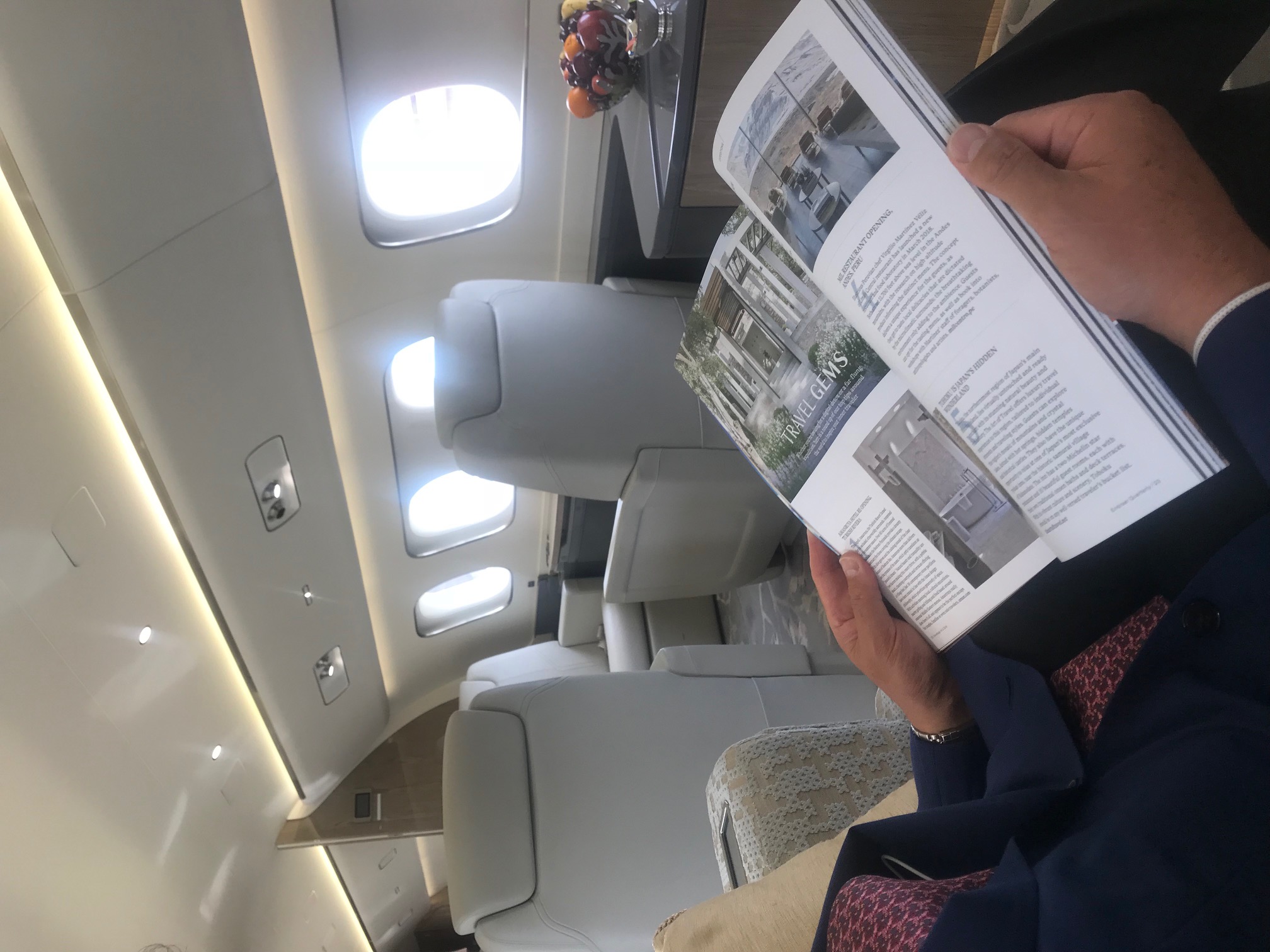
How Does Holding a Beautifully Designed Magazine Differ From Scrolling Through Digital Content?
A printed magazine has no notifications, no autoplay video, no adjacent tab pulling attention away mid-sentence. Every minute a reader spends with it is uninterrupted, which is a rare condition for any brand touchpoint in a marketing plan built mostly around apps and inboxes.
Holding the object also changes the pace of reading. Readers linger on spreads, flip back to revisit an image, and move through the piece at a speed scroll behavior actively discourages, scrolling is built for skimming forward, not returning. A well-designed spread rewards that slower pace with detail that a quick glance would miss.
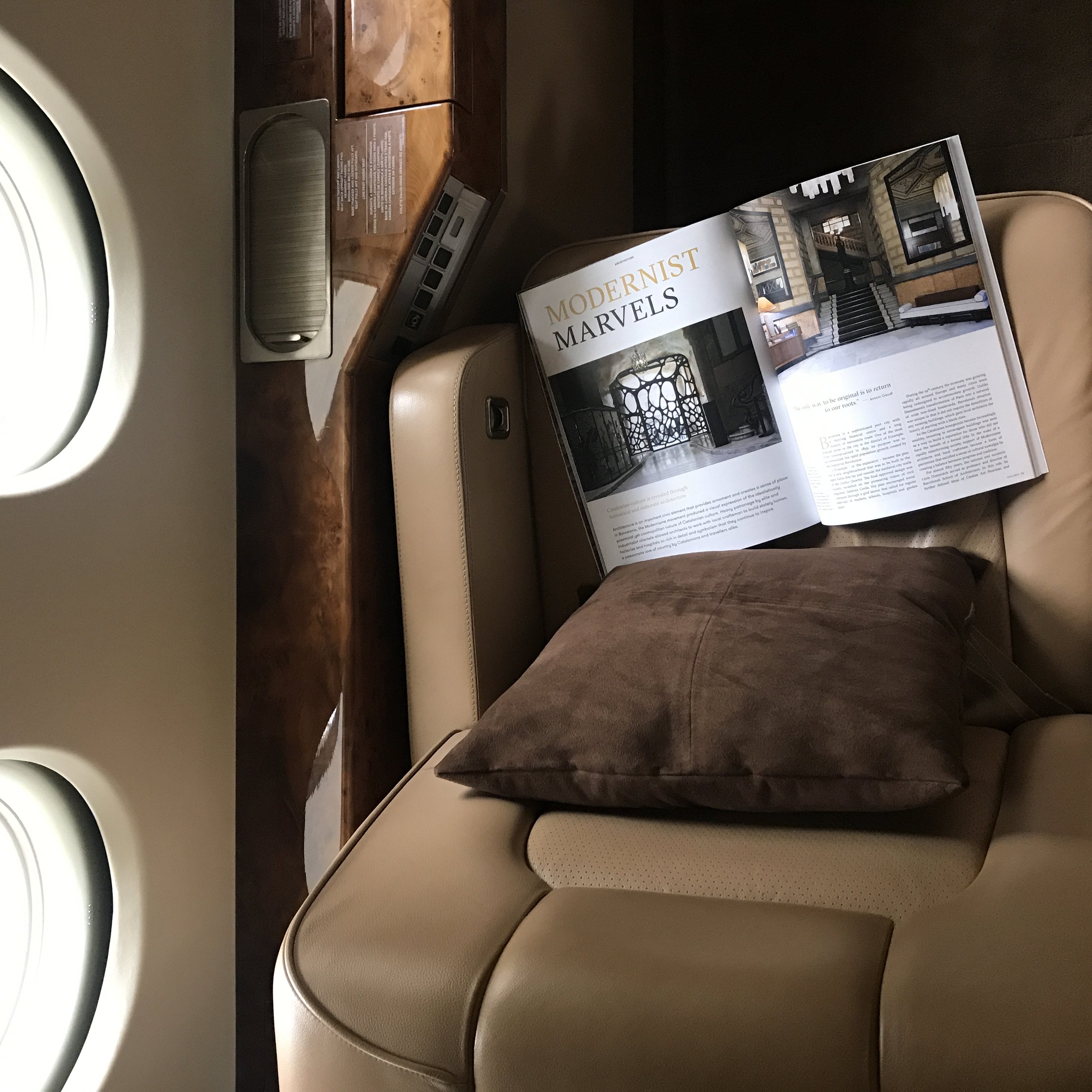
Physical persistence extends this effect well past the first read. A digital impression disappears the moment the session ends; a printed magazine sits on a desk or a coffee table and gets picked up again days or weeks later, often by someone other than the original recipient. That repeat exposure, without any additional media spend, is something a banner ad or email newsletter cannot replicate.
For a CEO or brand executive weighing where to put marketing budget, this is the point that matters most: the sensory difference isn’t about reading enjoyment, it’s about recall. A brand felt through paper and print craft is a brand remembered, which is the entire premise behind Rethink Publishing’s approach to editorially directed, design-led print magazines and coffee-table books as long-term brand assets. When considering tactile storytelling marketing, this point stands out.
How Do Luxury Brands and B2B Companies Use Tactile Storytelling Marketing to Tell Their Story?
They build every physical decision, paper weight, binding, typography, photography, around a single editorial spine, so the object argues the brand’s case before anyone reads a sentence.
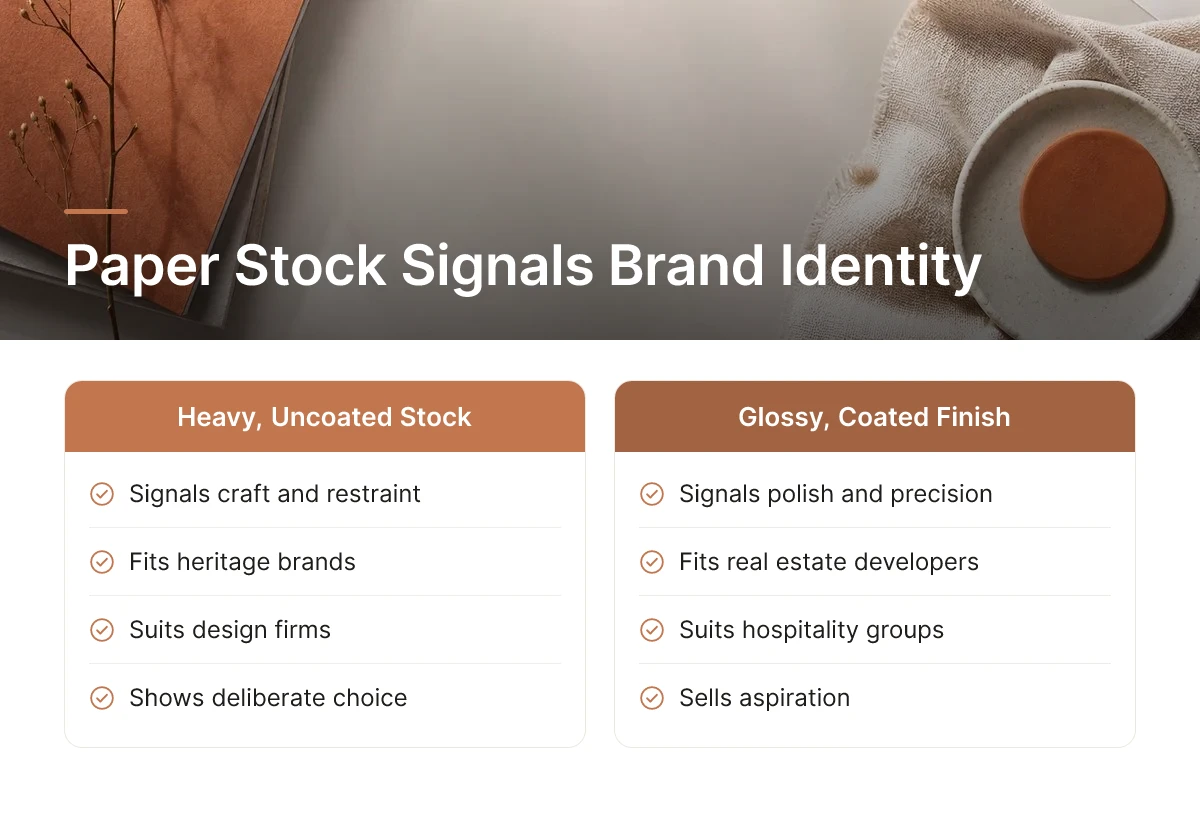
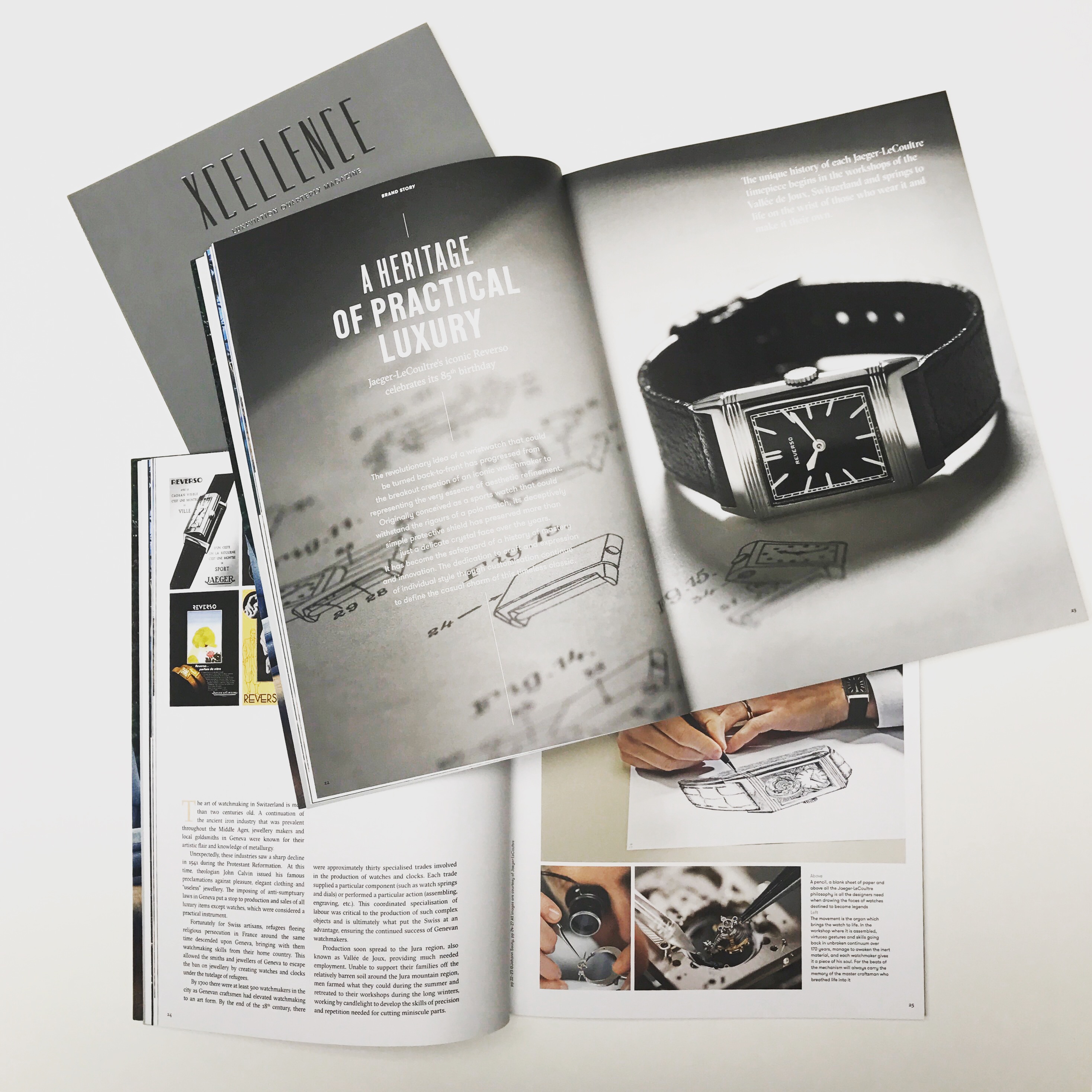
Paper stock alone carries meaning. A heavy, uncoated stock with visible texture signals craft and restraint, the kind of choice a heritage brand or design firm makes to say “we don’t rush.” A glossy, coated finish signals polish and precision, which fits a real estate developer or hospitality group selling aspiration. Binding matters too: a Swiss-bound or stitched spine that lies flat reads as considered and durable, while a stapled booklet reads as disposable. None of this is decorative. It’s the first paragraph of the story, read through the hands before the eyes.
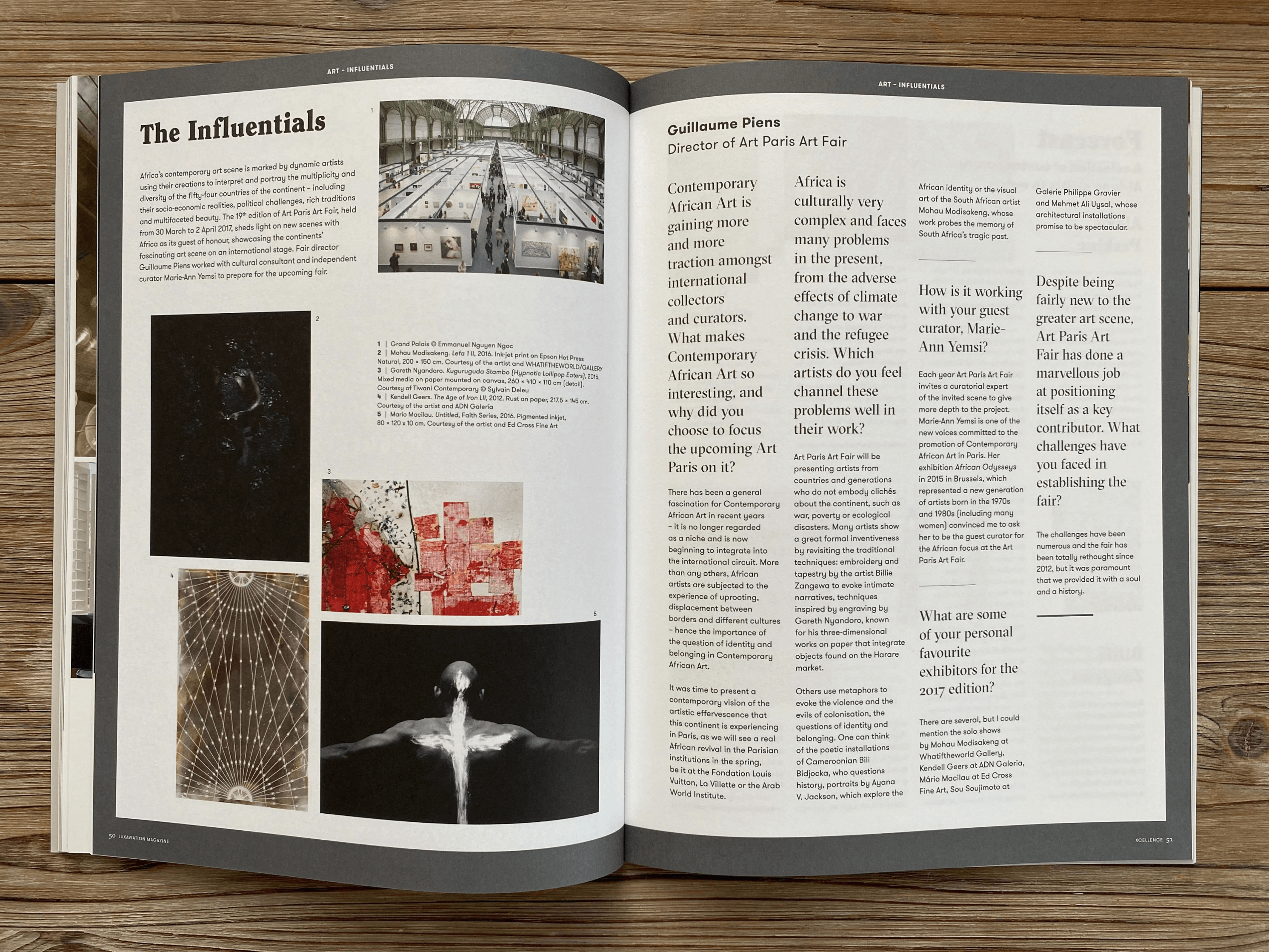
Editorial structure does the rest. A feature story, a founder interview, a photo essay, these let a brand show its positioning through scenes, people, and process instead of stating it. That’s the core difference from a brochure, which pitches directly and gets discarded because there’s nothing to read, only to skim. A magazine’s structure gives a brand room to demonstrate expertise or craftsmanship across 40, 60, or 100 pages, building a case the way a well-reported feature does rather than the way an ad does.
What Are Real Examples of Tactile Storytelling That Actually Moved Business Outcomes?
The clearest signal isn’t a single campaign metric, it’s retention. When a publication is produced with real editorial discipline, people don’t recycle it after one read. They keep it on a coffee table, hand it to a colleague, or leave it in a waiting room where it keeps working for months. That extended shelf life is the business outcome: a marketing asset that stays in front of a client long after a social post or email would have disappeared.
How Do Industry-Specific Approaches Differ, Luxury Versus B2B Versus Other Sectors?
Luxury brands lean on heritage, craftsmanship, and sensory indulgence, a hotel group might use a photo essay on its property’s architecture to sell atmosphere rather than amenities. B2B companies use the same format for a different goal: proof of expertise, documented client outcomes, and thought leadership from named executives. A law firm or architecture practice uses a case-study feature the way a hotel uses a photo essay, to demonstrate rather than declare. For those exploring tactile storytelling marketing, this matters.
What’s notable is how far this extends beyond obviously visual industries. Cybersecurity firms and industrial manufacturers, sectors with no natural aesthetic hook, commission custom publications for the same reason: tactile storytelling marketing builds trust through physical credibility, not just visual appeal. A dense, well-bound technical publication tells a buyer the company takes its own expertise seriously enough to invest in how it’s presented. At Rethink Publishing, that range spans hospitality and design work alongside genuinely unexpected sectors, because the editorial principles hold regardless of industry.
What Makes a Printed Magazine a Lasting Marketing Asset Instead of a Throwaway?
A magazine earns its place on a coffee table when it has a real editorial spine; anything without one gets flipped through once and recycled.
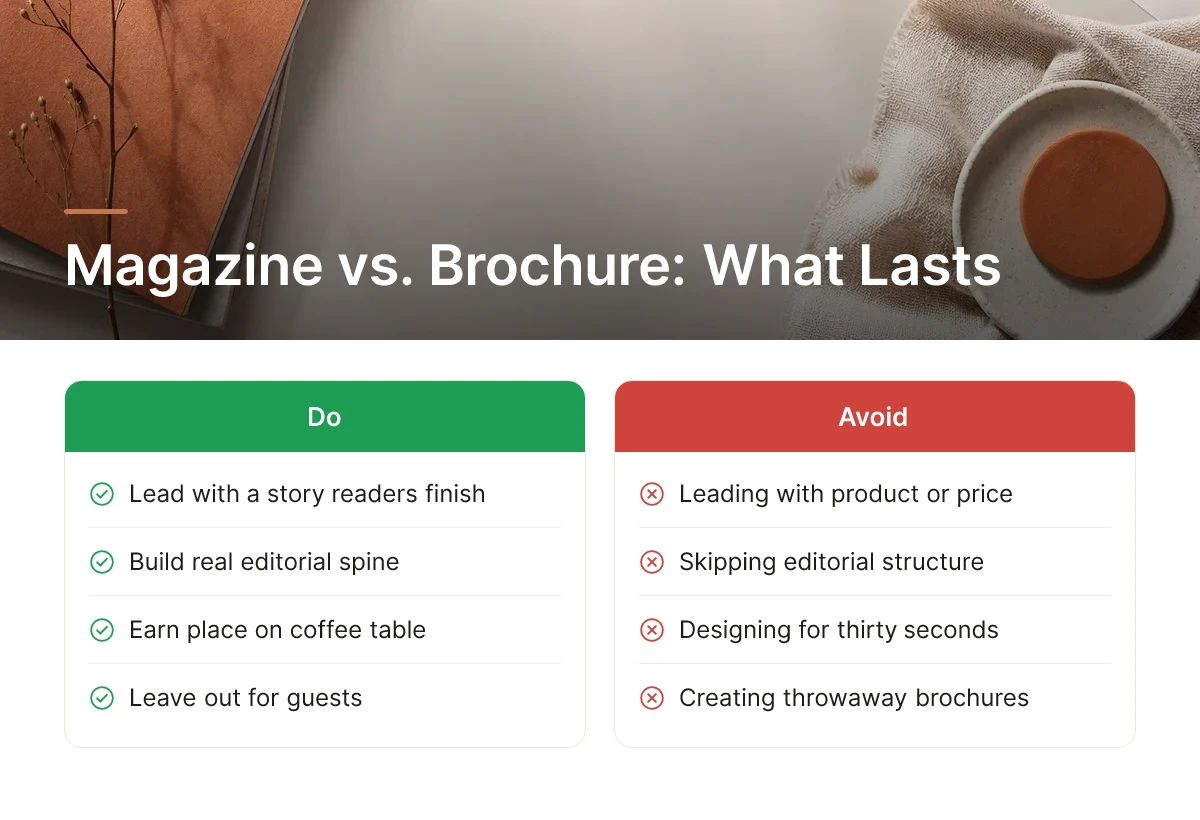
That distinction sounds small. It isn’t. A brochure exists to sell something in the next thirty seconds, it leads with a product, a price, a call to action. A magazine leads with a story the reader wants to finish. One gets filed in a drawer or a recycling bin. The other gets left out for a guest to pick up. That difference is the entire premise behind tactile storytelling marketing: the physical object has to earn attention the same way a good article does, not just announce a brand’s existence.
What Are the Key Design and Editorial Elements That Turn a Magazine Into a Keepsake?
Four decisions separate a keepsake from collateral: binding, cover, photography, and narrative depth.
- Durable binding. A perfect-bound or stitched spine signals permanence. Saddle-stitched pamphlets on flimsy stock signal the opposite, no matter how good the writing is.
- A cover that earns a second look. The cover has roughly one second to convince someone not to set the piece down. Generic stock photography or a logo-and-tagline cover reads as marketing; a considered image reads as editorial.
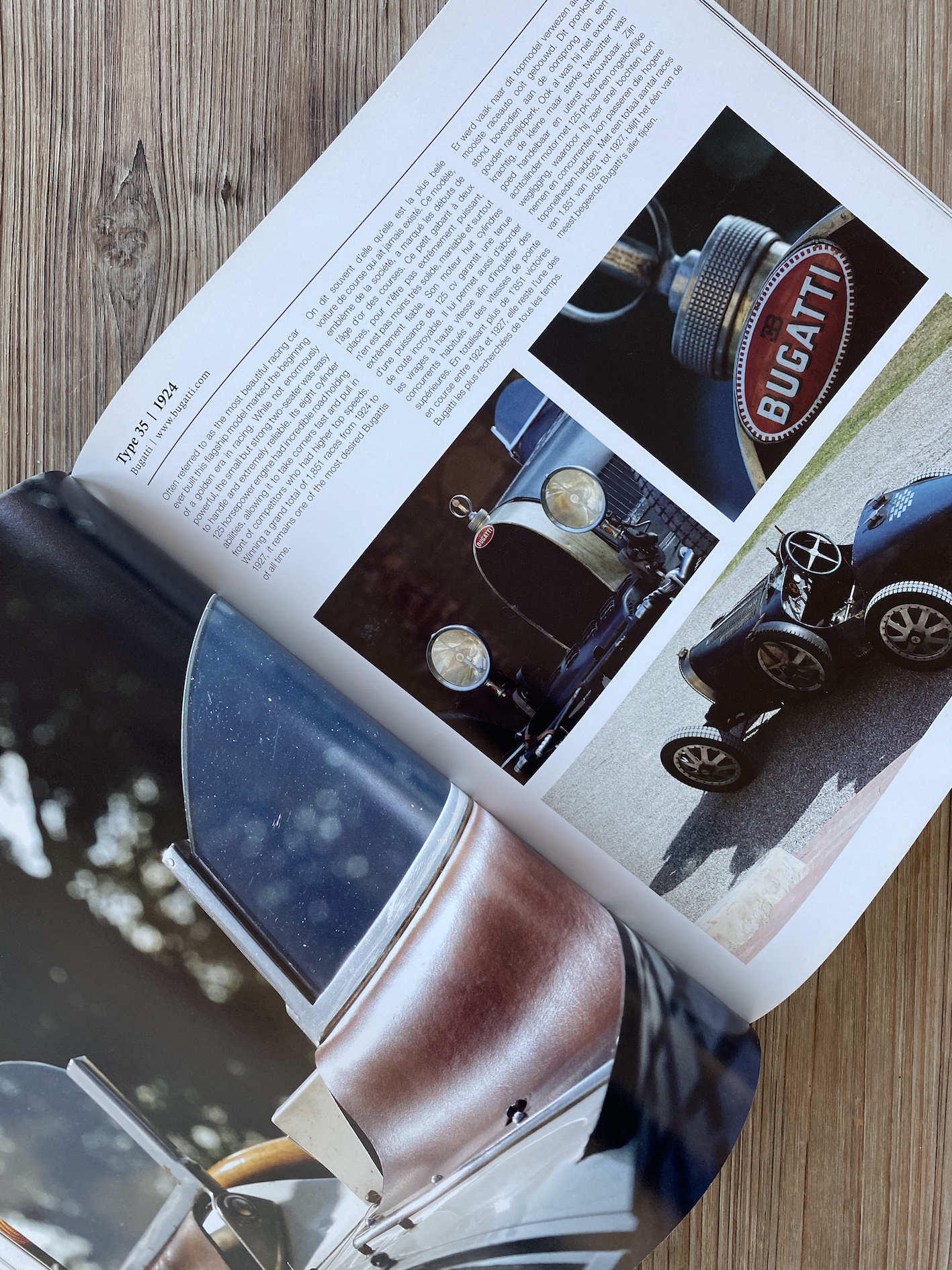
- Photography worth returning to. Licensed or commissioned images that reward a slower look, not filler shots dropped in to fill white space.
- Stories with a narrative arc. A profile, a place, a point of view, not a rebranded list of product features. Readers can tell the difference within a paragraph.
At Rethink Publishing, this is why editorial direction comes before layout on every project, a magazine designed around a defined spine holds together in a way that a collection of nicely designed pages never does.
How Do You Measure Whether a Tactile Publication Is Delivering Real Brand Impact?
Print has no click-through rate, so impact shows up in behavior, not dashboards: does the piece get displayed, requested, and passed along.
Three signals are worth tracking honestly. First, placement, is it sitting on a reception desk, a partner’s office shelf, a client’s actual coffee table, or did it disappear into a drawer. Second, demand, do people ask for it by name months after the mailing, and does the sales team come back asking for more copies because prospects are requesting one. Third, conversation, does it come up unprompted in client retention meetings or referral conversations, evidence that it’s doing quiet work between touchpoints rather than sitting unread. This directly impacts tactile storytelling marketing outcomes.
None of this replaces analytics for digital channels. It supplements what digital can’t measure: whether a brand earned a physical place in someone’s life. A poorly made version, thin paper, stock photography, copy that reads like a sales deck, undermines that exact goal. It confirms the cheap perception it was built to avoid.
How Do You Integrate Tactile Storytelling Into a Broader Marketing Strategy?
Print works best as the anchor of a campaign, not a replacement for it, digital builds awareness at scale, while a printed piece deepens the relationship with people who already matter to the business.
How Does a Printed Magazine Work Alongside Digital and Other Marketing Channels?
Digital channels are efficient at reaching thousands of people quickly, but that efficiency comes at the cost of depth. An email newsletter or a paid social ad can introduce a prospect to a brand, it rarely convinces a CEO to trust that brand with a seven-figure decision.
Tactile storytelling marketing earns its place in the sequence after digital has done its job of casting a wide net. A magazine sent to a prospect after a sales meeting signals something an email never can: that the company took time and care to follow up. The same applies at trade shows, where a well-designed print piece gives a booth visitor something to hold, remember, and take home, instead of one more business card lost in a jacket pocket.
The highest-value use case is often the simplest: mailing a magazine directly to top-tier accounts. A law firm’s most important client, a real estate developer’s largest investor, or a hospitality group’s most loyal repeat guest is exactly the person who should receive something physical, not another automated drip email. Rethink Publishing builds these publications with that follow-through in mind, strategy, writing, design, and print production handled end-to-end, so the piece a client sends after a meeting is as considered as the meeting itself.
What’s the Right Way to Think About Budget and ROI for Print as a Long-Term Investment?
Print doesn’t behave like a paid ad, and judging it by per-click or per-impression math misses the point entirely. A magazine’s return shows up over years, in the client relationships it sustains, the referrals it generates when someone leaves it on a coffee table for a peer to notice, and the brand memory it builds simply by staying in a room rather than disappearing after 48 hours. This is particularly relevant for tactile storytelling marketing.
Digital and tactile budgets aren’t competing for the same dollar, either. A strong printed magazine is a source of raw material, photography, interviews, editorial narrative, that gets repurposed into web content, social posts, and email campaigns for months after the print run ships. That repurposing extends the asset’s working life well past the mailing date, which changes the ROI conversation from a single spend to a compounding one.
The mistake worth avoiding: treating a magazine as a one-off gimmick, produced once and disconnected from the rest of the marketing calendar. A publication that shows up once and is never followed by another loses the compounding effect that makes print worth the investment in the first place.
What Should Companies Consider Before Investing in a Custom Publication?
Not every company needs a magazine. Honestly? Most don’t. A custom publication fits businesses with a real story to tell, an audience worth investing in over years rather than weeks, and a sales cycle or client relationship long enough to justify a physical object that sits on a desk or coffee table for months.
That last point matters more than most companies realize going in. Tactile storytelling marketing only pays off when the relationship it’s supporting is itself long-term, a real estate developer courting the same buyer for eighteen months, a law firm nurturing referral partners for a decade, a hospitality group trying to stay top-of-mind between visits. If the buying decision happens in a week over a web search, a magazine is the wrong tool.
What Does the End-to-End Process Look Like, From Strategy Through Design to Delivery?
The process runs through five stages, and skipping any one of them is usually where self-produced print pieces go wrong. It starts with strategy and editorial direction, deciding what the publication is actually about before anyone writes a word or picks up a camera. Without that editorial spine, a magazine collapses into a glorified brochure.
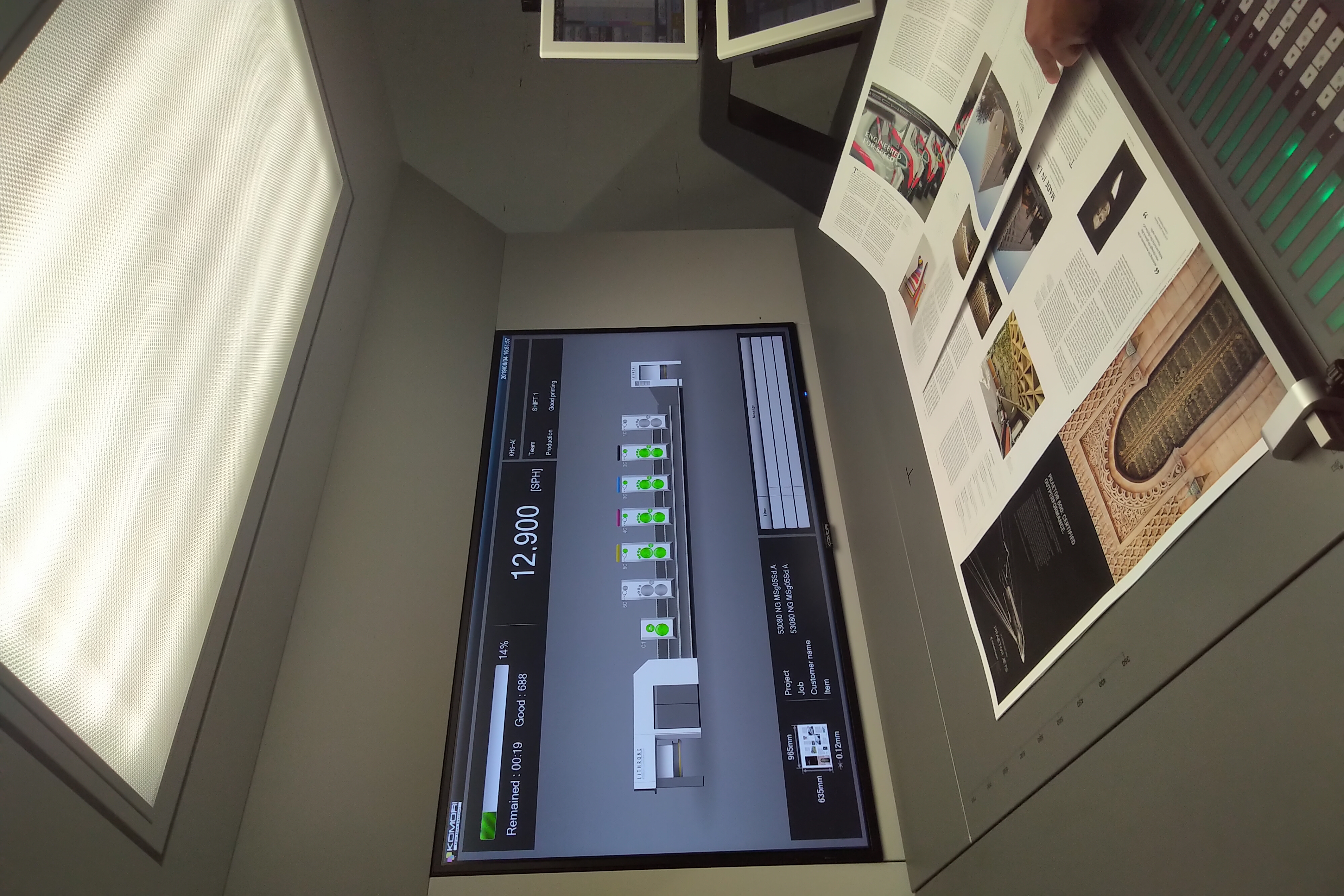
From there, content and photography get commissioned around that direction, followed by design, the intentional pairing of words and images that separates an editorial product from a stack of marketing copy. Print production and quality control come next, then delivery. At Rethink Publishing, this entire sequence is managed end-to-end, so the client isn’t hiring a writer, an art director, and a print vendor separately and hoping they coordinate. When considering tactile storytelling marketing, this point stands out.
How Do You Know if Your Company Is Ready for a Custom Magazine?
Ask three questions before committing. First: do we have enough substance for multiple features, or just one good story stretched thin? A single case study padded into forty pages reads as filler, not editorial.
Second: who exactly receives this? “Our clients” isn’t specific enough, a magazine built for existing high-value relationships looks different from one built to open new ones. Third: what happens to it after the first read? If the honest answer is “it gets recycled,” the investment isn’t working as intended.
The investment tier also deserves a clear-eyed look. Paper stock, binding method, and print run size all shift the production cost and the object’s perceived weight in someone’s hands, a budget-friendly run and a premium one are genuinely different products, not just different price points. That decision should follow from the audience and purpose, not the other way around.
If there’s no real story and no audience worth this kind of attention, save the money for something else. That’s not a sales pitch, it’s the same honest filter Rethink Publishing applies before taking on a new publication.
Frequently Asked Questions
Is print marketing actually dead, or just changed?
Print isn’t dead, mass-produced print lost its edge, but premium, purposeful print is gaining ground. Luxury brands are reinvesting in physical publications precisely because digital channels feel crowded and forgettable. A well-made magazine now signals that a brand is willing to invest real craft in the relationship, not just an inbox slot. For those exploring tactile storytelling marketing, this matters.
What industries benefit most from a custom printed magazine?
Hospitality, real estate, law, architecture, private clubs, and design-forward tech companies see the strongest returns. These industries sell trust and taste as much as a service, and a physical publication reinforces both. Rethink Publishing has produced work across hospitality and design, plus surprising categories like cybersecurity, proving the format travels beyond obvious “lifestyle” sectors.
How long does a custom magazine stay relevant as a marketing asset?
A well-made magazine holds relevance for one to three years, often longer if the editorial content isn’t tied to time-sensitive promotions. Unlike a social post, it sits on a coffee table or reception desk, getting picked up and re-read months after publication.
Can a small or mid-sized company justify a custom publication, or is it only for large brands?
Size matters less than intent, a mid-sized firm with a strong brand story and a defined, relationship-driven client base can justify a publication just as easily as a large one. The real question isn’t company size; it’s whether physical, lasting contact with key clients or partners actually moves the business. If it does, the investment holds up regardless of revenue.
How is a magazine different from sending a branded brochure or catalogue?
A brochure sells; a magazine earns attention through editorial content readers actually want to read. Brochures get scanned and discarded because they’re transactional by design. A magazine has a real editorial spine, features, narrative, imagery, which is why people keep it instead of recycling it.
Conclusion
Tactile storytelling works because it asks for something digital can’t: a reader’s hands, a few unhurried minutes, a spot on their coffee table. The brands winning with print aren’t chasing nostalgia, they’re using physical permanence to outlast the scroll. If your last three marketing initiatives all lived on a screen, that’s the gap worth closing first. This directly impacts tactile storytelling marketing outcomes.
Start by auditing what your best clients actually keep from you today. If the honest answer is “nothing,” that’s your opening. Visit rethink-publishing.com and bring us that gap, we’ll tell you plainly whether a magazine is the right answer for it.
Recommended Articles
Explore more from our content library: