
Publication storytelling happens where editorial narrative and strategic curation meet, the choices about what stories to include, how they’re sequenced, and how design frames them, all working together to build brand authority over time. It’s not a technique you apply to a page; it’s the discipline of treating a print magazine as a narrative asset rather than an advertising vehicle. Done well, every editorial decision, the stories chosen, the ones left out, the way paper and layout carry the message, compounds into an impression readers trust and keep coming back to, and keep on their coffee table instead of throwing away.
How Do You Build a Brand Narrative Through Publication Storytelling in a Custom Magazine?
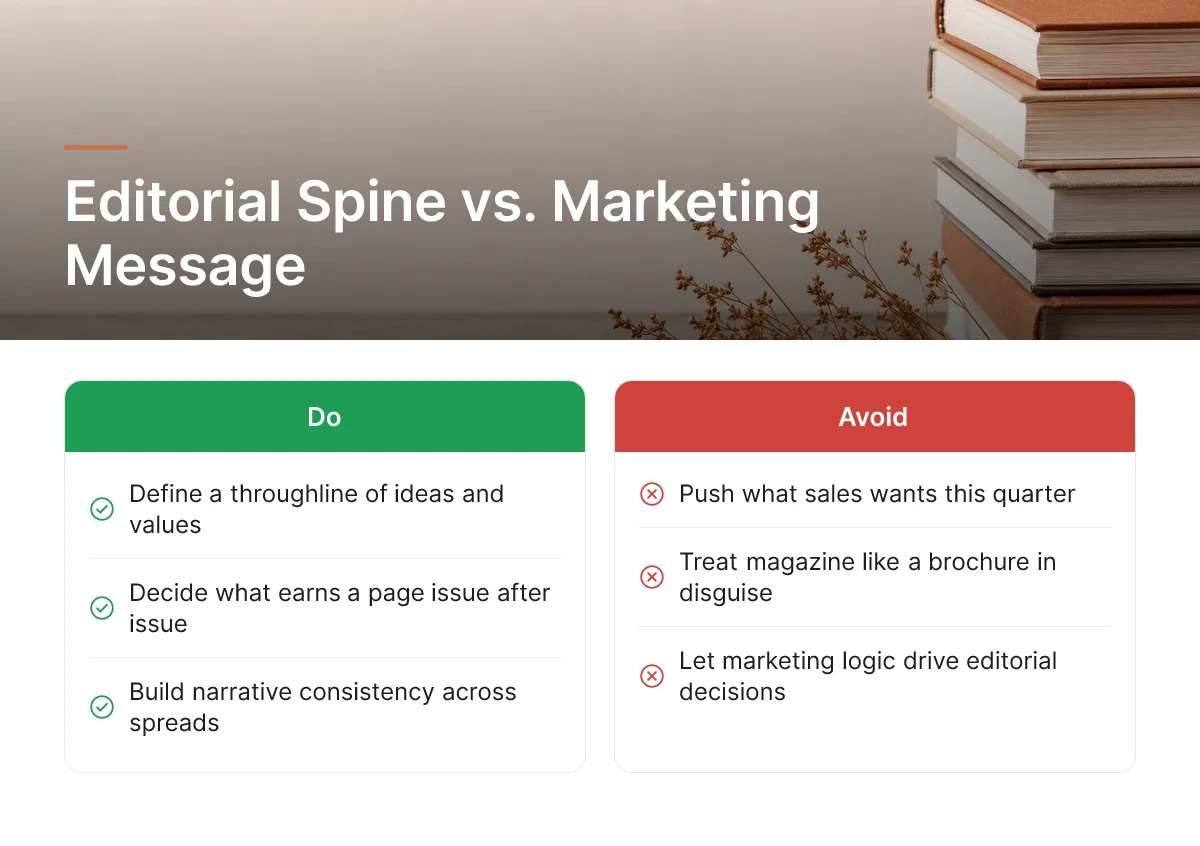
A brand narrative gets built through an editorial spine, a defined throughline of ideas and values that decides what earns a page, issue after issue, rather than what a sales team wants to push this quarter. This is particularly relevant for publication storytelling.
This is the dividing line in publication storytelling that most brands miss before their first issue goes to print. A marketing message and an editorial spine look similar on a spread, both use the brand’s voice, both sit inside the same cover, but they operate on opposite logic. Get this wrong and you end up with a brochure wearing a magazine’s clothing.
What Makes an Editorial Spine Different From a Marketing Message?
A marketing message asks the reader for something, attention, a click, a purchase decision. An editorial spine gives the reader something first: an insight, a story, a point of view worth their time regardless of whether they ever buy anything.
That distinction is not cosmetic. Trust follows the giving, not the asking. A hospitality brand that runs a feature on the history of a region’s winemaking families is building trust; the same brand running a feature that’s a room-rate promotion in disguise is spending it. Readers can tell the difference within a paragraph, and once they clock the disguise, every future issue gets read with suspicion. This is why publication storytelling treats editorial judgment as the product, not decoration around a pitch.
How Do You Decide What Stories Belong in Your Magazine?
Every story gets tested against one question: does this deepen the reader’s sense of who the brand is, or does it just promote what the brand sells?
Take a law firm producing a client-facing magazine. A profile of a client’s succession-planning story supports the spine if it illustrates judgment and discretion, the values the firm wants associated with its name. A thinly veiled promotion of the firm’s billing structure does not, no matter how relevant it feels to the partners who requested it. The same test applies to a real estate developer choosing between a feature on a neighborhood’s design history and a listing dressed up as a lifestyle piece. One builds authority; the other spends it. When considering publication storytelling, this point stands out.
Saying no to the second kind of story is the harder, less comfortable discipline, and it’s the one that protects the magazine’s credibility over years, not just the current issue. At Rethink Publishing, this editorial filtering happens before a single layout gets built, because a spine decided mid-production is not a spine at all. It’s the difference between a publication people keep and one they recognize as an ad and set aside.
What’s the Relationship Between Intentional Design and Storytelling in Print Publications?
Design is not decoration in a print magazine, it’s the delivery mechanism, deciding whether a story is felt or just seen. In publication storytelling, paper stock, layout rhythm, and image placement carry as much narrative weight as the words themselves.
How Does the Choice of Paper, Layout, and Image Pairing Change the Way a Story Lands?
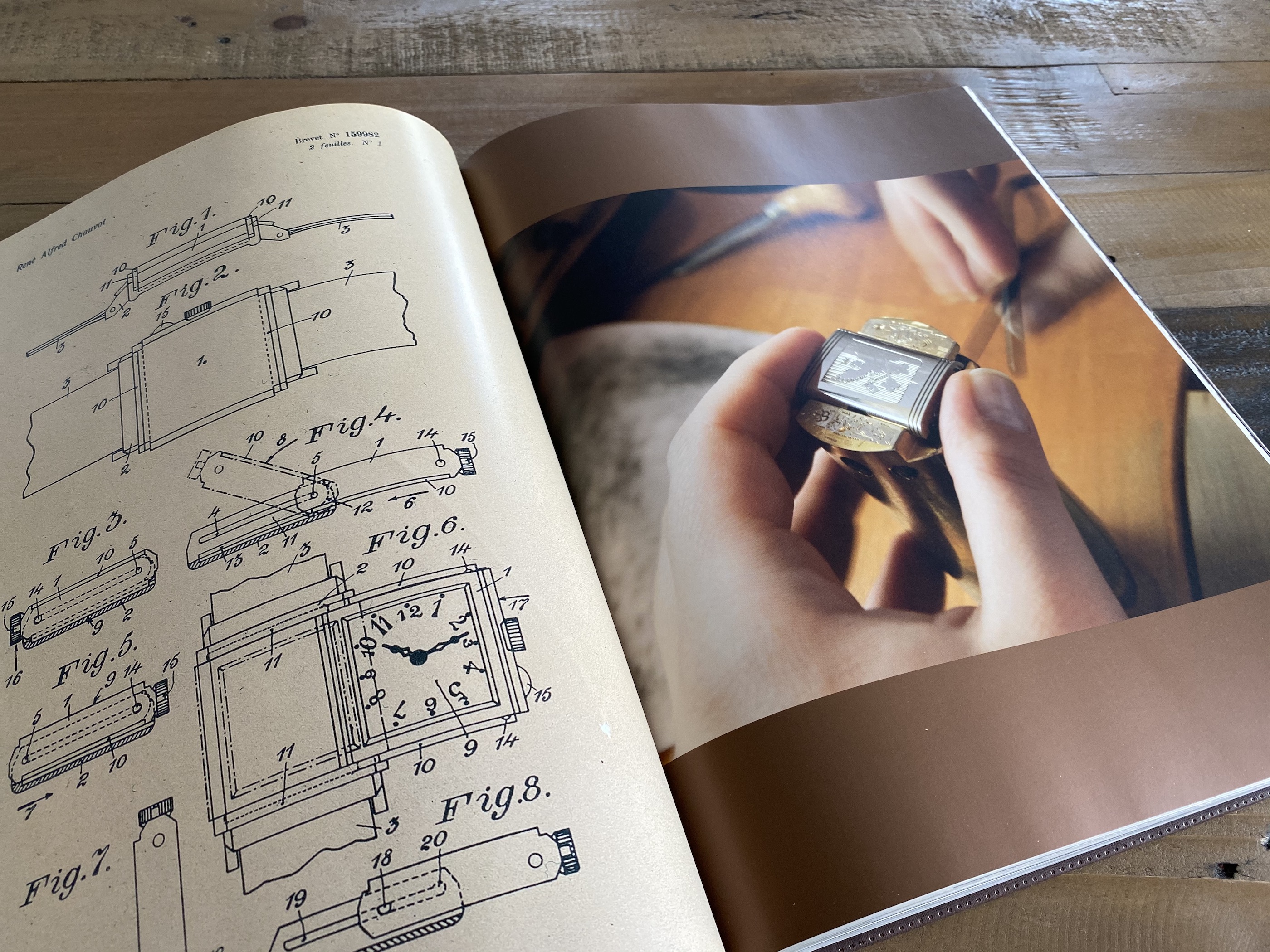
A reader forms an opinion about a magazine before reading a single sentence, based entirely on how it feels in the hand. A heavy, uncoated stock signals permanence and craft; a thin, glossy page signals disposability, the same words printed on each will land differently because the paper has already told the reader what kind of publication this is [3]. That physical judgment happens in seconds, well before editorial content gets a chance to make its case.
Layout pacing works the same way, just over a longer arc. White space around a portrait gives it room to breathe; a dense grid of text and thumbnails tells the reader to skim rather than settle in. The ratio of image to text across a spread, and the rhythm of quiet pages against busy ones, controls whether a story is absorbed slowly or scanned and forgotten. Magazines have always used this pacing to hold attention across many pages [3], good publication storytelling extends that discipline to every spread, not just the opening feature.
Why Does Precise Design Amplify Rather Than Constrain Editorial Storytelling?
Restrained design does not compete with a story, it clears space for it to land. When a layout is disciplined, a strong photograph or a well-turned paragraph gets to do its work without visual noise pulling attention away. Design that tries to impress on its own terms usually undercuts the words it was meant to support. For those exploring publication storytelling, this matters.
Cluttered, template-driven layouts read as generic no matter how good the writing underneath them is, because the reader’s first signal is the design, not the copy. Disciplined design, controlled type, considered white space, image pairing that reinforces rather than decorates, reads as authority. At Rethink Publishing, this is why editorial direction comes before layout on every issue: the design decisions are made to serve a specific story, not filled in around a template after the fact.

How Does a Carefully Curated Magazine Build Lasting Brand Authority Compared to Other Marketing Channels?
A magazine earns trust through repeated, chosen exposure over weeks or months, while a digital ad earns a glance, if that, before it disappears. That difference in mechanism, not just medium, is what makes publication storytelling a different kind of brand investment than a campaign built for the scroll.
What Makes a Magazine a Keepsake Instead of Something That Gets Thrown Away?
A well-made magazine sits on a coffee table or a reception desk and gets seen again and again, by the person who received it and by everyone who visits them. An email gets one open, maybe a second if you’re lucky. A social post gets a few seconds of a feed scroll before it’s gone for good. The magazine stays in the room.
That repeated exposure is not an accident, it is designed. Rethink Publishing builds every issue with an editorial spine strong enough to reward a second and third read, because a coffee-table book nobody reopens is just an expensive brochure. The goal is a physical object worth returning to, not a one-time impression. This directly impacts publication storytelling outcomes.
How Do High-End Publications Build Trust in Ways Digital Content Cannot?
Every time someone picks a magazine back up off the table, they are making an active choice, no algorithm served it to them, no autoplay forced it. That small, repeated decision is a trust signal an ad impression can never generate, because the reader chose the brand, not the other way around.
Weight, paper finish, and print quality carry meaning too. A heavy stock and a considered layout tell the reader that a company invested real time and money into this object, and that kind of visible investment signals permanence in a way a webpage cannot, a website can be rebuilt overnight, but a printed run represents a decision the company stood behind. Publication storytelling depends on that physical signal; the craft is the credibility.
Print also forces a slower pace. Readers turn pages instead of scrolling past them, which means the ideas and images land with more weight and stay in memory longer than something skimmed in a feed. Digital content marketing platforms have documented this same instinct toward deeper, lifestyle-oriented engagement over direct sales messaging [1], and a well-executed magazine delivers that experience in its most concentrated, durable form, one built to be picked up again, not swiped past.
What Does the Process Look Like for Turning Your Brand’s Story Into a Magazine People Keep?
Five stages, in strict order: brand and audience strategy, editorial planning, content and design production, print, and distribution, skip the order and you get a good-looking magazine with nothing to say. This is particularly relevant for publication storytelling.
What Does an End-to-End Magazine Production Workflow Actually Involve?
Strategy comes first. Before anyone writes a headline or picks a typeface, the real work is figuring out who reads this, why they’d keep it, and what the brand actually stands for once the marketing language is stripped away. This is where publication storytelling gets decided, not designed, the narrative spine, the recurring themes, the voice.
Editorial planning follows: mapping out the actual table of contents, deciding which stories carry the brand’s authority and which are filler, assigning writers to angles instead of just topics. Only then does content and design production begin, writing, photography or image sourcing, layout. At Rethink Publishing, this is where a curated team of editorial and design talent pairs words and images with intent, rather than dropping stock photos next to finished copy.
Print production and distribution close the loop: paper stock, color proofing, quality control on press, then getting finished copies into the hands, offices, and coffee tables of the people who matter to the brand.
How Long Does It Take to Create a Publication That Feels Like a Real Asset?
Measure this in weeks and months, not days, a same-week turnaround usually means the strategy step got skipped. Editorial planning alone takes real time: deciding what a magazine says about a brand isn’t a task you rush between meetings. Design and layout take longer still, since every spread is a deliberate pairing of image and text, not a template filled in. Print production has its own physical timeline, proofing, press runs, binding, that no amount of urgency shortens. When considering publication storytelling, this point stands out.
Brands that try to compress this into a sprint tend to end up with something that reads like a brochure wearing a magazine’s clothes. That’s the opposite of publication storytelling done properly, content marketing agencies that treat print as one channel among several often make this exact trade, because Content, Print, Marketing strategy and Distribution get squeezed into a shared production calendar rather than given their own [1].
End-to-end means one team owns strategy, editorial, design, print, and delivery, no handoffs, no separate vendors dropping the thread between the brief and the bound copy. That accountability is the difference between a magazine that looks finished and one that actually says something.
How Do You Measure Whether Your Publication Is Working as a Strategic Brand Asset?
You measure it by watching what people do with the physical object, not by pulling a dashboard, the signal lives in shelf life, not click-through.
Most executives approach publication storytelling with a digital marketer’s instinct: find the report, check the metrics, optimize. That instinct fails here. A magazine doesn’t have an unsubscribe rate or a bounce rate. It has something better, if you know where to look for it.
What Outcomes Should You Actually Care About When You Invest in a Custom Magazine?
Three outcomes matter, and none of them show up in an analytics platform. First: does the recipient keep the issue and go back to it, or does it end up in the recycling bin the day it arrives? Second: does it open or move forward a conversation with a client or prospect, a partner mentioning an article at a dinner, a prospect referencing a feature in the first meeting? Third: does it change how people talk about your brand when you’re not in the room. That last one is the real test of publication storytelling done well. If the magazine simply repeats what your website already says, it won’t shift perception. If it positions your company inside a broader cultural or industry conversation, it will.
How Do You Know if Your Publication Is Reaching the Right People and Staying in Their Hands?
Trace the distribution list against your actual target list, then check who still has a copy six months later. A mailing list built for volume is not the same as a list built for influence, a beautifully produced issue sent to the wrong 5,000 addresses does less for brand perception than 300 copies placed with decision-makers who will act on what they read. Watch for requests for extra copies from your own sales or partnership teams; that’s a stronger signal of relevance than any open rate. Watch for the issue sitting on a desk or coffee table months after delivery, rather than a landing page in front of a company you can no longer identify. Traditional digital metrics like click-through rate don’t translate here because print has no click, the closest equivalent is retention and reference, whether the object stays present in someone’s physical space long enough to keep doing its job. For those exploring publication storytelling, this matters.
The compounding effect matters most over time. Each issue builds on the credibility of the last, so a company on its fourth or fifth issue carries an authority that a one-off campaign never accumulates, this is the case with the 80+ magazines Rethink Publishing has produced for clients who treat their publication as a standing institution, not a single project.
Frequently Asked Questions
Does every company need a custom magazine to build brand authority?
No. Not every company needs one. A magazine makes sense once you have a real audience worth deepening a relationship with, clients, members, referral partners, and a brand story that holds up under editorial scrutiny. If your marketing is still finding its footing, fix that first. Print rewards brands that already know who they are.
Can a custom magazine work alongside digital content instead of replacing it?
Yes, a magazine works best as a companion to digital, not a replacement for it. Digital channels handle speed, reach, and frequency; a printed publication handles depth and permanence. Many clients repurpose magazine features into web content or email campaigns, extending the editorial spine across formats without duplicating the same short-lived social posts. This directly impacts publication storytelling outcomes.
Who should be involved from the client side when creating a brand magazine?
One decision-maker, usually the CEO, CMO, or Head of Brand, should own the project. Beyond that, input from client-facing teams helps surface the real stories worth telling. Rethink Publishing handles writing, design, and production, so internal involvement stays focused on direction, not execution.
What industries actually benefit from a custom print magazine?
Industries with high-trust, relationship-driven sales cycles benefit most: hospitality, real estate, law, architecture, private clubs, and design firms. Rethink Publishing has produced magazines and coffee-table books across these sectors, plus less obvious ones like cybersecurity, where a physical publication signals credibility that a website or PDF brochure can’t match.
Conclusion
A brand magazine only earns its keep when the editorial spine comes before the design, when the stories are real rather than promotional, and when the finished piece is built to survive on a coffee table, not a browser tab. Get those three things right and print stops being a marketing expense and starts working as a physical asset for your brand. This is particularly relevant for publication storytelling.
If you’re weighing whether this fits your brand, start smaller than a full magazine commitment: audit the last three stories your marketing team told publicly, and ask whether any of them could survive 200 pages of scrutiny. Then talk to Rethink Publishing at www.rethink-publishing.com about what an editorial spine for your brand could look like.
Sources & References
- How a brand magazine can be the missing link in your content marketing
- Marketing Magazines: Why They’re a Secret Weapon – Smartpress Blog
Recommended Articles
Explore more from our content library: