
Understanding how to start a magazine is essential. A company starts a magazine as a brand asset by treating it as an editorial product, not a marketing pamphlet: define the strategic role it plays before a single page is designed, build a real editorial spine, and hand production to people who work in print every day. The steps are: clarify why print (not digital-only), set the editorial foundation, produce end-to-end with strategy, design and print handled together, and commit to it as a long-term investment in how clients perceive you. Done properly, a magazine gets kept, not thrown away.

Decide Why You’re Starting a Magazine Before You Start One
Before anything else, decide whether you’re building a brand asset or a business, this article is about the first, and confusing the two ruins both.
If you want a magazine that generates subscription revenue and stands alone as a media company, that’s a different venture with different economics, distribution, and staffing needs. Most CEOs and brand executives asking how to start a magazine actually mean something narrower: a publication that carries their brand, deepens relationships with existing clients, and sits on a coffee table instead of a hard drive. That’s the version worth pursuing here. Rethink Publishing works exclusively in this second lane, brand-owned print as a marketing asset, not newsstand publishing.
Why Print Still Works for Brands That Care About Quality
Print earns its place because it survives attention spans that digital content can’t hold. A social post disappears in a scroll; a PDF sits unread in an inbox folder. A well-made magazine sits on a side table for months, gets picked up more than once, and gets handed to someone else in the room. The global custom publishing market, valued at roughly $2.8 billion in 2023, reflects exactly this shift, brands reinvesting in print precisely because digital saturation has made attention scarce and physical media correspondingly valuable [1]. Scarcity is the strategic asset now, not a liability.
How a Magazine Differs From a Brochure or Newsletter
A brochure sells. A magazine informs, entertains, and earns trust before it ever mentions the brand directly. The difference is structural: a real magazine needs an editorial spine, a defined point of view, recurring sections, writers and photographers doing actual work, not a product catalog dressed up with better paper stock. Skip that step and you get a brochure with an ISSN, which fools no one and gets tossed with the rest of the mail.
Not every company needs this. If your brand doesn’t have a real point of view, or if clients aren’t relationships you’re trying to deepen over years rather than one transaction, save the budget. Honesty here saves everyone a wasted six-figure investment.
How to Start a Magazine as a Brand Investment, Not a Media Startup
How to start a magazine depends entirely on what you’re trying to build: a media business that sells subscriptions, or a brand asset that sells nothing at all.
Most articles on this topic assume you’re launching an independent publication, chasing readers you’ve never met, competing for newsstand shelf space, building an ad sales team. None of that applies here. If your goal is to deepen relationships with clients and prospects you already have, you skip subscriber acquisition entirely. You skip ad sales. You skip newsstand distribution. The audience isn’t strangers you need to find, it’s the client list, the prospect pipeline, the referral network already sitting in your CRM.
Revenue Publication or Brand-Building Keepsake?
A revenue publication measures success in circulation and ad dollars; a brand-building keepsake measures success in whether a client keeps it on the coffee table six months later. That distinction changes every decision that follows, budget, editorial voice, print run, even what “success” looks like at the end of the project. A media startup needs enough subscribers to justify an ad rate card. A brand magazine needs to land in the right 500 hands, not the most hands.
This is also where the two readings of “how to publish a magazine” split. In the media-business sense, publishing means securing distribution deals and managing renewal cycles. Here, publishing means something more direct: writing, designing, printing, and physically delivering a finished piece into a client’s or prospect’s hands. Rethink Publishing manages that entire sequence, editorial strategy, layout, image rights, print production, delivery, so the client’s job is approving the direction, not chasing a distributor.
How the Editorial Approach Changes When You’re Writing for Clients
Writing for people who already know your brand is a different craft than writing to convert a stranger flipping through a newsstand rack. You don’t need a cover line fighting for attention next to a dozen competitors, you need content that rewards someone who already trusts you with something worth their time. That means features with real depth: a founder’s perspective, a project retrospective, a point of view on where the industry is heading. It reads more like a trusted publication a client would seek out than a sales brochure dressed up in glossy paper.
Build the Editorial Spine Before You Design a Single Page
An editorial spine is the set of recurring themes, values, and point of view that make every issue feel like it came from the same publication, not a pile of loose marketing pages. Anyone researching how to start a magazine tends to jump straight to fonts and photo shoots. That’s the wrong order.
What an Editorial Spine Actually Does for the Issue
Skip this step and the result reads like disconnected marketing collateral stitched together, a property profile here, a leadership Q&A there, no thread connecting them. The spine is what a reader feels on page 40 that they also felt on page four: the same voice, the same set of concerns, the same reason for existing. A law firm’s magazine might return, issue after issue, to the theme of judgment under pressure. A hospitality brand’s might keep circling back to the idea of hosting as a form of care. That throughline is decided before a single layout gets drawn, because design choices, column width, image scale, pacing, all serve the spine rather than the other way around.
Pairing Words and Images With Intention
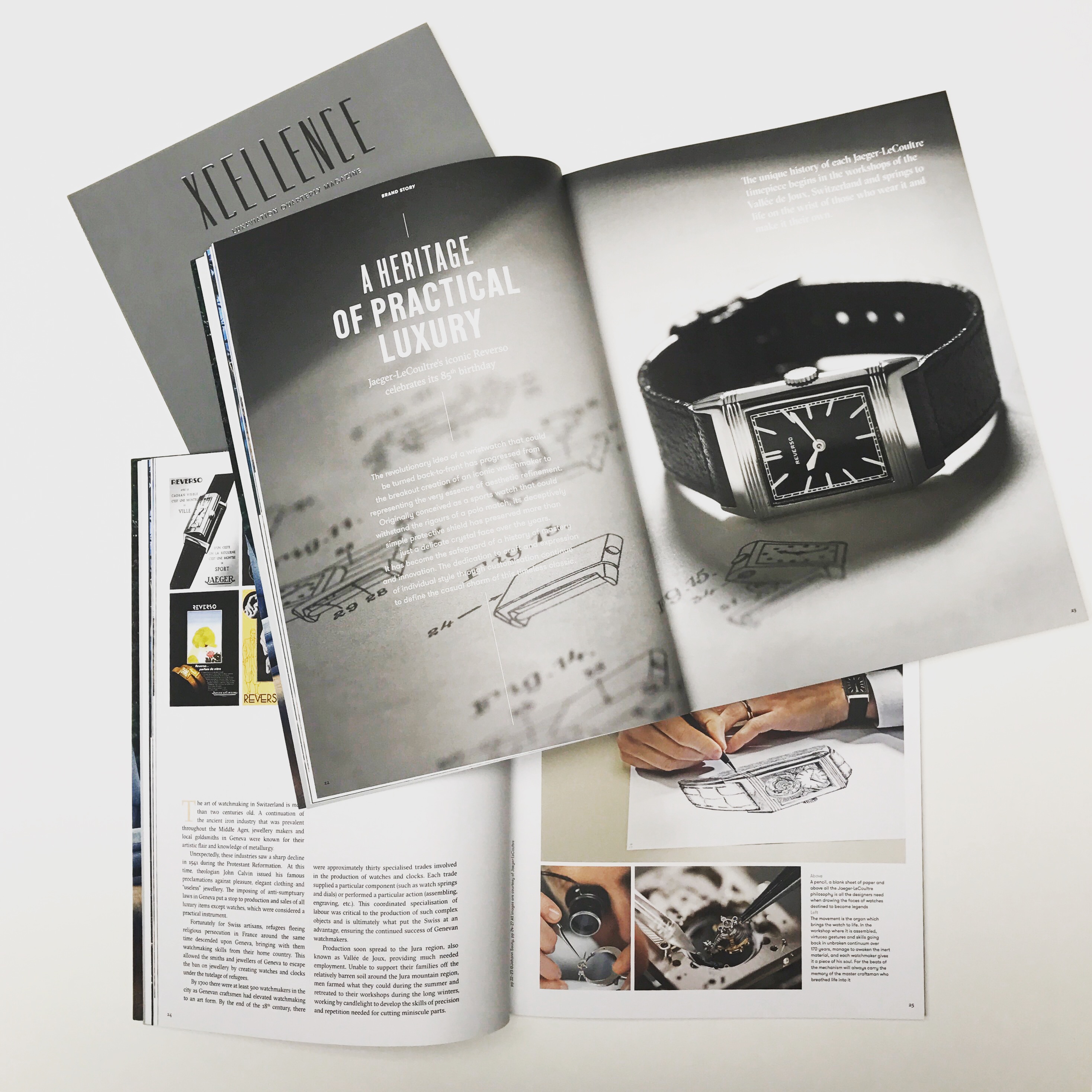
Once the spine exists, copy and photography get chosen to reflect it, not just to illustrate a product or a property. A shot of a hotel lobby means something different when the surrounding text is about craftsmanship versus when it’s about arrival and welcome, same image, different job. This is where a lot of self-produced attempts fall apart: the pictures look polished, but nothing in the pairing tells the reader what the company actually values. Rethink Publishing builds this spine as the first deliverable in any project, before writing or image sourcing begins, precisely because a well-chosen photograph paired with the wrong copy still reads as generic.
This stage is usually shaped by an editorial team working closely with company leadership, not a design freelancer working alone with a brand deck and a deadline. Leadership brings the values and the trigger for wanting the publication in the first place; the editorial team translates that into recurring sections, a voice, and a point of view that can sustain multiple issues. Getting this pairing right is also what separates a magazine from a brochure, which is the real distinction to understand before learning how to publish a magazine that clients actually keep.
Take the Magazine From Concept to Print to Your Client’s Hands
A magazine moves through six stages, strategy, editorial planning, content production, design, print, and delivery, usually over three to five months from first meeting to finished copies on a shelf.
Once the editorial spine is set, production follows a sequence, not a scramble. Each stage produces something concrete before the next one starts, which is a large part of how to start a magazine without losing momentum halfway through.
- Strategy and concept. Confirm the audience, the story angle, and how the publication ties back to the brand’s positioning. This is where the editorial spine gets locked.
- Editorial planning. Build the table of contents, assign features, and schedule interviews or photo shoots. This is the working document everything else gets measured against.
- Content production. Writers draft, photographers shoot, and image rights get cleared. Nothing moves to layout until copy is approved.
- Design and layout. Words and images get paired page by page, with a design direction that matches the brand rather than a generic template.
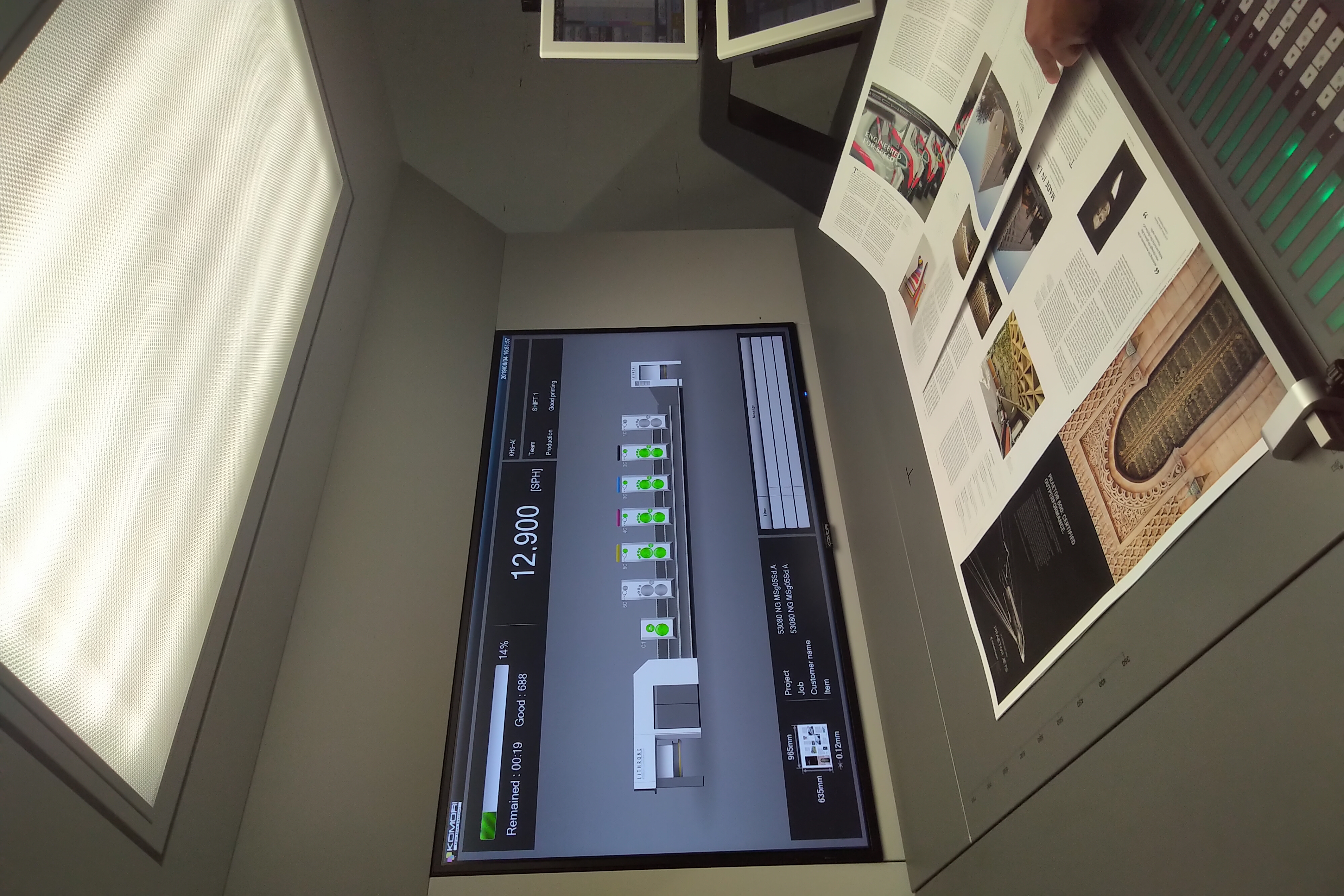
- Print. Paper stock, binding, and color proofing get finalized before the full run goes to press.
- Delivery. Finished copies ship to offices, client mailing lists, events, or wherever the brand needs them in hand.
Who Needs to Be Involved, In-House and Outsourced
In-house, a company typically needs just one project sponsor and access to brand materials, everything else can be outsourced to a publishing partner.
That sponsor is usually a CEO, CMO, or head of brand who signs off on direction and supplies input: brand guidelines, client stories, access to executives for interviews. They are not expected to write copy, manage designers, or negotiate with a printer. Editorial writing, design and layout, and print production are specialist work, and pulling them in-house usually means hiring or managing three separate skill sets the company doesn’t have a permanent need for.
A calm production process looks distinctly unglamorous: a shared timeline with named milestones, two or three proofing rounds where the sponsor reviews and signs off, and zero surprises when the files go to print. If a company only learns about paper stock or binding choices the week before a print deadline, the process was not transparent enough earlier on.
The bigger risk is coordination, not creativity. When a strategy consultant sets direction, a separate agency writes and designs, and a third vendor prints, gaps open at every handoff, timelines slip, the design brief drifts from the original strategy, and no single party owns the outcome. Rethink Publishing runs strategy, editorial, design, and print under one roof specifically to close those gaps, which is the practical case for learning how to publish a magazine through a single accountable partner rather than three.
Common Mistakes to Avoid When Starting a Magazine as a Brand Asset
Most failures in how to start a magazine trace back to one of five mistakes, and every one of them is avoidable with the right process in place before printing starts.
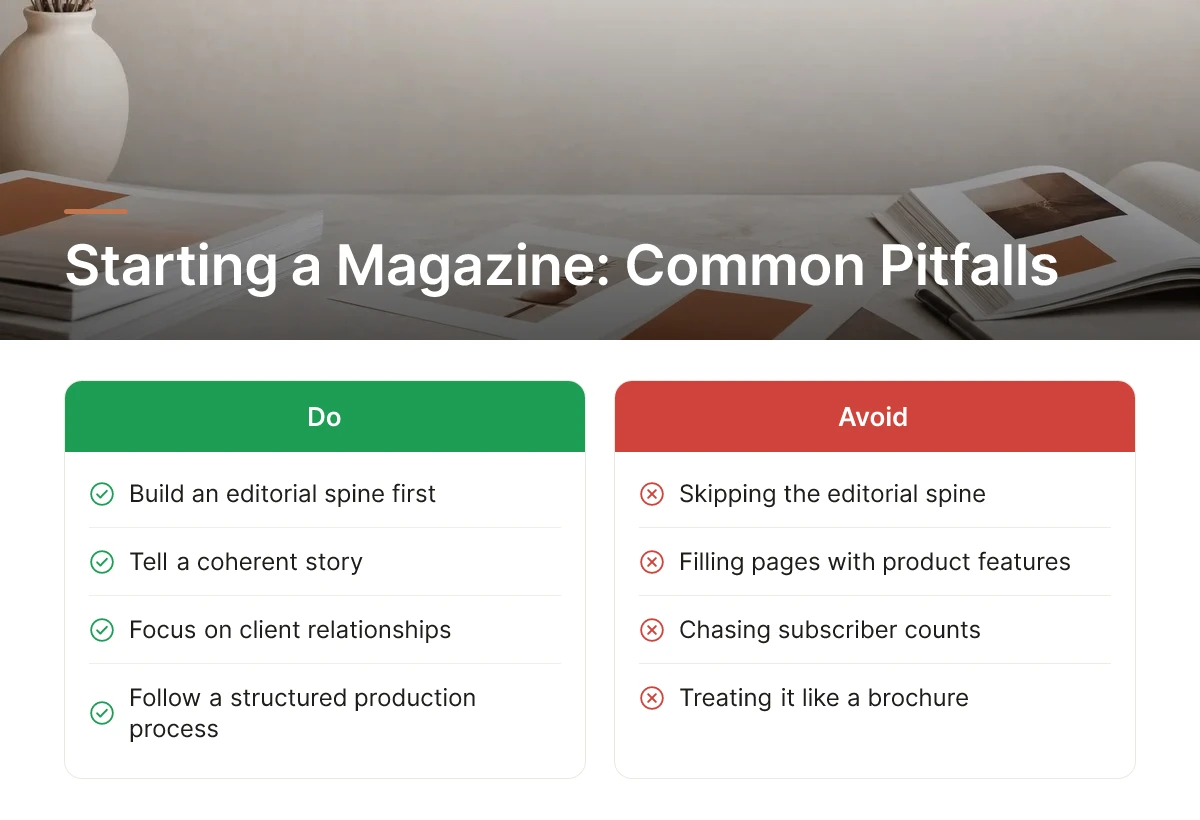
- Building a brochure with a spine. The most common misstep is skipping the editorial spine entirely and filling pages with product features and service descriptions. There’s no story, no reason for a client to open it twice, let alone keep it on a coffee table. A magazine needs a point of view, a brochure just needs a price list.
- Chasing the wrong metrics. Companies coming from a digital marketing background sometimes default to subscriber counts, newsstand sales, or ad revenue as success measures. None of that applies here. The audience is your existing client base and prospects you already know by name, the goal is deepened perception and retention, not circulation growth.
- Printing before the editorial foundation is set. Rushing to production before the content strategy is locked produces a beautifully designed object with nothing to say. Design can’t rescue a magazine that skipped the strategy phase, it just makes the emptiness look expensive.
- Expecting one issue to prove ROI. Print is a long-term investment, not a single-touch campaign. One issue won’t move the needle on its own; brand perception builds across repeated issues that clients see, keep, and associate with quality over time. Judging issue one the way you’d judge a paid ad campaign misreads what the format is for.
- Splitting the work across too many vendors. Hiring a strategy consultant, a freelance writer, a design agency, and a separate printer introduces delays at every handoff and produces a voice that shifts from section to section. A single accountable partner, one that manages strategy, editorial, design, and print production together, is what keeps the publication coherent from first page to last.
Rethink Publishing exists specifically to close that last gap: one team, one editorial spine, one point of accountability from concept through delivery. That’s the difference between a company that publishes one nice-looking issue and a brand that builds a recognizable print presence clients actually wait for.
Frequently Asked Questions
Why do luxury brands choose print magazines over digital-only content?
Print gives a brand a physical presence that digital cannot replicate, it sits on a coffee table or in a waiting room for months, not seconds. A social post disappears in a scroll; a well-made magazine gets picked up again. For brands selling trust and taste rather than a transaction, that lasting physical touchpoint carries weight a banner ad never will.
Should a company’s magazine generate its own revenue?
No, treat it as a brand investment, not a profit center. Chasing ad sales or subscription revenue pulls editorial focus away from the brand story and toward pleasing advertisers. The return shows up in client retention, referrals, and perception, not in a separate revenue line.
What should a company expect from a custom magazine in terms of client perception?
Expect the brand to be associated with culture and authority, not just a product or service. A magazine done properly signals that a company invests in craft the same way it expects its clients to notice craft elsewhere. Done poorly, thin content, stock photography, no editorial spine, it reads as another brochure and undercuts the very perception it was meant to build.
How long does it take to produce a custom magazine from concept to delivery?
Most fully managed projects run several months from strategy to printed delivery, depending on scope and content depth. Editorial direction and image sourcing take longer than most first-time clients expect, rushing that stage is the most common reason a first issue underwhelms.
Is print not dead for brand marketing?
No, premium brands are reinvesting in print precisely because digital saturation has made attention scarce [1]. The global custom publishing market was valued at roughly $2.8 billion in 2023 [1], and physical scarcity is now a strategic asset rather than a liability.
Conclusion
A magazine only works as a brand asset if it starts with an editorial spine, not a template. Get the content strategy and image direction right before a single page is laid out, resist the urge to monetize it, and give the project the months it actually needs rather than compressing it into a quarterly deadline. The brands that get this right end up with something clients keep, not discard.
If you’re weighing whether your brand has enough of a story to fill 80 pages, start there, not with a designer. Visit rethink-publishing.com and ask for a candid read on whether your brand is ready for one.
Recommended Articles
Explore more from our content library: