
A magazine strengthens brand perception when its content follows one editorial spine, a single story thread that decides what gets covered, how it’s written, and how it’s designed, rather than a stack of unrelated marketing sections. That spine gives readers a reason to keep reading page to page instead of skimming for their department’s update, and it’s the difference between a magazine people archive on a coffee table and one that goes straight into recycling. Narrative-driven publication design, in practice, means letting that story decide the layout, not the other way around.
What Does It Mean to Design a Magazine Around a Narrative Spine?
An editorial spine is the single question or theme an entire issue exists to answer, every article, photo, and caption either serves it or gets cut. It’s the filter applied before a single page gets laid out, and it’s what separates narrative-driven publication design from simply arranging content in a nice-looking grid.
Most branded magazines skip this step. They default to a structure that looks more like an internal newsletter: a CEO letter up front, a department update from marketing, a product announcement from sales, a client spotlight wherever there’s room. Nothing connects one section to the next except the fact that they share a cover. A reader flips through looking for the one page relevant to them, then sets it down, because there was never a story to keep reading for. This is particularly relevant for narrative-driven publication design.
How Do Words and Images Work Together to Create a Cohesive Editorial Story?
Once a spine exists, copy and photography stop being separate workstreams and start answering the same question from different angles. A profile might make the argument in words; a full-bleed photograph makes it in a glance on the facing page. At Rethink Publishing, this pairing is deliberate, image sourcing and layout decisions happen after the editorial direction is set, not before, so a picture never just “fills space” next to text that’s making an unrelated point.
Why Does Starting With an Editorial Spine Matter More Than Starting With Design?
The spine decides which stories get commissioned, which get killed, and in what order sections run, decisions that are impossible to make well once layout has already started. Design that comes first tends to produce a magazine that looks polished page by page but reads like nothing when taken as a whole. Design that comes second, after the story is locked, gives every layout choice a reason to exist.
Consider an issue built around the theme of craft. That spine would include founder profiles that show hands-on process, photo essays of materials and workshops, and interviews with people who make things slowly and deliberately. It would reject a quarterly earnings recap or a generic “meet the team” spread, even if both are relevant to the brand, because relevance to the company isn’t the same as relevance to the spine. That discipline, more than any font choice or paper stock, is what makes a magazine feel like one continuous argument instead of a folder of separate updates stapled together.
How Do You Build an Editorial Story That Strengthens Brand Perception?
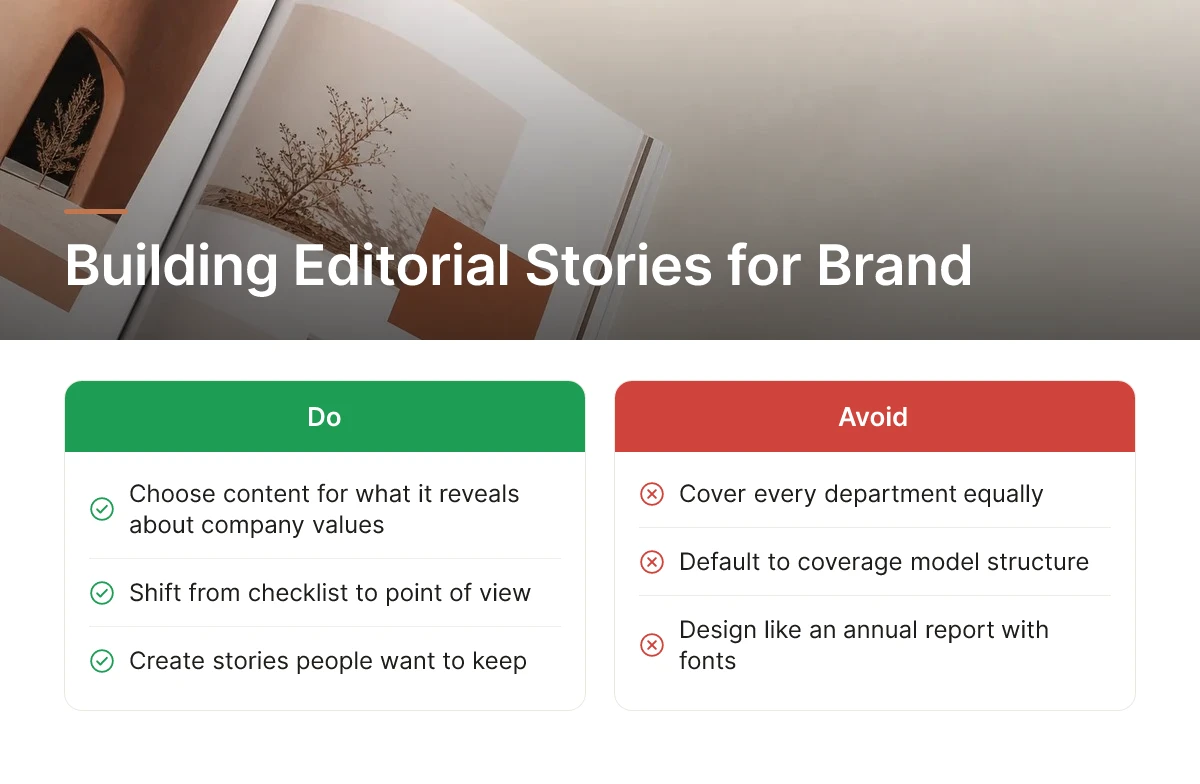
A strong editorial story comes from choosing content for what it reveals about the company’s values, not from covering every department equally. That single shift, from checklist to point of view, is what separates narrative-driven publication design from a glorified internal newsletter.
Most companies default to a coverage model: a feature on the CEO, a nod to the design team, a client testimonial, a note about sustainability. Each section exists because someone felt that department deserved airtime. The result reads like an annual report with better fonts. Nobody keeps it. When considering narrative-driven publication design, this point stands out.
What Makes a Magazine Feel Like a Keepsake Rather Than a Disposable Marketing Piece?
A keepsake earns a second read; a marketing piece gets scanned once and recycled. Three things separate the two: physical quality that holds up on a coffee table for years, storytelling honest enough to feel like journalism rather than promotion, and content dense enough that a reader finds something new on the third flip-through.
Paper stock and binding matter here, but they’re not the whole answer. A beautifully printed piece with hollow content is still disposable, it just takes longer to throw away. The content itself has to reward attention the way a well-edited magazine does, with pacing, tension, and a payoff.
How Do You Choose Stories and Content That Align With Your Brand’s Values?
The editorial angle rarely comes from a marketing brief, it comes from talking to the people closest to the actual work. A brief describes how a company wants to be perceived. The people doing the work describe what actually happens, and that gap is usually where the real story lives.
At Rethink Publishing, this is the first phase of every project: before layout or design direction, the editorial team interviews the founders, tradespeople, chefs, architects, or relationship managers who touch the brand daily, then builds the spine of the publication around what surfaces. Sometimes the strongest material isn’t the polished success story, it’s the failed prototype that led to the breakthrough, or the client relationship that started badly and turned into the firm’s best advocate. For those exploring narrative-driven publication design, this matters.
That honesty is what makes the difference. A story that only flatters the company reads as PR, and readers who’ve seen enough corporate content spot it immediately. A story with real texture, including the parts that aren’t flattering, builds the trust that a glossy brochure never does.
What’s the Difference Between Narrative-Driven Magazine Design and Standard Publication Layout?
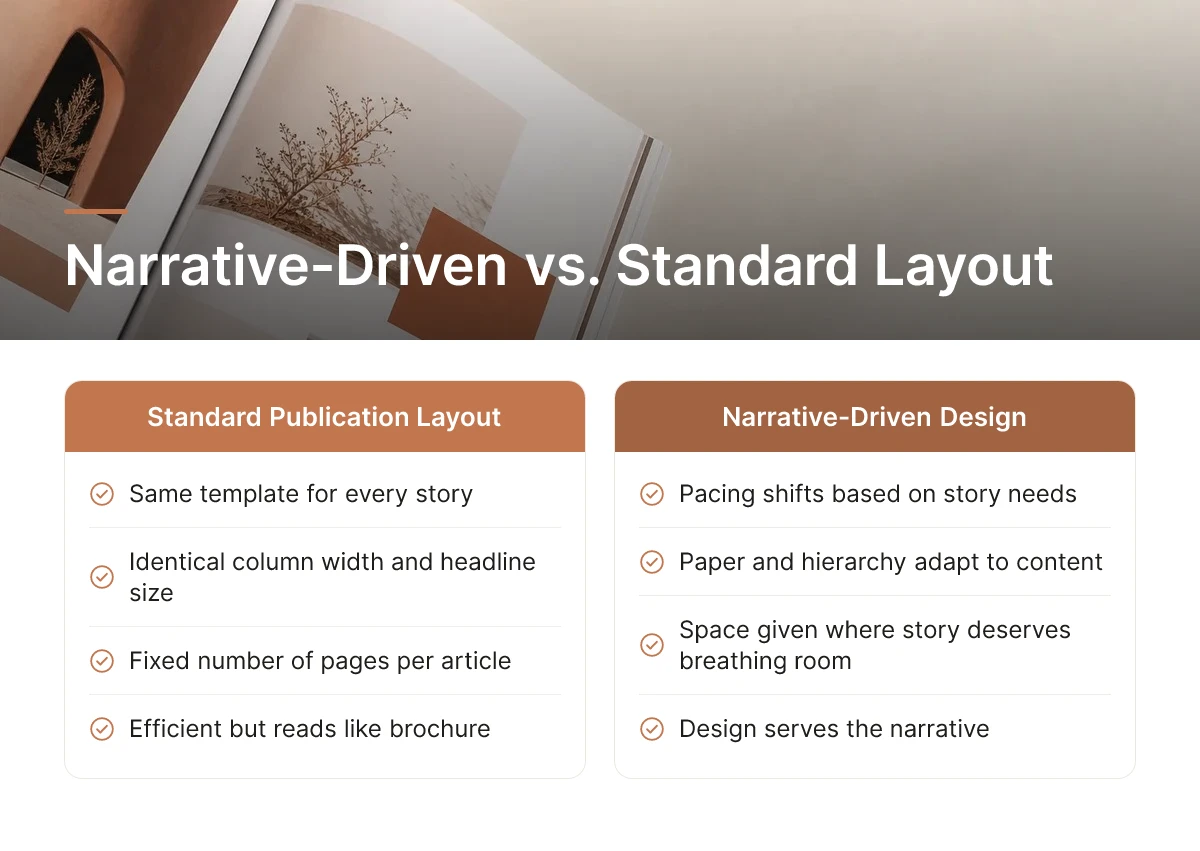
Standard layout applies the same template to every story regardless of content; narrative-driven publication design lets pacing, paper, and hierarchy shift based on what each story actually needs.
How Does Intentional Design improve a Magazine Beyond Typical Corporate Publications?
A template-driven publication treats every article the same way. Same column width, same headline size, same number of pages, whether the story is a 200-word update or a feature that deserves room to breathe. That approach is efficient, and it’s exactly why so much corporate collateral reads like a brochure someone stretched into magazine form.
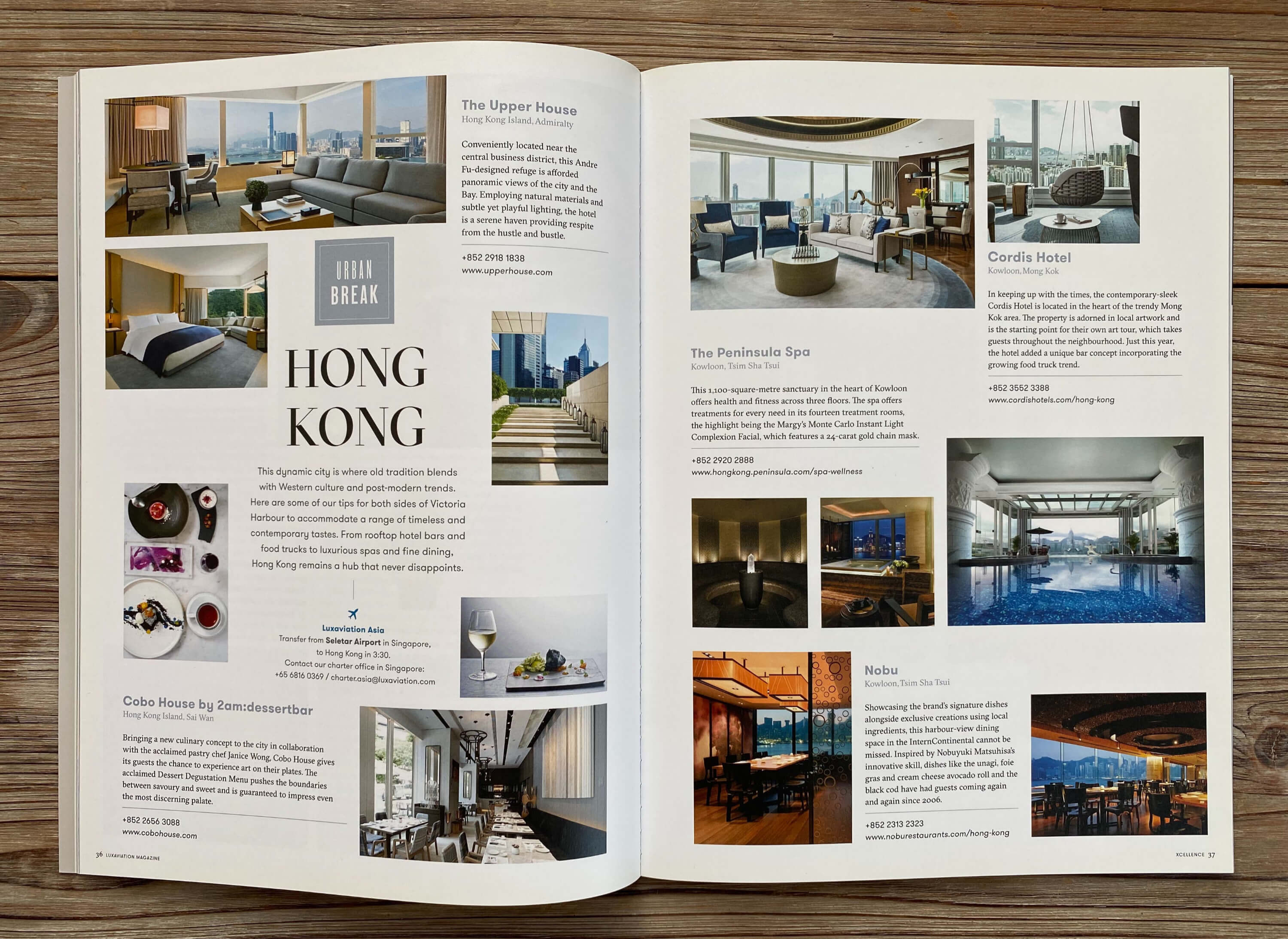
A magazine built around a clear editorial spine works the opposite way. The designer decides, story by story, how much space an idea earns. A profile of a founder might open with a two-page spread and a single striking image. A quick industry update might run as a half-page sidebar with tight copy. That variation isn’t decoration, it’s the design telling the reader what matters before they’ve read a word.
What Role Does Paper Choice, Typography, and Visual Hierarchy Play in Telling Your Story?
Paper stock is a signal, not a footnote. A heavier, textured stock tells the reader this object is meant to last, it sits differently in the hand than a lightweight sheet that feels disposable the moment it’s printed. Clients who commission a coffee-table book or a print magazine as a brand asset are choosing paper the way they’d choose materials for a flagship retail space: it has to match the level of the story being told. This directly impacts narrative-driven publication design outcomes.
Typography and white space work as pacing tools. A long-form feature needs generous margins, larger line spacing, and a typeface built for extended reading, the page has to slow the reader down. A sidebar or quick-hit list needs tighter setting and less air, because it’s meant to move fast. That contrast between slow pages and quick ones is what keeps a reader moving through an entire issue instead of stopping after the first spread.
Visual hierarchy is the clearest tell of what a brand actually values. Give a story a full spread and you’re saying it matters. Shrink it to a quarter page and you’re saying it’s supporting material. Standard layout skips that decision entirely and gives everything equal weight, which, intentionally or not, tells the reader nothing is more important than anything else.
This is the layer of decision-making Rethink Publishing builds first, before a single page is designed: which stories carry the issue, and which pages need to slow a reader down versus move them forward.
How Do You Measure Whether a Narrative-Driven Magazine Actually Works as a Brand Asset?
Judge it the way you’d judge a relationship, not a campaign: by whether people remember it, keep it, and ask for more of it. A magazine built through narrative-driven publication design isn’t meant to generate a click, it’s meant to generate a memory, and memory has its own set of signals.
What Metrics Matter When Evaluating a Magazine’s Impact on Brand Perception and Reader Engagement?
Forget click-through rates and conversion percentages, a printed keepsake was never built to chase either. The signals that actually matter are conversational and physical: does a client bring up a specific story from the issue three months later? Does the receptionist mention that a visitor picked it up off the table and started reading? Do people ask if there’s a next issue before you’ve announced one? This is particularly relevant for narrative-driven publication design.
Those moments are data. They tell you the editorial spine held together well enough that someone absorbed it and carried it back into a conversation with you. A brochure rarely earns that. A magazine, done properly, does.
How Long Does a Well-Designed Magazine Stay in People’s Hands and Homes?
A well-made print magazine can stay visible on a desk, coffee table, or waiting room for months or years, a digital post disappears from a feed within a day or two [1]. That gap in shelf life is the entire economic case for print as a brand investment rather than a marketing expense.
Every week the issue sits out, it’s doing quiet work, reminding a client of the relationship, prompting a partner to flip through it before a meeting, sitting in a stack that a new hire eventually picks up out of curiosity. None of that shows up in an analytics dashboard, which is exactly why the wrong yardstick, impressions, opens, dwell time, misses what the object is actually doing.
The measurement doesn’t require a survey platform. Ask recipients directly, in the natural course of business, whether they’ve looked at it. Track who requests extra copies for their own clients or offices, a reprint request is one of the clearest signals a magazine earned its keep. Rethink Publishing hears this from clients across hospitality and design sectors: the second-issue conversation almost always starts with someone asking who else can get a copy of the first. When considering narrative-driven publication design, this point stands out.
What Does the Process Look Like From Editorial Concept to Printed Keepsake?
The process runs in five stages: strategy and spine definition, editorial curation and interviews, design and layout, print production, and distribution, each one building on client sign-off from the last.
Strategy comes first because everything else depends on it. Before a single photo is chosen, the editorial spine gets defined: what story the publication tells, which sections carry it, and how it ties back to brand positioning. Skip this step or rush it, and narrative-driven publication design collapses into a pretty layout with no argument underneath it. Editorial curation follows, interviews, photography direction, and copywriting all built around that spine, not around whatever content happens to be on hand. Design and layout translate the words into pages, print production turns pages into a physical object, and distribution puts it in the hands of the people it was built for.
Who Should Be Involved in Creating a Custom Magazine, and What Does a Transparent Design Process Look Like?
The client side needs someone with real authority over brand voice, a CEO, CMO, or head of brand who can make a final call, not a marketing coordinator relaying decisions from a committee. Publications that lose their spine midway through production usually lose it because approvals got diffused across too many people with partial context. One decision-maker keeps the story consistent from the first strategy conversation to the final printed page.
A transparent process means the client sees shared drafts and signs off at defined checkpoints, after the spine is set, after the editorial draft, after the design pass, rather than waiting for one big reveal at the end. At Rethink Publishing, that structure is deliberate: strategy, writing, layout, image sourcing, and print production each get reviewed with the client before moving forward, so nothing arrives as a surprise at the printer.
How Much Time Should You Budget for Strategy, Editorial Curation, Design, and Production?
Strategy takes the longest stretch up front, because getting the editorial spine wrong is expensive to fix later, rushing it to save a few weeks tends to cost more time downstream in revisions. Editorial curation and interviews run next and depend on subject availability more than anything else. Design and layout have more predictable timelines once content is locked, and print production carries fixed lead times set by press schedules and paper stock availability, not by how quickly a team works. Budget the calendar accordingly: generous time at the start, tighter and more fixed windows toward the end. For those exploring narrative-driven publication design, this matters.
Frequently Asked Questions
Does every company need a narrative-driven magazine?
No. A print magazine only makes sense if you have real stories worth telling and a client relationship worth deepening. If your brand is transactional, or you’re chasing a trend rather than solving a retention or perception problem, save the budget for something else. This format works best for companies that already invest in relationships, hospitality, real estate, law, design, private clubs.
How is a custom magazine different from a company brochure?
A brochure sells a product; a magazine earns attention with editorial content readers choose to keep. Brochures get scanned once and discarded. A well-built magazine has an editorial spine, features, profiles, photography, that gives people a reason to sit with it, then leave it on a coffee table instead of a recycling bin.
Who should write the stories in a brand magazine, internal staff or outside editorial help?
Outside editorial help, in most cases, because writing for a magazine is a different skill than writing marketing copy. Internal teams know the brand but often default to promotional language that reads flat in an editorial format. An experienced editorial team knows how to interview subjects, structure a feature, and pace a full issue, something a marketing department rarely has time to develop in-house.
Can a narrative-driven magazine work for a B2B or technical company?
Yes, technical companies often have some of the most compelling stories, precisely because they’re rarely told well. Rethink Publishing has produced work for sectors including cybersecurity, where editorial storytelling made complex, trust-dependent services feel human and credible to a skeptical buyer. This directly impacts narrative-driven publication design outcomes.
Conclusion
A magazine only earns its place on a coffee table if the editorial spine comes before the design, if the stories are told by people who know how to report and pace them, and if the brand is honest about whether this format fits its audience at all. Skip any of those steps and you get an expensive brochure. Get them right and you get an asset clients keep, reread, and pass to colleagues.
If you’re weighing whether this is right for your brand, start by listing five stories about your clients or your work that no one has told yet. That list will tell you more than any pitch deck.
Sources & References
Recommended Articles
Explore more from our content library: