
Understanding how to create a brand magazine is essential. A brand magazine is a strategic, design-led publication a company produces to deepen relationships with clients and prospects, not to sell directly, but to earn attention through genuine editorial value. With a small in-house team, you create one by defining a clear editorial spine (a point of view your content consistently serves), setting a premium design direction, and running a repeatable production process, strategy, editorial, design, print, distribution, often leaning on an experienced print partner for the parts your team doesn’t have bandwidth or craft skill for. Done well, it becomes something recipients keep, not discard.
What You’ll Need Before You Create a Brand Magazine
Before you touch a single layout template, you need three things in place: a clear editorial point of view, buy-in on who owns the project, and honesty about whether you need this at all.
How Is a Brand Magazine Different From a Brochure or Newsletter?
A brochure sells. A newsletter reports. A brand magazine does neither, it holds a point of view and earns the reader’s attention through editorial value, not a pitch. A brochure exists to move someone toward a transaction. A newsletter exists to keep people informed. A magazine exists because it has something to say, a perspective on an industry, a set of stories worth telling on their own terms, independent of whatever you’re currently selling. That distinction sounds subtle. It isn’t. It determines everything from the writing to the paper stock.
Honestly? Not every company needs one. If what you actually need is lead-generation collateral, something with a call to action, a discount code, a QR code to a landing page, save your budget and build a better brochure. A brand magazine is the wrong tool for that job, and a good print partner will tell you so before taking your money.
What Industries and Business Types Benefit Most?
This format earns its keep wherever relationship depth matters more than transaction volume, which is a wider list than most executives assume. Professional services firms use it to demonstrate expertise without sounding like a pitch deck. Hospitality groups use it to extend the feeling of a property into a client’s living room long after checkout. Manufacturing companies use it to put craft and process on display for buyers who never see the factory floor. Even cybersecurity firms, an industry with no obvious print instinct, have found that a well-made magazine builds trust with clients who are otherwise buying invisible, technical work on faith.
What connects these businesses isn’t sector. It’s a client relationship long enough and valuable enough to justify an asset that outlasts a single sales cycle.
On the team side, you need three roles filled before you start, even if one person wears two hats: a decision-maker who owns the vision and has final say on tone and direction; someone inside the company who can gather stories and open doors to subject matter experts, clients, or leadership; and a production partner who handles editorial, design, and print execution. Figuring out how to create a brand magazine mostly comes down to getting that third role right, Rethink Publishing exists specifically to be that partner, managing strategy through delivery so the internal team only has to supply access and judgment, not craft skill.
Last expectation to set: this is a print-first, long-term brand investment, not a campaign asset with a shelf life measured in weeks.
Define the Strategy Behind How to Create a Brand Magazine That Deepens Client Relationships
The strategy behind how to create a brand magazine starts with a decision about purpose, not paper stock: who should feel differently about your company after reading it, and what should they do next.
How Does a Curated Print Experience Build Perception and Loyalty in Ways Digital Cannot?
A printed magazine works on perception because it occupies physical space and competes with nothing else while it’s being read. A LinkedIn post or email newsletter fights for attention against dozens of other tabs and a notification every few seconds. A magazine sitting on a reception desk or a coffee table has no algorithm deciding whether it gets seen, it just sits there, credible, until someone picks it up [4].
That permanence changes how the content lands. Digital magazine readership is real, 42% of US adults reported reading at least one digital magazine issue in a recent 30-day period [4], but a browser tab closes and the impression closes with it. A well-made print piece stays on the table for months, gets picked up by a second and third person, and keeps doing its job long after the marketing budget that funded it has moved to the next quarter.
What Role Does Editorial Curation Play in Making the Magazine a Real Marketing Asset?
Editorial curation is the discipline of choosing what earns a page and what doesn’t, and it’s the difference between a magazine and a brochure with a spine. The test isn’t “does this promote us,” it’s “does this reflect the reader’s world back at them.” A law firm’s magazine that runs a feature on a client’s industry challenges, written with genuine reporting, earns more trust than four pages about the firm’s own services ever could.
This curation has to happen before layout starts. Get it wrong and no amount of design polish fixes a magazine that reads like a catalog.
- Set the objective first, deepen relationships with a defined list of key accounts, give the sales team a credible leave-behind, or reinforce a positioning shift ahead of a launch.
- Decide who’s in the room: the CEO or head of brand who owns positioning, the person managing top client relationships, and whoever runs sales conversations day to day.
- Agree on the editorial spine, the two or three recurring themes or sections that will hold every future issue together, before anyone sources an image or drafts a layout.
This is the stage where Rethink Publishing starts every engagement: strategy and editorial direction before a single page gets designed, because a magazine built on a clear spine is the only kind that keeps earning its keep on a client’s coffee table.
Build the Editorial Spine and Design Direction
An editorial spine is the recurring point of view, themes, and section architecture that hold every issue together, skip it, and you get a glossy brochure with page numbers.
What Is an Editorial Spine, and Why Does It Matter Before You Design Anything?
Before a single layout gets drawn, someone has to answer a harder question: what does this publication believe, and what will it always come back to? A law firm’s magazine might return to themes of stewardship and long-term client relationships in every issue. A hospitality brand’s might circle back to place, craft, and the people behind a property. That recurring thread is the spine, and it’s what separates a magazine from a seasonal marketing pamphlet with a cover.
Companies that skip this step usually end up with a first issue that reads like six unrelated brochures stapled together, a case study here, a product update there, no throughline connecting them. That’s the most common failure point in how to create a brand magazine: teams jump to design before they’ve decided what the publication is actually for. The spine has to exist first, on paper, as a one-page document naming the point of view, three to five recurring themes, and the sections that will repeat issue after issue.
How Do You Design a Magazine That Feels Like a Keepsake Rather Than Promotional Material?
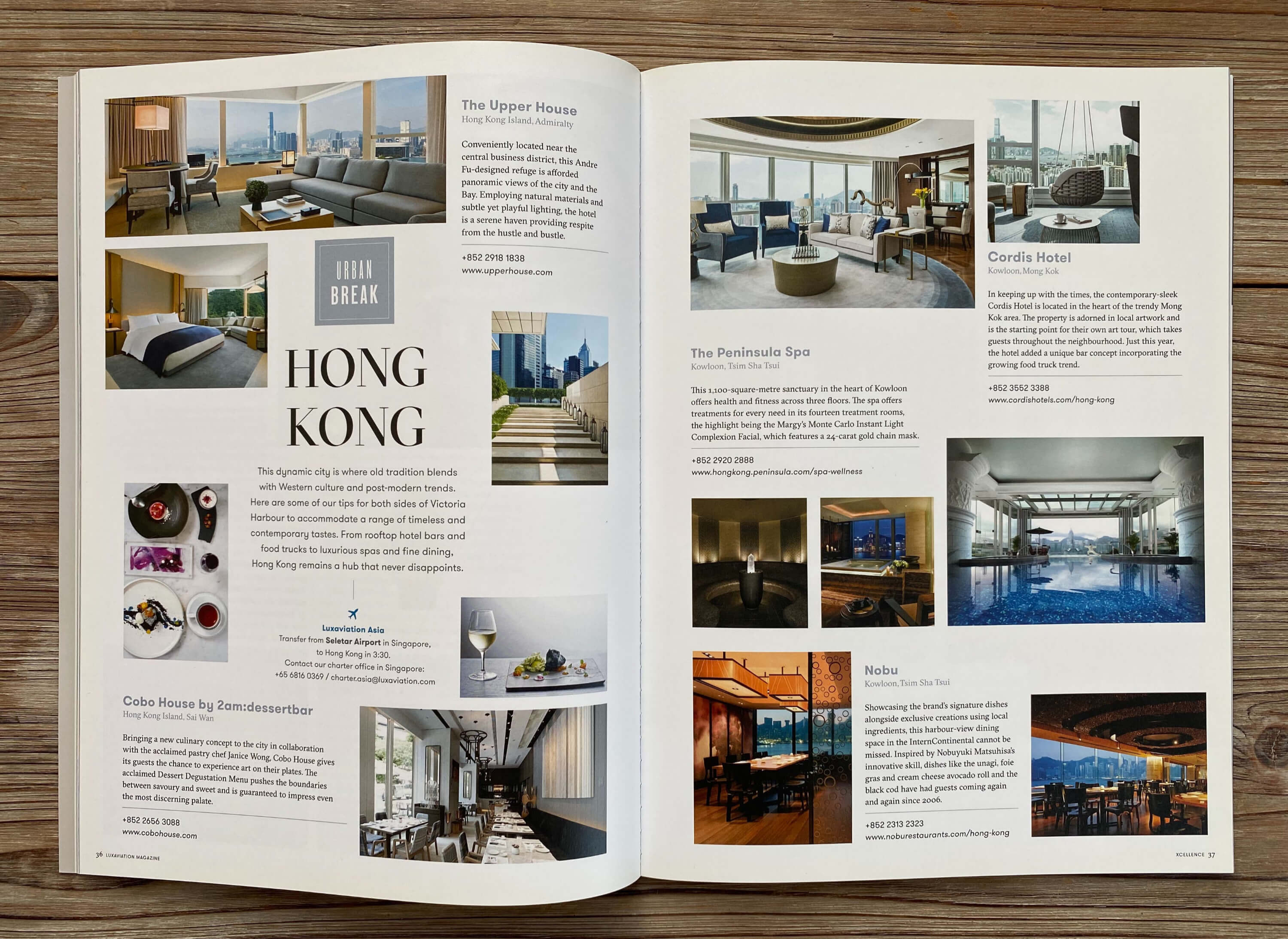
Design-led means every visual decision, typography, paper stock, photography direction, layout rhythm, gets chosen to support the spine, not to fill space. Structurally, that spine translates into a magazine built around recurring sections, a feature well for the longest and most ambitious stories, and a back-of-book for shorter, lighter content readers return to issue after issue. How you structure a magazine around that architecture determines whether it reads as a considered publication or a pile of loosely themed pages.
- Set a grid system early and hold to it, consistent margins and column structures signal editorial discipline the way a wandering layout never will.
- Use white space deliberately. Crowded pages read as anxious; generous margins read as confidence, the same way premium print advertising has always used restraint to suggest quality.
- Commission original photography where possible. Stock imagery is the fastest way to make an otherwise strong publication look interchangeable with a competitor’s.
- Choose paper stock that adds weight, literally, a heavier sheet changes how a reader handles and remembers the piece long after the meeting ends.
Most in-house marketing teams can handle the spine document and section planning, that’s brand knowledge, not design craft. Where they typically need outside expertise is the layout system itself: grid construction, typographic pairing, and image direction that reads as intentional rather than assembled in a template. This is the gap Rethink Publishing exists to close, pairing the editorial spine with a design team that has built this rhythm across 80-plus magazines, so the result feels like something a client keeps rather than recycles.
Run the End-to-End Production Process, From Strategy to Delivery
A brand magazine moves through six stages in sequence: strategy and editorial planning, content gathering and writing, design and layout, proofing, print production, and distribution. Skip a stage or run them out of order, and the delays compound.
Strategy comes first for a reason. Before anyone writes a headline, someone has to decide what the magazine is for, who reads it, and what story runs across every issue. That editorial spine, the throughline that connects issue one to issue four, is what separates a magazine from a glorified brochure. Once the spine exists, content gathering starts: interviews, photography, client stories, staff profiles. Writing and layout follow in parallel, not sequence, because a designer needs to see copy length before building spreads, and a writer needs to know the layout grid before finalizing word counts. Proofing happens twice at minimum, once for editorial accuracy, once after layout, because a single typo on a printed page can’t be fixed with a quick edit.
Who Should Be Involved, and What Should You Outsource?
In-house teams add the most value on relationships, story sourcing, and brand knowledge, the things outsiders can’t fake, no matter how skilled they are.
Your marketing team knows which clients have a story worth telling, which partnerships matter, and which brand details a freelance writer would get wrong. Keep that part in-house. But editorial craft, design systems, and print production expertise are specialized skills that take years to build, not weeks. A marketing coordinator moonlighting as an art director produces something that reads as amateur, and a self-produced print piece that looks “corporate” instead of editorial undermines the exact credibility the magazine is supposed to build. This is the gap a studio like Rethink Publishing exists to close, handling writing, layout, image rights, printing, and quality control end-to-end, so the in-house team supplies substance and the outside team supplies craft. Figuring out how to create a brand magazine well usually comes down to getting this division of labor right from the start.
How Long Does It Take From Concept to Printed Copies?
Most brand magazines take several months from initial strategy conversation to printed copies in hand, and rushing any single stage tends to cost more time later than it saves.
Three things cause delays more than anything else. Approval cycles, too many stakeholders reviewing copy and layout, stretch timelines fastest, especially at organizations without a single decision-maker signed off on final say. Content collection is the second bottleneck: waiting on client testimonials, executive interviews, or photography holds up design work that’s otherwise ready to start. Print scheduling is the third, press time books weeks out, and a missed slot means waiting for the next opening. Building buffer into the calendar around these three points keeps a launch date realistic instead of aspirational.
Distribution deserves the same planning as production, not an afterthought once copies arrive. Owned events, direct mail to top-tier accounts, reception and desk placement, and partner handoff each reach a different segment of the audience, and deciding which channels matter before print run size is finalized avoids over- or under-printing. Budget planning follows the same logic: cost scales with print quality, run size, and finishing (foil stamping, matte lamination, hardcover binding), so treating the investment as tiered, budget-friendly, mid-range, premium, lets a brand match spend to the audience the magazine is actually built for.
Verify the Outcomes: Why Print Works and What to Measure
Print works because it does not compete with 40 open tabs, a recipient holds one object, gives it full attention, and reads the weight of paper stock as a signal of how much the brand invested in the relationship.
Digital content is cheap to produce and easy to ignore; that is precisely why it fails at the job a brand magazine is built to do. A social post disappears in a day. An email gets archived unread. A printed magazine sits on a desk, a coffee table, or a reception counter for months, and every time someone picks it up, the brand gets another few minutes of undivided attention. That tactile permanence is also a status signal, a beautifully produced, design-led publication tells a client or partner that the relationship is worth real resources, not just a template and a send button.
What ROI and Engagement Signals Should a Brand Magazine Deliver?
Skip vanity metrics and watch what happens in physical spaces and real conversations instead. Track how long copies stay visible on desks and in waiting rooms before they get filed away, weeks, not minutes, is the benchmark that matters. Watch for recipients requesting extra copies to hand to colleagues or clients of their own; that request is a stronger signal than any click-through rate. Notice whether the magazine becomes a talking point in meetings, opening conversations that a brochure never would. And where possible, compare renewal or retention patterns among the client segment that receives the magazine against those who don’t, a durable physical touchpoint tends to correlate with longer, warmer relationships.
How Does a Print Magazine Stay Valuable as a Long-Term Brand Investment?
A single issue is a project; a magazine is a program, and the difference shows up over years, not months. Consistency of cadence, quarterly, biannual, annual, whatever fits the brand, trains recipients to expect and anticipate the next issue. The editorial spine should evolve issue to issue, following where the brand and its audience are headed, rather than repeating the same format indefinitely. Over three or four years, a shelf of back issues becomes an archive with its own value: a documented history of the brand’s thinking that a website redesign can never fully replace.
Most failures in how to create a brand magazine trace back to a handful of avoidable mistakes:
- Treating it as a brochure with more pages, rather than a genuine editorial product with a point of view
- Skipping the editorial spine entirely and filling pages with whatever content is on hand
- Rushing design and layout to hit a deadline, which shows immediately in the finished object
- Distributing without a defined recipient list or clear purpose, so the magazine reaches no one who matters
If the case for print is clear and the next question is execution, Rethink Publishing manages the entire process, editorial direction, writing, design, image sourcing, print production, and delivery, so the only decision left is to start.

Frequently Asked Questions
Can a small in-house team produce a brand magazine without a large publishing department?
No, not without help, and that’s fine. Most brand leaders who want a magazine don’t have an editor, art director, and print manager on staff, which is why fully managed studios exist. Rethink Publishing handles writing, layout, image sourcing, and print production end to end, so a marketing team of one or two people can still commission a magazine that reads like it came from a real publishing house.
What’s the difference between a brand magazine and a customer newsletter?
A newsletter reports updates; a magazine tells stories with an editorial point of view. A newsletter is transactional and often disposable, while a magazine has a defined editorial spine, considered design, and a reason someone keeps it on a coffee table instead of recycling it.
How often should a company publish a brand magazine, quarterly, annually, or another cadence?
Most companies do well with annual or biannual issues rather than a fixed quarterly schedule. Print’s strength is permanence, not speed, publishing less often but with more editorial depth keeps each issue feeling like an event worth anticipating, rather than a recurring obligation that dilutes quality over time.
Do digital tools or templates work for a brand magazine, or does it need custom design?
Templates can produce a magazine-shaped document, but they rarely produce one people keep. Learning how to design a magazine layout that feels editorial, not templated, usually means custom typography, intentional pairing of copy and imagery, and print production expertise most in-house teams don’t have. A generic layout tool can format pages; it can’t build the editorial spine that makes a reader hold onto the issue.
How do you decide who receives the printed magazine?
Start with the relationships that matter most, key clients, referral partners, prospects mid-decision, and top employees. A brand magazine works best as a targeted, high-touch asset sent to a curated list, not a mass mailer, since its value comes from feeling personal and deliberate rather than broadly distributed.
Conclusion
A brand magazine earns its place on a coffee table by doing three things well: starting with an editorial spine instead of a content calendar, pairing writing and design with the same discipline a commercial magazine would demand, and reaching a curated list of people who actually shape the business’s future. Skip any one of those and the result reads like a brochure with better paper.
If you’re weighing whether this is worth pursuing, start smaller than you think: draft the editorial spine for a single issue, three to five story angles tied to your brand’s actual point of view, before committing to design or print. That exercise alone will tell you whether the idea has enough substance to become something readers keep.
Sources & References
Recommended Articles
Explore more from our content library: