
Understanding justify print magazine budget is essential. Understanding how to justify a print magazine budget is essential. A print magazine justifies its budget when your board sees it as a durable brand asset rather than a recurring marketing expense. Unlike a social post or an email, a well-made magazine stays on a desk or coffee table for months, gets picked up repeatedly, and signals quality the way a flimsy brochure or a digital-only presence cannot. The case for budget isn’t built on one metric, it’s built on showing the board what print does that nothing else in the marketing mix does, and why that earns a place in the long-term brand budget rather than the quarterly spend review.
Prerequisites: What to Gather Before You Justify a Print Magazine Budget
Before you justify a print magazine budget, assemble four things: a defined audience, a clear job for the magazine, a baseline of current marketing activity, and a list of brand assets it could reinforce. This is particularly relevant for justify print magazine budget.
Skipping this groundwork is the most common reason a budget pitch stalls. A board doesn’t reject a magazine because print is outdated, it rejects a pitch that can’t answer who the magazine serves and why that audience needs it. For a structured approach to building the request itself, the Institute of Museum and Library Services’ guidance on preparing a budget and budget justification offers a useful framework for tying each line item to a stated goal, a discipline that applies just as well to a corporate board deck as it does to a grant application.
Know who the magazine is actually for
A magazine built for existing clients looks different from one built to win new business or recognize employees. Decide this first, because it changes everything downstream, the editorial spine, the print run, the distribution plan, even the cover.
- List every candidate audience: clients, prospects, referral partners, employees, industry peers.
- Rank them by who drives the most revenue or influence over your brand’s reputation.
- Pick one primary audience. A magazine trying to serve everyone usually serves no one well.
Define the job other channels aren’t doing
Email and social media are fast and cheap, but they’re also disposable, a newsletter gets fifteen seconds of attention before the next one arrives. Write down, plainly, what you need the magazine to accomplish that a LinkedIn post or email campaign structurally cannot: sustained desk presence, a physical object clients pass to colleagues, a credibility signal that a PDF can’t replicate.
Pull your current marketing baseline
Gather recent examples of your email newsletters, social content, and digital collateral. You’ll need this material later to show the board a real comparison, not a hypothetical one, between what digital channels already deliver and what a print piece would add.
Inventory existing brand assets
Note where a magazine could reinforce work you’ve already paid for: client gifting programs, flagship events, sales collateral, anniversary campaigns. A magazine that extends an existing investment is an easier approval than one that stands alone.
Step 1: Frame the Print Magazine as a Brand Investment, Not a Cost
To justify a print magazine budget, stop presenting it as a line item and start presenting it the way the board already evaluates office design, flagship events, or a headquarters lobby, by its lasting presence, not its monthly return.
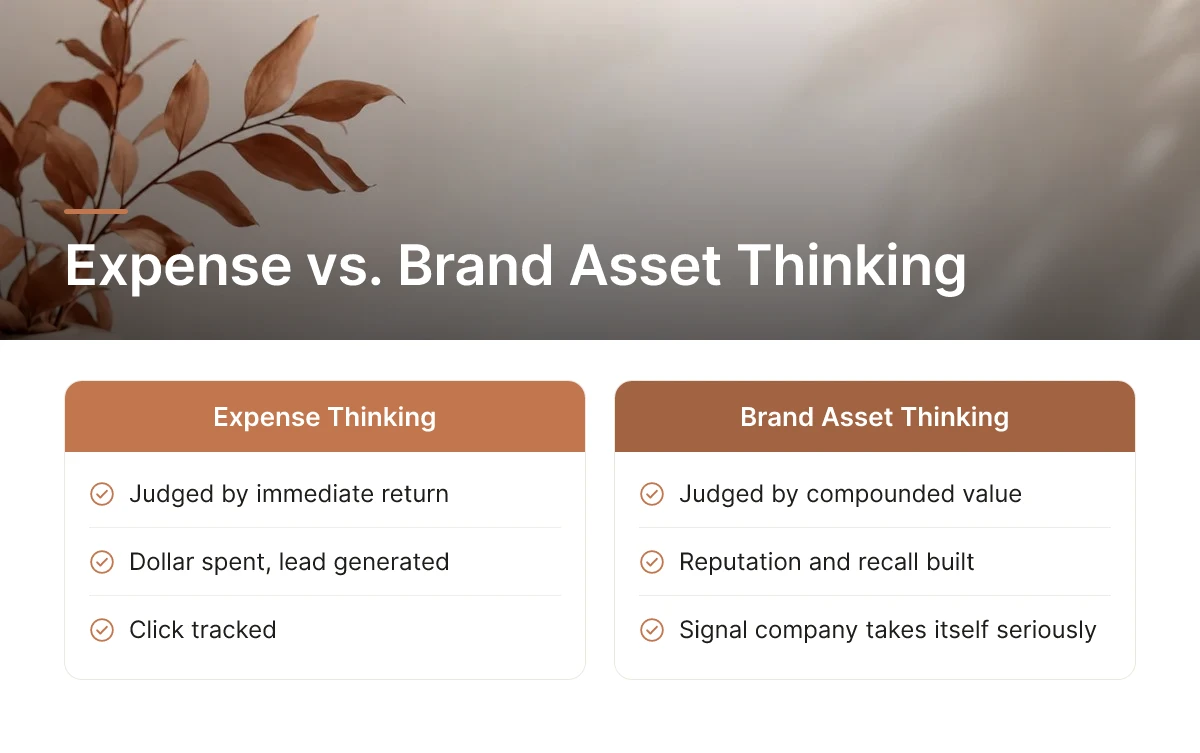
Expense Thinking vs. Long-Term Brand Asset Thinking
An expense gets judged by what it returns immediately: a dollar spent, a lead generated, a click tracked. A brand asset gets judged by what it compounds over years, reputation, recall, and the quiet signal that a company takes itself seriously.
A printed magazine doesn’t behave like a paid ad campaign. It sits on a coffee table for months, gets picked up more than once, and gets handed to a colleague or client who was never on your email list. None of that shows up in a weekly performance report, which is exactly why boards tend to misclassify it as discretionary spend rather than durable brand equity. The fix isn’t a better spreadsheet, it’s a different question. Instead of “what did this cost per lead,” ask “what does this signal about us, every time someone picks it up, for as long as they keep it.” This reframing is often the real turning point when you try to justify print magazine budget requests to a finance-minded board.
Why Premium Print Still Matters in a Digital-First World
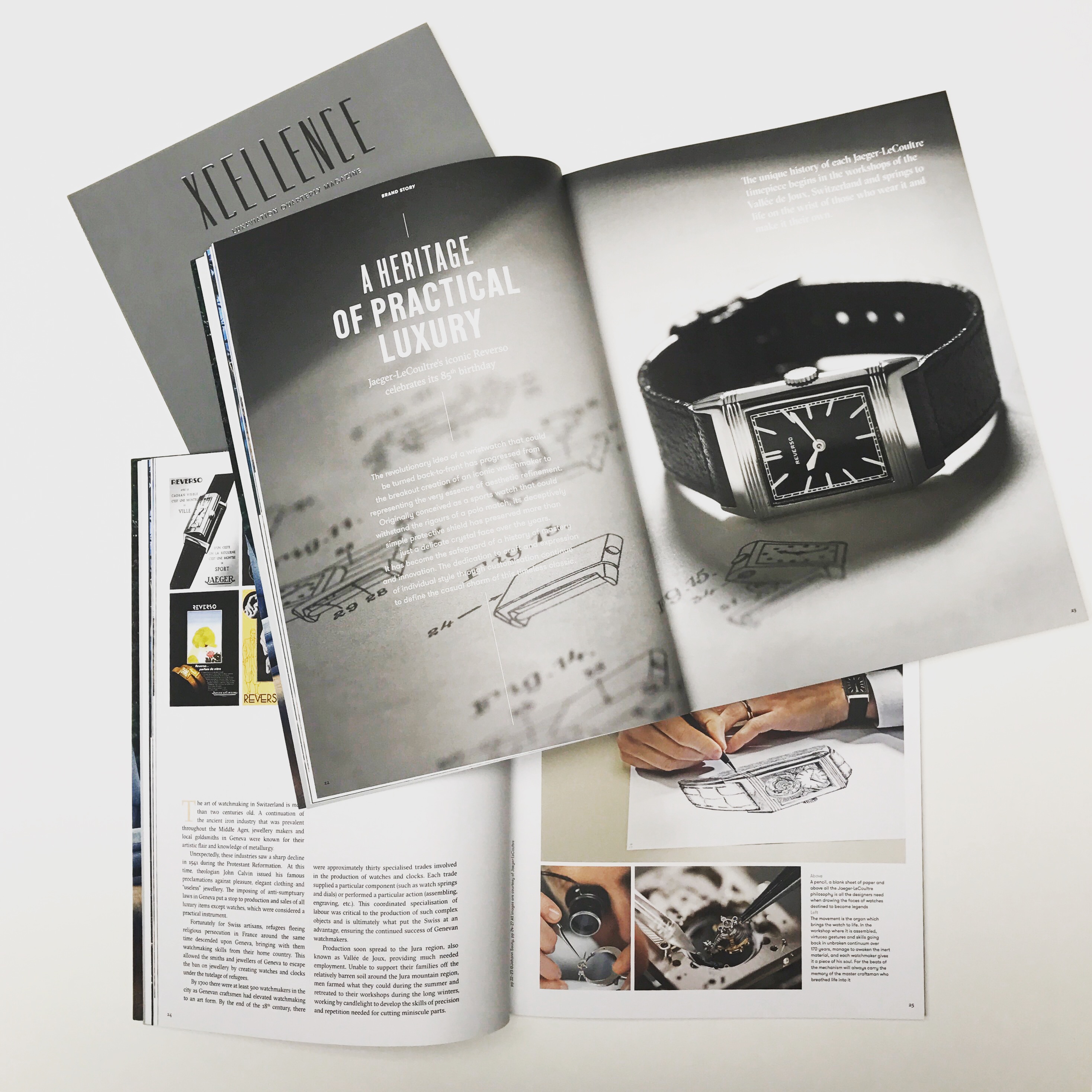
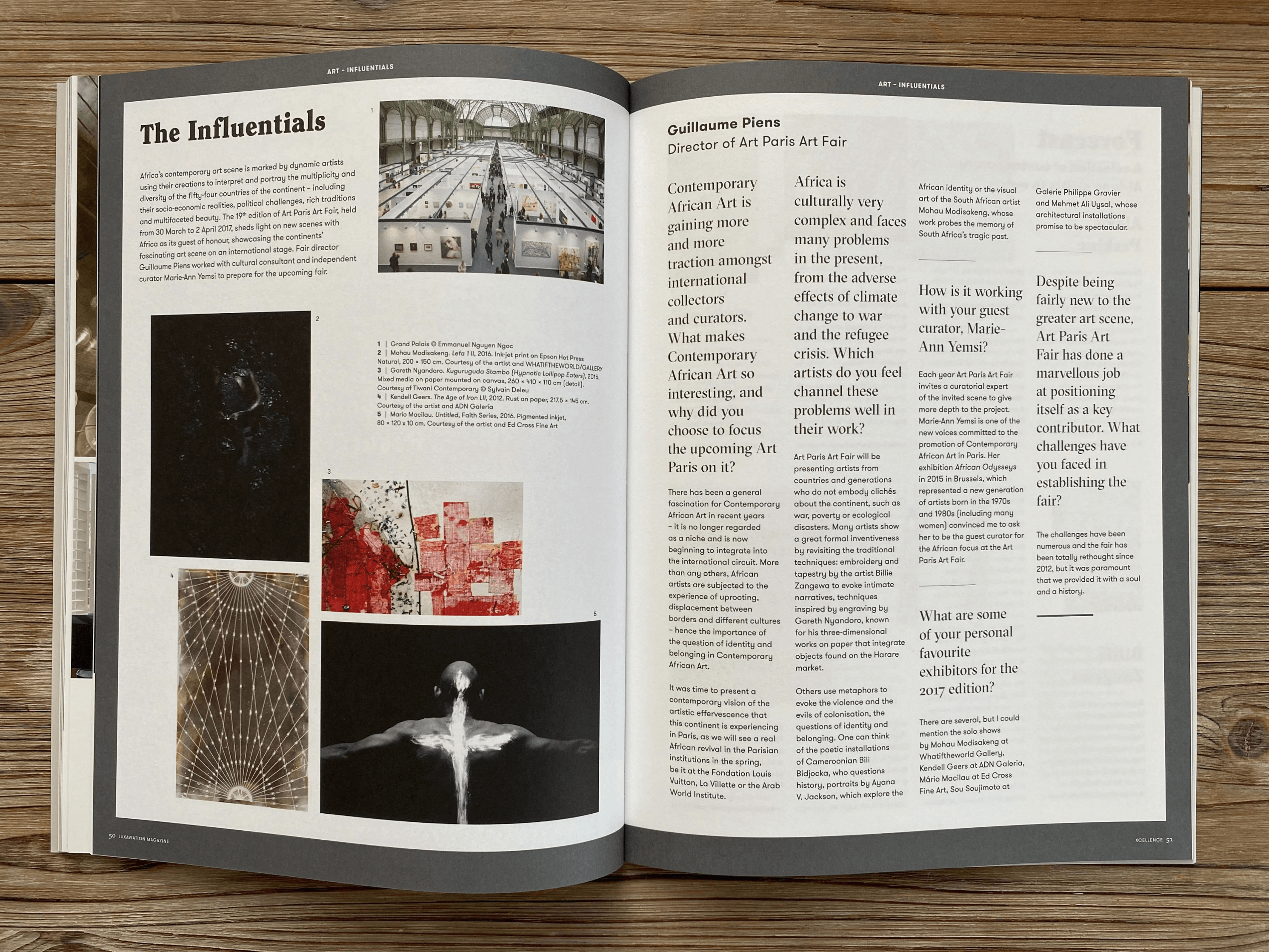
Print still matters precisely because digital attention has become so scarce and so easy to skip, a physical object that can’t be closed with one tap is now the rarer, more distinctive move [3]. A well-made magazine costs the company visible effort: paper stock, binding, photography, editorial time. That effort is the message. Anyone can publish a blog post in an afternoon; far fewer companies will commission 80 pages of considered writing, image sourcing, and print production, which is part of why Rethink Publishing has delivered more than 80 high-end magazines for brands that wanted exactly that kind of visible, material commitment. When considering justify print magazine budget, this point stands out.
Boards already fund things with this exact logic. Nobody asks for the per-unit ROI on the lobby renovation or the anniversary gala, those get approved because they shape how the company is perceived over years, not quarters. A premium magazine belongs in the same conversation. If a flagship event or an architecturally considered office gets approved without demanding a cost-per-impression breakdown, a printed brand asset that sits in a client’s home for a year deserves the same latitude, not a stricter one. This is also the logic worth using when you need to maximize a marketing budget with commercial printing more broadly, treating physical materials as durable brand infrastructure rather than disposable spend.
Step 2: Compare What Print Accomplishes Against Your Existing Channels
The clearest way to justify print magazine budget is to lay your existing channels next to a printed piece and ask what each one actually earns from the reader: seconds of attention, or months of presence.
Print vs. Email, Social, and Digital Communication
Every digital channel your company owns is competing for attention the instant it arrives. An email sits in an inbox next to dozens of other unread messages; a social post scrolls past in a feed built to keep moving. This is channel fatigue, not a flaw in your marketing, but the basic condition of digital communication itself. A printed magazine doesn’t compete that way. It occupies a desk, a waiting room table, or a shelf, without a notification badge pulling attention somewhere else.
The lifespan gap is the real argument here. An email gets, at best, a few seconds of scanning before it’s archived or deleted. A social post has an even shorter window before the next post replaces it. A well-made print piece, by contrast, can sit on a client’s coffee table for months, read once, picked up again, left out for a visitor to notice. That difference in duration is not a marginal improvement; it’s a different kind of asset entirely, which is part of why boards asking for hard numbers on print often start from the wrong comparison [3].
What a Physical Magazine Can Do That Digital Alone Cannot
A magazine offers something no scroll-based format can: a slower, uninterrupted reading experience. There’s no autoplay video competing for the same five inches of screen, no algorithm deciding what shows up next. The reader turns a page because they chose to, which builds a depth of brand perception that quick digital clicks were never designed to produce.
None of this means digital marketing should shrink. The strongest case for budget rarely asks a board to choose between email and print, it asks them to add a channel digital structurally cannot replicate. Content marketing agencies that treat print as one tactic among many tend to undersell this distinction, because their model depends on channels being interchangeable [2]. Rethink Publishing builds the opposite case: a magazine engineered to do the one job your inbox and your feed were never built to do, hold a reader’s full attention, without competition, for longer than a few seconds.
Step 3: Build the Case and Present It to Skeptical Stakeholders
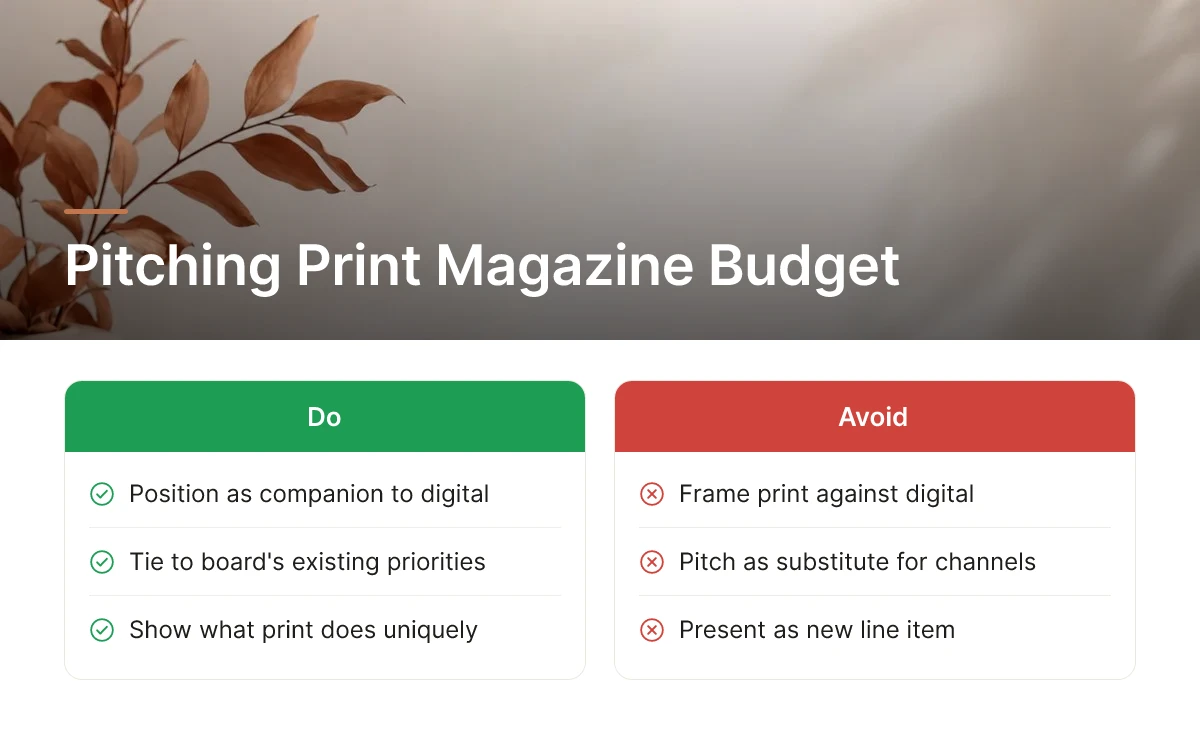
Present the budget request as a sequence: name the audience and the goal first, then tie the magazine to a priority the board already funds, rather than pitching it as a new line item.
Boards do not approve “a magazine.” They approve client retention, recruitment, or reputation initiatives that happen to take the form of a magazine. If your firm already spends on client events, referral programs, or recruiting collateral, position the publication as reinforcing that spend, not competing with it. This is the fastest way to justify print magazine budget conversations without sounding like you are asking leadership to fund a vanity project. Name the specific business priority in the first slide, then explain the production approach, as Rethink Publishing does when scoping a project, starting with an editorial spine tied to brand strategy before any layout work begins.
Evidence and Outcomes Finance Teams Want to See
Finance teams respect honesty about what print can and cannot measure, so present outcomes as signals rather than invented ROI formulas. Three are worth tracking from the first issue: whether a client references the magazine unprompted in a meeting, how long a prospect spends flipping through it during a pitch, and whether recipients ask for extra copies to pass along. None of these produce a clean percentage. All three indicate the piece is doing its job, staying in rooms and in hands longer than a digital asset ever could [1]. If your organization already tracks client retention or referral sources, note anecdotally when the magazine comes up in those conversations rather than forcing a causal claim the data cannot support. For those exploring justify print magazine budget, this matters.
Common Questions Boards Ask Before Approving the Budget
Expect four questions in some order: who actually reads this, how often does it go out, what happens if we cancel it next year, and how does the cost compare to what we already spend on brochures, sponsorships, or event collateral [2]. Answer plainly. If the distribution list is 300 named clients and prospects rather than a mass mailing, say so, a smaller, intentional list is a strength, not a weakness. If frequency is annual or biannual rather than quarterly, explain that a less frequent, higher-quality schedule is a legitimate strategy, not a compromise [3].
Resist the urge to oversell. Naming which companies should not make this investment, a startup still finding product-market fit, a business with no real relationship-driven sales cycle, builds more credibility with a skeptical board than claiming universal fit. The honest answer to “why not digital instead” is usually about longevity: a well-made print piece sits on a coffee table or office shelf for months, getting picked up repeatedly, while a social post disappears within days. That extended physical presence, not a single metric, is the real argument when you need to justify print magazine budget decisions at the board level.
Common Mistakes to Avoid When Pitching a Print Magazine Budget
Most failed pitches share the same four errors, and fixing them does more to justify print magazine budget than any spreadsheet.
The first mistake is framing print against digital, as if a board has to pick one. Nathalie Grolimund, who has spent 20+ years producing print publications at Rethink Publishing, built the studio’s whole model around the opposite premise: a magazine works because it does something digital channels structurally can’t, it sits on a desk, gets handed to a colleague, and survives past the 48-hour life of a social post. Pitch it as a companion to your digital program, not a substitute, or you’ll invite a false-choice debate you didn’t need to have.
The second mistake is promising campaign-style returns on a long-term asset. A magazine judged against a quarter’s click-through rate will always look expensive. Set the measurement window at 12 to 24 months, tied to renewal rates and relationship depth, and you remove the wrong clock from the conversation entirely [2].
The third is skipping segmentation and pitching print to everyone. Not every company earns a return from it.
Which Audiences and Goals Benefit Most From Print
Print performs best with client-facing, relationship-driven businesses selling high-consideration purchases, hospitality groups, real estate developers, law firms, architecture practices, private clubs. These are businesses where a single client relationship is worth pursuing patiently, and where a tactile, well-made object [1] signals the kind of investment a PDF never will. If your audience is transactional or price-driven, say so in the pitch. Naming who print isn’t for makes the case for who it is stronger.
The fourth mistake is cutting quality to shrink the number on the page, thinner stock, fewer pages, a rushed layout. That choice undercuts the entire argument for spending on print in the first place, because a cheap-feeling magazine tells clients the opposite of what you intended.
Questions to Ask Before You Commit Budget
- Does our audience actually keep physical materials, or do they operate entirely online?
- Is the goal relationship depth and retention, or short-term lead volume?
- Can we commit to editorial and production quality, not just a budget line?
- Do we have 12 months of patience before we judge results?
If the answers point toward relationship-building over quick conversion, a fully managed partner, Rethink Publishing handles strategy, writing, design, and print production end-to-end, removes the operational risk that sinks most in-house attempts. Working through these questions is often the fastest way to justify print magazine budget decisions internally before the board meeting even happens.
Frequently Asked Questions
How long does a quality print magazine stay valuable in a reader’s home or office?
A well-produced magazine typically stays on a coffee table or shelf for months, sometimes years, not days. Unlike a social post that disappears in 48 hours, a bound print piece gets picked up repeatedly, shared with visitors, and passed to colleagues. That extended physical presence is the entire basis for treating print as a durable asset rather than a one-time campaign cost. This directly impacts justify print magazine budget outcomes.
What is the real difference between treating print as an expense versus a brand asset?
An expense buys a single use; an asset keeps producing value after the invoice is paid. A brochure gets read once and discarded. A properly edited magazine, built around a genuine editorial spine instead of sales copy, keeps generating impressions, conversations, and referrals for as long as it sits on a desk or table.
Can a hybrid print-digital approach reduce budget concerns while keeping the brand benefit?
Yes, pairing a print magazine with a digital companion extends reach without diluting the physical piece’s impact. A quarterly or annual print edition can anchor the brand experience while digital excerpts, email teasers, or a landing page extend its life online. This lets a board see print as the premium centerpiece of a broader plan rather than an isolated, stand-alone cost competing with digital channels [1].
Which industries get the most value from a custom print magazine?
Luxury hospitality, real estate, private clubs, law firms, and design-focused companies see the strongest returns. These sectors depend on relationship-driven, high-trust sales cycles where a tactile, editorially credible object reinforces taste and authority better than another email or PDF ever could.
What measurable outcomes can a well-executed print magazine produce over time?
Boards typically track retained client relationships, referral conversations, and brand recall during renewal or pitch cycles. While print’s impact is harder to attribute than a click-through rate, companies report stronger client retention and more qualified introductions after distributing a magazine consistently, especially when it’s mailed directly to a named decision-maker rather than left in a lobby rack.



Conclusion
Justifying a print magazine budget comes down to reframing the conversation: this is not a marketing line item competing with paid social, it’s a brand asset with a multi-year shelf life. Boards respond to specifics, editorial direction, distribution plan, and what happens to the piece six months after it ships, not just production cost. Before your next budget meeting, pull three examples of digital content your clients forgot within a week, then ask what a bound, keepable alternative would be worth over a year. Rethink Publishing can help you build that case with a sample editorial spine before you commit a dollar.
Sources & References
- How to Maximize Your Marketing Budget With Commercial Printing
- How to justify your marketing budget to the board
- How to convince your boss to invest in print
Recommended Articles
Explore more from our content library: