
Understanding brand magazine naming is essential. A brand magazine’s name works when it reads as a title people respect, not a brochure headline dressed up in serif type. The strongest names sit close to the brand’s editorial territory, the ideas, industry, or worldview it wants to own, rather than restating the company name or product line. Treat it as a long-term asset: it needs to survive rebrands, work on a spine, a cover, a website, and a social tile, and still sound credible ten years on. Get this right and the name becomes shorthand for the publication’s authority, the same way a well-run title in any industry becomes trusted currency long before anyone reads a page.
Define What Brand Magazine Naming Needs to Achieve Before You Start
Brand magazine naming works as a strategy decision first and a wordplay exercise a distant second, treat it backward and the name will read hollow within a year.
Start with positioning, not vocabulary. A magazine’s name should signal the territory of ideas it intends to own, the industry conversation, the worldview, the audience obsession, rather than describe the product sitting behind it. A real estate developer naming a publication after its own company signals “brochure.” A name built around the lifestyle its buyers actually live in signals “editorial.” That distinction is the entire game. Brand identity work generally treats a name as one output of a wider strategy, not an isolated creative sprint [2], and a magazine title is no exception, it has to sit inside the same positioning logic as everything else the brand says about itself. For a broader look at how naming fits into overall brand strategy, see this complete guide to branding for marketers.
That means naming comes after editorial strategy, not before it. You cannot evaluate a shortlist of names without a working answer to two questions: what is this magazine actually for, and who is it for. A title that sounds sharp in isolation can fall apart the moment you define the audience, a name aimed at industry peers reads wrong for a magazine meant to sit on a client’s coffee table. Editorial-style storytelling that foregrounds a brand’s world rather than its sales pitch is what separates a brand magazine from a marketing pamphlet in the first place [3], and the name has to match whichever side of that line the publication sits on. Because brand magazine naming is really a positioning exercise, it should be revisited any time the editorial strategy shifts, not treated as a one-time decision.
Consider longevity next. A magazine name is not a one-off publication title, it appears on a spine, a cover, a press mention, a website header, a social tile, potentially for a decade or more. Names chosen for a clever pun rarely survive that kind of repeated, public exposure without starting to feel dated or thin.
One scope note before moving further: this article addresses naming decisions for real, commissioned custom brand magazines, not generic title ideas for consumer lifestyle or fashion launches. If you’re building a magazine as a brand asset rather than a newsstand product, the rest of this guide is written for you.
Draft Candidate Names That Reflect Editorial Strategy, Not Just Branding
Good brand magazine naming starts after the editorial spine is set, not before, the name should describe a reader’s world, not just restate a company’s product list.
A strong name shares four traits. It’s specific to the brand’s actual world rather than a word that could sit on any glossy cover. It avoids the vocabulary every other custom publication reaches for first, “Journal,” “Living,” “Collective” tacked onto a category word. It says out loud easily, without a founder having to explain what it means. And it carries a sense of authority earned from the content inside, not a clever pun that wears thin by issue three.
Naming and editorial strategy should move together, not in sequence. A working title chosen in week one often changes once the content pillars and the reader promise are locked. That’s normal, and it’s a sign the process is working rather than stalling. If the name still fits comfortably after the team has drafted a full table of contents for issue one, it’s probably right. If it feels thin next to the actual stories, revisit it before print. This is also where good brand magazine naming starts to distinguish itself from a generic title exercise, because it is tested against real content rather than a hypothetical brief.
Product-Based vs. Reader-Based Naming
Consider the difference in direction. A real estate developer could name a publication after its flagship property line, descriptive, safe, forgettable within a year. Or it could name the publication after the world its buyers actually live in, architecture, design, the neighborhoods they’re moving into, which gives the editorial team years of material and gives readers a reason to keep the issue on a table instead of a shelf. The first approach names the company. The second names the reader’s interest, which is what makes people keep reading past the first feature. This is a useful guide to building a strong brand identity if you want to see how naming decisions connect to identity work more broadly.
Watch for naming patterns that borrow too heavily from trend language, a word that feels current now will feel dated by the third or fourth issue. A magazine is a long-term asset, often produced across years and dozens of issues, so the name has to survive well past a single campaign cycle. Rethink Publishing works through this naming and editorial-spine process with clients before a single page is designed, precisely because a name that ages badly undercuts every issue that follows it.
Adapt the Naming Approach for B2B and Niche Industry Magazines
Professional readers trust restraint over cleverness, a name that sounds too playful undercuts the authority a specialized magazine needs to earn a place on a partner’s desk. Brand magazine naming for a law firm or cybersecurity company works on different rules than naming a lifestyle title, because the reader isn’t buying charm, they’re buying credibility.
What naming strategies work best for specialized industries like architecture, law, or cybersecurity?
Each field has its own register, and the name has to speak it. An architecture publication can lean into spatial and material vocabulary, words tied to form, structure, or place, without drifting into abstraction that means nothing to a practicing architect. A law firm’s magazine benefits from language rooted in judgment, precedent, and counsel rather than anything that sounds like a consumer newsletter. A cybersecurity title should sound like it was named by someone who understands the field’s stakes, clarity and technical grounding matter more than a name trying to be clever about threats or defense. Effective brand magazine naming in these fields borrows more from trade vocabulary than from consumer publishing conventions.
The common thread: fewer abstractions, more precision. A name like a lifestyle magazine’s playful pun would read as a mismatch in a boardroom or a courtroom lobby.
How do you name a magazine that needs to command respect within a professional audience?
Respect comes from association, not decoration. A name earns credibility when it sits comfortably next to established trade publications in the same field, without copying their structure or borrowing their words outright. That means avoiding generic industry buzzwords that every competitor already uses, and instead choosing language that signals fluency in the discipline itself. This kind of approach to shaping brand identity applies just as much to a magazine title as it does to a logo or tagline.
Niche magazines often do better naming the craft rather than the company. A cybersecurity publication named for the discipline, the practice of defense, the architecture of trust, will outlast one built around a corporate tagline, because the reader’s professional identity, not the brand’s product line, is what pulls them in. Rethink Publishing has applied this thinking across sectors as varied as hospitality and cybersecurity, where the same editorial discipline that shapes a luxury lifestyle title gets redirected toward technical credibility instead of aesthetic appeal. The goal in both cases is the same, a name the target reader would be proud to be seen holding, but the vocabulary that earns that pride changes entirely by industry [3].
Check Legal, Competitive, and Cross-Channel Fit Before Finalizing the Name
A shortlist name earns its place only after it clears a trademark search, has an available digital home, stands apart from competitor titles, and reads well in every format it will appear in. Skipping this step is how a beloved name becomes a six-figure liability after print.
What trademark and legal considerations matter when selecting a magazine name?
Run a trademark search before you commission a single design comp or send anything to print. The mechanism is simple: if another company already holds a registered mark in a related class, media, publishing, or even your broader industry, using a conflicting name can force a rename after launch, along with the cost of redesigning a masthead, reprinting stock, and rebuilding any digital presence tied to the old name.
Search the relevant trademark database in your country, then check adjacent markets if the magazine will circulate internationally. A quick search at this stage costs little time. Discovering a conflict after your first 5,000 copies are bound costs considerably more.
At the same time, check domain and social handle availability. A name with no clean domain, or one where every reasonable handle is already taken, creates friction that compounds for years, every reference to the magazine online routes through a workaround. Treat digital availability as a practical filter during shortlisting, not an afterthought once the name is locked.
Does a magazine name need to work differently in print versus digital or social contexts?
Yes, a name has to perform in at least four contexts, and testing only one is how brand magazine naming projects go wrong after launch. Read each shortlist candidate on a mocked-up spine, in a digital masthead at header size, inside a social bio with character limits, and out loud in a client meeting.
- On a spine: does it stay legible in a narrow vertical space, or does it need abbreviation that changes its meaning?
- In a digital masthead: does it hold up at the smaller scale of a website header or newsletter subject line?
- In a social bio: is it short enough to sit next to your company handle without truncation?
- Spoken aloud: does a colleague introducing the magazine in a pitch stumble over it, or does it land cleanly the first time?
Before you lock anything, audit the competitive field. Pull the mastheads of the trade and lifestyle publications your target readers already recognize in your niche, and note recurring words, structures, or tropes, “Journal,” “The [Adjective] Life,” place-name plus noun. Deliberately steer away from those patterns so your title doesn’t read as a copy of something already on the coffee table [3]. For more perspective on how to make a name distinctive, this piece on discovering brand names that stick is a useful companion to the process described here.
Finally, test the finalists with actual target readers or internal stakeholders, not for personal preference, but for recall and pronunciation. Ask them to repeat the name back an hour later. If they hesitate or mispronounce it, that’s the signal to cut it, regardless of how much the room liked it in the room.
Common Mistakes to Avoid When Naming a Brand Magazine
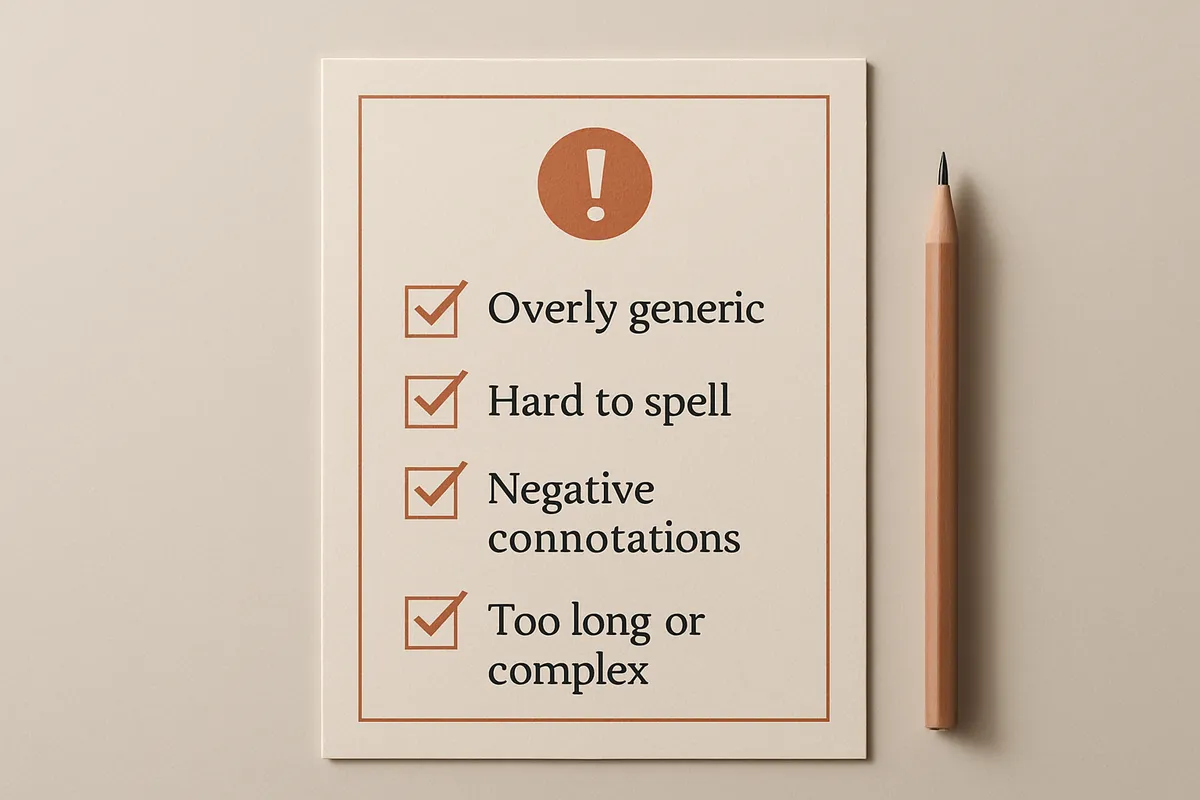
Most brand magazine naming mistakes trace back to one root cause: treating the name as decoration instead of a decision with editorial and legal consequences.
Run your shortlist against these five failure points before you commit.
- The name is just the company name. Calling the publication “Acme Quarterly” or “The Meridian Group Magazine” signals a corporate newsletter, not something a reader keeps on a coffee table. A magazine title should describe the reader’s world, their interests, ambitions, taste, not restate the org chart. This is the single most common way a publication collapses into a brochure with better paper.
- The name copies an established consumer title. A name that echoes a well-known magazine borrows confusion, not credibility. Readers register the resemblance before they register the brand, and the association undercuts the sense that this is an original editorial product with its own point of view.
- Trademark and domain checks happen last. Some teams finalize cover design, print a full issue, and only then search the U.S. Patent and Trademark Office database or check domain availability. If the name is already claimed in publishing or media, the fix is a rename after the budget is spent, layouts, spine text, and masthead all redone.
- The name only works on a cover. A title that looks elegant in a serif typeface can fall apart the moment someone says it out loud, types it as a social handle, or searches for it online. Test the name in plain conversation and as a URL before locking it in, not just as artwork.
- Naming happens before strategy. When the name gets picked in a single brainstorm session disconnected from the editorial spine, it rarely survives contact with the actual content. Rethink Publishing builds the editorial direction first, what the magazine covers, who it speaks to, how often it publishes, and lets the name follow from that decision, not the other way around.
If your shortlist trips more than one of these wires, that is not a signal to pick faster. It is a signal the editorial strategy underneath the name needs another pass. Careful brand magazine naming at this stage saves far more time than it costs.
Frequently Asked Questions
What’s the relationship between a magazine’s name and a company’s broader brand positioning?
The name should read as a direct extension of how the brand already positions itself, not a separate creative exercise. If your brand voice is precise and understated, a loud, punny title will undercut it immediately. Think of the name as one more brand asset, it needs to sit comfortably next to your logo, your tagline, and the way your executives actually talk to clients.
How do you ensure a magazine name serves as a lasting marketing asset, not just a publication title?
Choose a name built to survive years of issues, not just the launch edition. A title tied to a single campaign, trend, or product line ages quickly and forces a rebrand within a few cycles. Names that reference an enduring theme, craft, place, a point of view, hold up the way a coffee-table book is meant to: sitting on a shelf for years, still relevant.
How do you differentiate a magazine name in a crowded niche or industry?
Avoid the generic descriptors your competitors already use, “Journal,” “Review,” or the company name plus “Magazine” rarely stand out. Look instead at what’s specific to your brand’s history, geography, or philosophy. A name drawn from something only your company can credibly claim is harder for a competitor to imitate. Thoughtful brand magazine naming often starts by ruling out these overused patterns before generating fresh options.
How do you test whether a name will resonate with a target audience across all touchpoints?
Say it out loud in the contexts it will actually live in, on a cover, in an email subject line, in a sentence a client says to a colleague. Show a shortlist to a handful of actual clients or partners before committing, and watch for hesitation or mispronunciation. A name that only works in a slide deck usually fails on a printed spine.
Should a brand magazine share its name with the company, or stand apart?
Either works, but the decision should be deliberate, not default. Sharing the company name reinforces recognition and works well for established brands; a distinct title gives the publication its own editorial identity, which often reads as more credible and less like a sales brochure.


Conclusion
A magazine name only earns its place once it passes three tests: it matches your brand’s actual voice, it can survive years of issues without going stale, and it sounds right when a client says it out loud. Skip any of those, and you end up with a title that reads like a slide deck instead of a publication people keep. Before you brief a designer or writer, write your shortlist on paper and read each name aloud in a sentence a client might actually say. If none of them survive that test, you don’t have a name yet, you have a placeholder. Good brand magazine naming is ultimately a discipline, not a single moment of inspiration, and treating it that way is what makes a title last.
Sources & References
- How to Build a Brand Identity: The Complete Guide | Jacob Tyler
- How a brand magazine can be the missing link in your content marketing
Recommended Articles
Explore more from our content library: