
Tactile branding marketing uses physical touch, texture, weight, material, finish, as a deliberate brand signal that shapes how consumers feel about a product or company. Unlike visual or audio branding, touch activates the somatosensory cortex and triggers emotional responses that are harder to ignore and longer-lasting. Research consistently shows that physical interaction with branded materials increases purchase intent, brand recall, and perceived product value, often by margins digital channels cannot match.

What Tactile Branding Marketing Is and How It Differs from Sensory Marketing
Tactile branding marketing is a subset of sensory marketing that uses touch, texture, weight, temperature, and material finish, as deliberate brand signals, distinct from the broader category that also covers smell, sound, taste, and sight.
Sensory marketing engages all five senses to shape consumer perception [2]. Tactile branding narrows that scope to a single channel, physical contact, and treats it as a primary brand carrier, not a supporting detail. A brand can operate without a signature scent or a sonic logo. The physical materials it puts in a customer’s hands are rarely optional.
A brochure delivers information. Tactile branding delivers a physical experience that carries brand meaning before a single word is read. Those are different jobs, and conflating them is how brands end up with expensive print pieces that feel like nothing in particular.
How texture works as a brand differentiator compared to visual or audio elements
Visual and audio elements require conscious processing, a reader scans a headline, a listener registers a jingle. Texture bypasses that step. A matte-laminated cover signals restraint and premium positioning the moment a hand closes around it. A rough-textured mailer signals craft and authenticity before the envelope is open. Neither effect depends on copy.
Tactile branding marketing also extends well beyond packaging. Printed collateral, direct mail, branded merchandise, event materials, and any physical touchpoint a customer handles all carry texture signals, intentional or not. Brands that treat those materials as neutral containers are leaving brand meaning on the table. According to Celloglas’s research on touch and emotion in marketing, the tactile qualities of printed materials directly influence how consumers emotionally evaluate a brand.
What the 3-3-3 rule reveals about tactile attention and memory
The 3-3-3 rule holds that marketers have three seconds to capture attention, three minutes to hold it, and three days to be remembered. Physical materials outperform flat digital assets at every stage of that sequence. Touch engages attention faster than a screen scroll, sustains it longer because handling an object is an active physical act, and encodes memory more durably because the brain processes tactile input through the somatosensory cortex alongside emotional centers.
A printed magazine with a considered material finish clears all three thresholds in ways a PDF attachment cannot. That gap is structural, not a matter of production budget.
How Touch Influences Consumer Psychology and Purchasing Decisions
Touch activates the brain’s emotional center directly, which is why physical brand interaction drives stronger purchasing intent than screen-based exposure alone.
What neuroscience reveals about the consumer-brand relationship through touch
When a consumer handles a physical object, the somatosensory cortex processes that tactile input and sends signals directly to the limbic system, the brain’s emotional center. This neural pathway does not activate in the same way during screen-based interaction, which is why holding a beautifully produced magazine or a weighted coffee-table book produces a measurable emotional response that scrolling through a website simply cannot replicate.
Daniel Kahneman’s research on the “endowment effect” explains part of what follows. Once a person physically holds an object, their perceived sense of ownership rises, and so does their willingness to pay for it. Tactile branding marketing applies this principle deliberately: getting branded materials into a client’s hands is not a courtesy, it is a persuasion mechanism grounded in behavioral economics.
The numbers support this. A 2015 Canada Post study conducted with True Impact found that physical direct mail required 21% less cognitive effort to process than digital ads and produced 70% higher brand recall [1]. Physical media demands less mental work and leaves a stronger impression, two outcomes that no digital format has yet matched at the same rate.
“Touch is the most emotionally immediate of all the senses. When a consumer physically interacts with a brand’s materials, the emotional encoding that follows is deeper and more durable than anything a screen can produce.” — Dr. David Parisi, Author and Researcher, Haptic Media Studies
Why tactile marketing evokes stronger emotional responses than digital-only approaches
Digital stimuli are processed primarily in the visual cortex. Tactile stimuli activate multiple brain regions simultaneously, somatosensory, limbic, and memory-encoding areas, creating richer, more durable memory traces. That multi-region activation is why a client who holds a printed brand publication is more likely to recall the brand days later than one who saw the same content on a screen.
According to Neuroscience Of’s analysis of touch and consumer psychology, tactile branding marketing creates brand loyalty pathways that purely visual stimuli cannot replicate, because the brain’s processing of texture and weight is deeply intertwined with emotional memory formation.
Haptic feedback in apps and devices, vibration, force feedback, is a growing attempt to introduce tactile signals into digital environments. It adds a layer of sensory response, but it does not replicate the full emotional weight of handling a physical object with real texture, mass, and finish. The gap between a phone vibration and the feel of a cloth-bound cover is not a technical problem waiting to be solved; it is a fundamental difference in how the brain processes each experience.
“The brands that win long-term loyalty are those that give customers something to hold. Physical materials create a sensory memory that no digital interaction can manufacture — and that memory becomes the brand.” — Martin Lindstrom, Brand Consultant and Author, Brand Sense
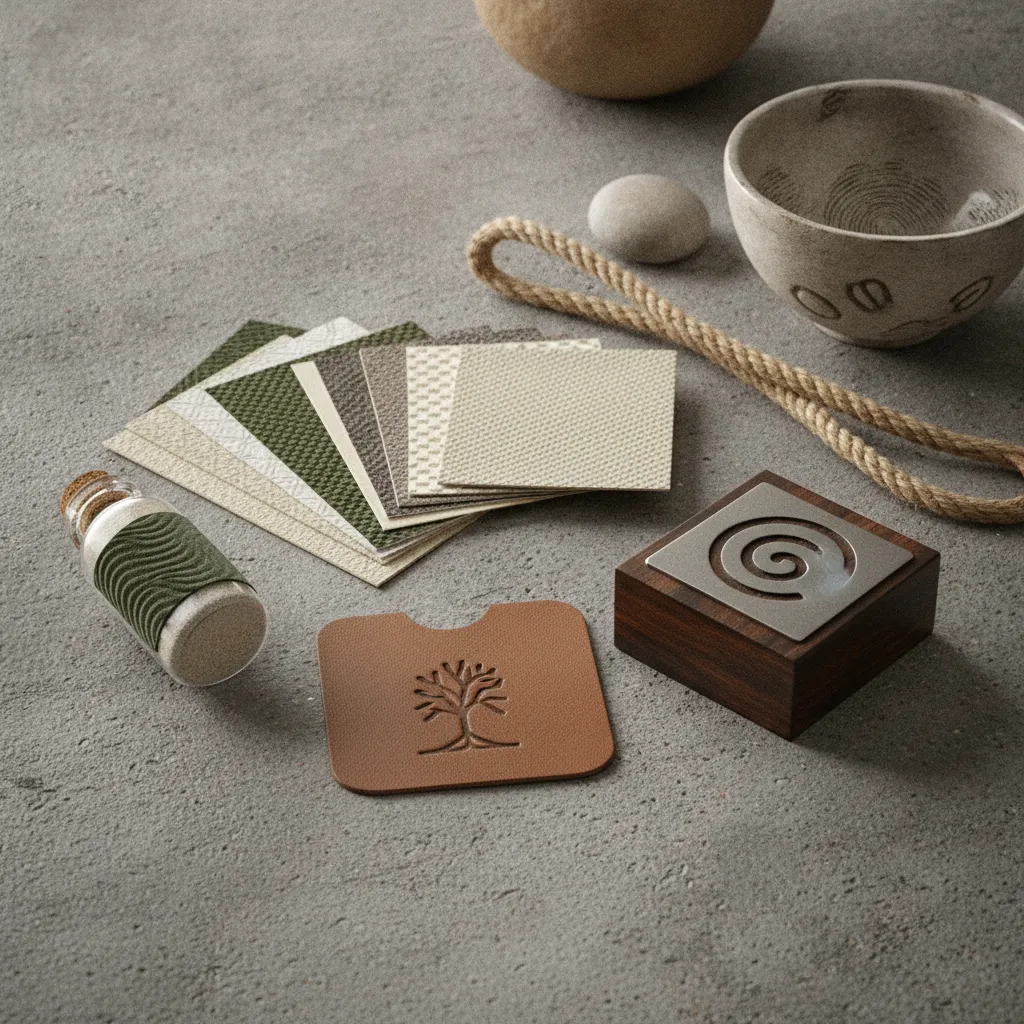
Real-World Examples of Tactile Marketing Done Right
Luxury brands, B2B firms, and mass-market retailers each use tactile branding marketing differently, but all three treat physical sensation as a deliberate brand signal.
How Luxury Brands, B2B Companies, and Mass-Market Retailers Each Use Tactile Marketing Differently
Hermès doesn’t wrap a purchase, it stages a ritual. The tissue paper and ribbon are engineered to a specific weight and crinkle, so the unboxing itself communicates rarity before the product is even visible. Apple applies the same logic to packaging: the slow-pull resistance on an iPhone box lid is a deliberate haptic signal, calibrated to feel like precision. Both brands use touch to justify a price premium that copy alone could never sustain.
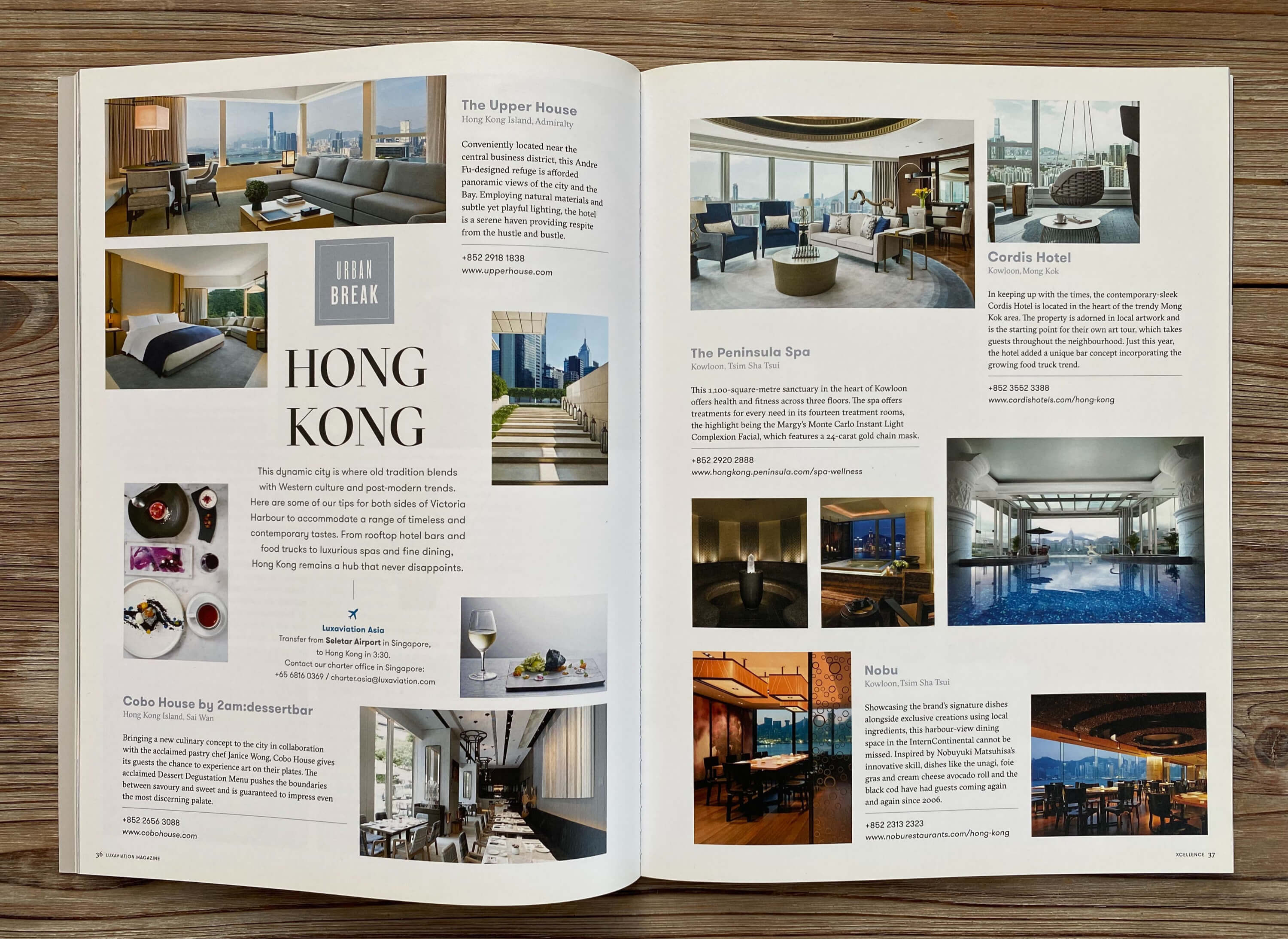
B2B brands have a parallel opportunity that most ignore. A high-end printed magazine or case study book sent to a C-suite prospect signals investment and seriousness in a way a PDF attachment cannot. Physical materials arrive on a desk, stay on a desk, and get passed between colleagues, none of which happens with an email sequence. Studios like Rethink Publishing produce exactly this kind of asset: editorially directed, design-led print publications built to function as long-cycle business development tools for law firms, real estate groups, and hospitality brands.
Mass-market brands prove tactile cues work at scale too. Lush Cosmetics uses texture-forward product surfaces and handwritten labels to signal handmade authenticity across thousands of retail locations. The rough paper tag does positioning work the price point alone cannot.
The numbers make the ROI case plainly. Direct mail campaigns using textured or dimensional elements achieve response rates of 4.4%, compared to 0.12% for email, a 36x gap, according to DMA data. That figure explains why physical mail is returning to B2B prospecting strategies after years of being written off. The American Marketing Association’s resources on branding strategy increasingly recognize tactile branding marketing as a core discipline rather than a niche execution.
What Role VR and AR Play in Creating Tactile Experiences in Digital Environments
Haptic technology is the industry’s attempt to close the gap between screen and sensation [1]. Automotive and luxury retail brands are currently testing haptic gloves and force-feedback controllers that simulate material feel, letting a prospect “touch” leather grain or metal weight in a virtual showroom. The technology is early-stage, and replication fidelity remains limited [1].
Still, the direction matters. If a brand has already built strong tactile associations through physical products and print materials, haptic interfaces give those associations a digital extension, rather than a replacement. The physical experience sets the reference point; the virtual one recalls it.
How to Measure ROI and Effectiveness of Tactile Marketing Campaigns
Track response rate, conversion rate, brand recall score, and customer lifetime value uplift, then use unique URLs or QR codes to bridge physical to digital attribution.
What Specific Metrics to Track for Tactile Campaigns
Tactile branding marketing produces measurable signals at every stage of the customer journey, if you instrument the campaign correctly before it ships.
Start with four core metrics:
- Response rate: Count inbound calls, unique URL visits, and QR code scans tied directly to the physical piece. This is your first proof of engagement.
- Conversion rate: Track how many recipients who responded from a physical touchpoint completed a purchase or signed a contract. Segment this separately from your digital-only cohort.
- Brand recall score: Run a 72-hour recall test with a sample of recipients, ask them to name brands they remember from recent marketing without prompting. Canada Post and True Impact research consistently shows physical mail outperforms digital in unaided recall at that mark.
- Customer lifetime value uplift: Compare CLV for segments that received physical materials against those that received email only. Over a 12-month window, the gap often justifies the per-piece cost.
For B2B campaigns specifically, add meeting-booking rate and pipeline velocity to that list. Accounts that receive a physical piece before an outreach sequence book meetings at measurably higher rates than email-only contacts, and that’s where the ROI case for tactile marketing is easiest to defend to a CFO.
The single most common gap in tactile campaign measurement is attribution. Use unique URLs, QR codes, or dedicated phone numbers on every physical piece to create a trackable bridge between the printed touchpoint and the digital conversion event. Without that bridge, you’re guessing.
How the Cost-Effectiveness of Tactile Marketing Compares to Digital Channels
Physical direct mail costs between $0.30 and $10 per piece depending on format and finish. A standard email costs fractions of a cent. On unit cost alone, email wins by a wide margin.
The response rate data changes that calculation. Email averages a 0.12% response rate; dimensional mail averages 4–6%. At mid-to-high-value customer segments, the cost-per-response often favors physical, sometimes significantly. A $5 mailer that converts at 5% produces a lower cost-per-response than a $0.001 email that converts at 0.1%.
The honest caveat: this math works best when average order value or lifetime contract value is high enough to absorb the per-piece cost. For low-margin, high-volume consumer goods, email remains the more efficient channel. For luxury brands, B2B services, and premium hospitality, exactly the clients Rethink Publishing works with, physical materials earn their place in the budget.
How to Integrate Tactile Marketing into an Omnichannel Strategy
Tactile touchpoints perform best as deliberate pattern interrupts in a digital-heavy sequence, placed precisely where digital engagement drops off.
After two unanswered emails, response rates on digital follow-ups fall sharply. That gap is where a physical piece, a dimensional mail package, a printed magazine, a weighted envelope, produces the highest lift. The physical piece doesn’t replace the digital sequence; it resets attention so the next digital touchpoint lands on a warmer audience.
Research on integrated campaigns from JICMAIL shows physical mail followed by a digital retargeting ad within 24 hours produces 35% higher conversion than either channel alone. The physical piece primes attention; the digital ad captures the intent it creates.
Tactile branding marketing works at its best when the physical and digital channels are explicitly sequenced, not running in parallel and hoping for overlap. The MarketingProfs library on tactile and direct marketing offers additional frameworks for sequencing physical and digital touchpoints effectively.
How to Measure Cross-Channel Attribution When Combining Tactile and Digital Touchpoints
Every physical piece must carry a digital bridge, a QR code, a personalized URL, or a unique promo code. Without one, the channel is untracked and you cannot defend the spend in a budget review.
Use a practical integration checklist before any physical drop:
- Identify the exact drop-off point in your current digital funnel.
- Design a physical piece that routes recipients to a tracked digital destination.
- Set a cost-per-response target before launch, not after.
- Run a split test against a digital-only control group for the same segment.
This approach gives you a clean read on incremental lift, not just correlation.
What Budget Allocation Framework Works Best for Tactile Marketing
For B2B campaigns targeting high-value accounts, allocate 20–30% of campaign budget to physical materials aimed at the top 10–20% of your prospect list by deal size. The unit economics work because the average contract value justifies a higher cost-per-touch.
For B2C, reserve physical spend for retention and loyalty segments where lifetime value is already established. Sending a premium printed piece to a first-time buyer rarely pencils out; sending one to a client who has purchased three times almost always does.
Studios like Rethink Publishing produce branded print magazines and coffee-table books that fit directly into this framework, physical assets designed to sit in a client’s home or office long after the campaign ends, maintaining brand presence across every subsequent touchpoint without additional media spend. This is tactile branding marketing operating at its most strategic: a single physical asset that continues generating brand impressions for months.

Frequently Asked Questions
Is tactile marketing only relevant for luxury or premium brands?
Tactile marketing works across price points, but the return on investment scales with brand positioning. A mid-market retailer can use textured packaging to reduce returns and increase perceived quality. A premium brand uses the same principle to justify higher prices and build loyalty. The research is consistent: physical sensation shapes purchase decisions regardless of category [2]. What changes is the material investment, not whether touch matters.
What is the minimum budget needed to run an effective tactile marketing campaign?
There is no universal floor, budget depends entirely on format, print run, and finishing complexity. A short-run direct mail piece with a soft-touch laminate costs far less than a fully produced brand magazine. The more useful question is cost per impression over time: a printed publication a client keeps for 18 months delivers more brand contact than a digital ad that disappears in seconds. Rethink Publishing does not publish pricing publicly; scope drives cost.
How does tactile branding apply to digital products or SaaS companies with no physical product?
SaaS and digital-first companies can apply tactile branding through physical brand artifacts, onboarding kits, printed annual reports, or client-facing magazines that give the brand a physical presence. Several technology companies, including cybersecurity firms, have commissioned branded print publications specifically because their product is invisible and intangible. A physical object creates a sensory anchor that no dashboard or email sequence replicates. The goal is to give an abstract brand something a client can hold.
What print finishes and materials produce the strongest tactile brand response?
Soft-touch matte lamination, uncoated stocks, and spot UV varnish consistently produce strong tactile responses because they create clear contrast, smooth against rough, matte against gloss [2]. Embossing and debossing add dimensional texture that readers notice before they read a word. For brand publications, paper weight matters as much as finish: a heavier stock signals permanence and quality the moment someone picks it up.
How does tactile branding marketing differ from traditional print advertising?
Traditional print advertising prioritizes visual communication — layout, imagery, and copy. Tactile branding marketing goes further by treating the physical properties of the printed piece itself as a brand message. The weight of the paper, the finish on the cover, and the texture under a reader’s fingertips all communicate brand values before a single word is processed. Where print advertising informs, tactile branding marketing creates a sensory experience that shapes emotional perception and long-term brand recall.
Conclusion
Touch is not a finishing detail, it is a brand decision made before a reader reads a single word. The evidence is clear: physical sensation shapes perceived quality, price tolerance, and emotional recall in ways that screen-based media cannot replicate [1] [2]. Executed well, tactile branding marketing is one of the few channels that simultaneously increases attention, emotional engagement, and long-term brand recall.
Three things worth acting on: first, audit every physical brand touchpoint you currently produce and ask whether the material matches the brand’s positioning. Second, treat paper weight, finish, and texture as strategic choices, not production defaults. Third, if your brand has no physical presence at all, consider what a single well-produced print asset, a magazine, a book, could do for client retention over a 12-month period.
If that last point is worth exploring, start at rethink-publishing.com and look at what a fully managed brand publication actually involves before you scope anything.
Sources & References
- How The Sense of Touch and Texture Influence Consumer Psychology, Neuroscience Of
- Why touch matters: marketing to evoke emotions, Celloglas
Recommended Articles
Explore more from our content library: