
Understanding how to commission photography brand magazine projects require is essential. Commissioning photography for a brand magazine means briefing and directing a shoot with the same intentionality a magazine editor would use, not the same approach as a stock library or an in-house marketing shoot. The difference is editorial intent: every image is planned to serve a narrative, paired deliberately with words and layout, and shot to last years rather than one campaign cycle. The result reads as a strategic asset, something people keep, rather than content that gets swapped out next quarter.
Understand What It Means to Commission Photography for a Brand Magazine
To commission photography for a brand magazine means directing original images around a narrative you’ve already decided to tell, not booking a photographer to collect a folder of usable shots. The brief starts with the story, not the camera.
A magazine editor doesn’t ask a photographer to “get some nice shots of the building.” They ask for an image that opens a specific chapter, carries a specific mood, and sits opposite a specific paragraph. That’s the difference between photography as decoration and photography as narrative structure, and it’s the mindset that has to be in place before a single frame gets shot.
How Commissioned Photography Differs From Stock Photography or In-House Shoots
Stock photography is generic by design, licensed for broad reuse, with no control over who else uses the same frame or what story it ends up serving [1]. It can fill a gap, but it can’t carry a brand’s point of view because it wasn’t made for that brand in the first place.
In-house marketing shoots solve a narrower problem: they produce assets for one campaign, one launch, one quarter. They’re built to be swapped out, which is the opposite of what a magazine needs. A publication meant to sit on a coffee table for years requires images planned as part of a lasting editorial spine, not a content calendar.
What Role Editorial Intent Plays in Turning Photography Into a Brand Asset
Editorial intent is the thing that separates a photograph from a brand asset, the idea that every image exists to serve a story the magazine is already telling, paired deliberately with copy and layout rather than inserted after the fact. Luxury branding research consistently points to imagery as a primary driver of how exclusivity and quality are perceived [2], and high-production-value visuals are repeatedly identified as central to how premium brands signal craftsmanship and status [1]. A commissioned shoot built around editorial intent is what makes that perception durable instead of momentary. This is one of the central reasons brands choose to commission photography brand magazine projects rather than pull from a stock library.
This logic isn’t limited to fashion houses or hospitality groups. The same editorial discipline shows up in industries that seem like unlikely candidates for a magazine at all, cybersecurity firms, industrial manufacturers, law practices, anywhere a brand leader wants clients to feel something beyond a service transaction. The industry changes; the requirement that every photograph answer to a narrative doesn’t. For a deeper look at how imagery shapes perception at the high end of the market, this overview of how marketing works for luxury brands and high-end goods is a useful reference point.
Specialized photography focused on conveying exclusivity and craftsmanship is already recognized as its own discipline within luxury marketing [4], which is exactly why treating it as an afterthought to design and copy undercuts the whole publication.
Prerequisites: What to Settle Before You Contact a Photographer
Settle the editorial concept, visual references, internal sign-off, and production logistics before you call anyone, a photographer can’t fix a brief that doesn’t exist yet.
Most companies that end up with generic-looking results made the same mistake: they called a photographer first and figured out the story later. When you commission photography brand magazine projects need to reflect, the sequence has to run the other way.
What Should Happen Before You Ever Contact a Photographer
The editorial concept comes first, full stop. What is this issue or spread actually about, a founder’s origin story, a property’s design philosophy, a client’s transformation? A photographer shoots to serve a narrative; without one, they default to safe, generic compositions that could belong to any brand in your category. Decide the story the way an editor would, then let the photography illustrate it, not the reverse.
- Build a reference set with a point of view. Pull 15 to 20 images, from magazines, film stills, other brands you admire, that show a specific mood: the quality of light, the color palette, how close the camera gets to its subject. “Premium” and “modern” mean nothing to a photographer. A folder of references does.
- Align stakeholders before the shoot, not during it. Get your CEO, CMO, and brand lead to agree on tone and message in one room, in advance. Direction that shifts mid-shoot costs reshoots, costs the photographer’s patience, and shows up as inconsistency in the final spread.
- Scope locations, talent, and timing against the real editorial calendar. A flagship property launch or anniversary issue has a hard deadline, work backward from print production time, not forward from when the shoot feels convenient.
Luxury marketing research consistently frames imagery as central to how exclusivity and aspiration get communicated, not incidental to it [1]. That’s a strong argument for treating pre-production as the real creative work, with the shoot itself as execution of decisions already made. At Rethink Publishing, this groundwork happens during the editorial-spine stage, before any photographer is approached, which is precisely why the final images read as intentional rather than stock. A detailed look at how luxury marketing and branding processes are structured makes clear why this sequencing matters so much before a shoot is even booked.
Build a Photography Brief That Produces Magazine-Worthy Results
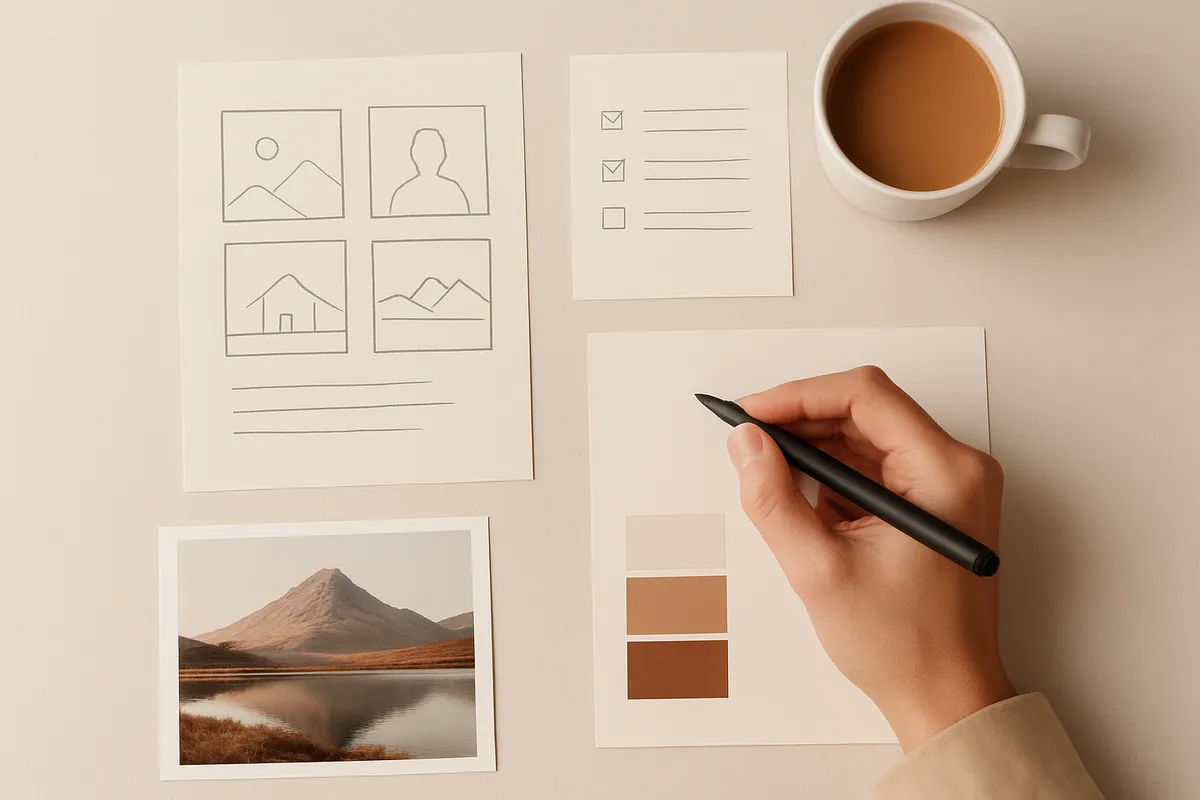
A brief that works reads like an editorial assignment, not a shot order, it tells the photographer what story each image serves, not just what to point the camera at. Get the brief wrong and you get generic results no matter how skilled the photographer is.
What a Photography Brief Needs to Feel Like Magazine Editorial
A brief built to commission photography for a brand magazine needs four things, and skipping any one of them shows up in the final pages.
- Narrative purpose. Every shoot should answer a question: what story beat does this image move forward? A property profile needs different images than a founder interview, even if both are for the same issue.
- Mood and tone references. Pull actual pages, not mood-board clichés. Show the photographer the exact kind of light, color grading, and framing the editorial calls for, specificity here removes guesswork on set.
- A shot list tied to story beats. Not “ten lifestyle shots” but a list mapped to the article’s structure, the opening spread image, the mid-story detail shots, the closing portrait. Each one earns its place because a page needs it.
- Technical specifics. Format and orientation matter more in print than most teams expect. A two-page spread needs horizontal compositions with room for a gutter; a vertical image forced into a spread gets cropped badly. Color treatment, warm film tones versus clean digital neutrality, should be decided before the shoot, not fixed in editing.
The brief is also where restraint gets built in. Luxury photography earns its authority through composition, subject choice, and what it leaves out, negative space, a single considered detail, a person caught mid-thought rather than posed and smiling at the lens [1]. A logo in frame or a product angled for maximum visibility turns an editorial image into an ad; the brief should say explicitly what not to include.
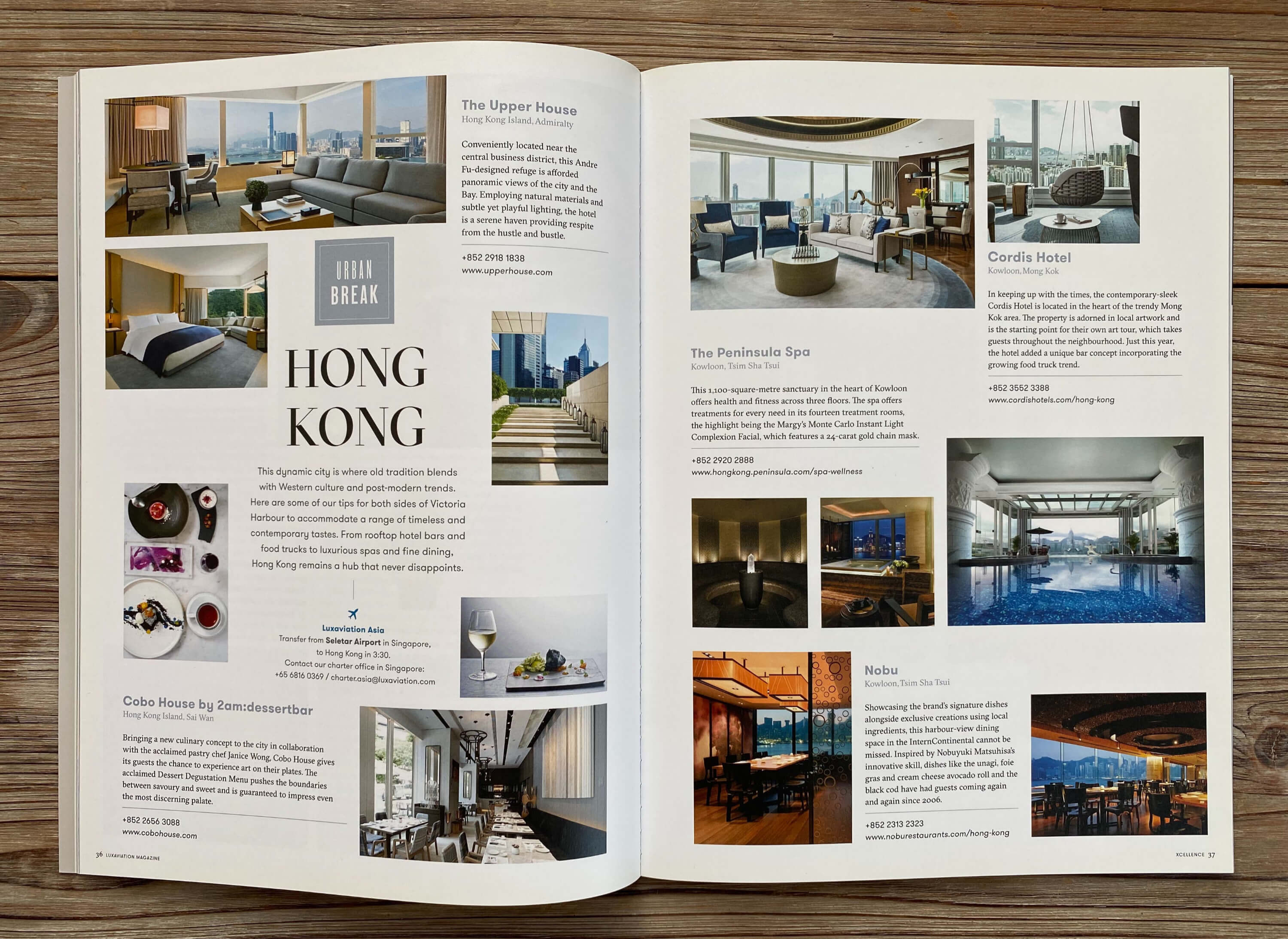
Pairing is what separates a magazine from a brochure. The same photograph reads as an advertisement or as a credible editorial moment depending on the caption, the headline it sits under, and where it falls in the sequence of the story. A striking portrait next to a headline that asks a real question lands differently than the same portrait next to a tagline. This is layout work, not photography work, but it starts at the brief stage, because the photographer needs to know how the image will be used to compose it correctly.
How Long the Process Takes From Concept to Published Images
Expect weeks, not days, between concept and a published spread, location scouting, talent coordination, and at least one revision round all take real time. Rushing the brief is the single most common reason photography ends up looking like stock imagery: a vague brief produces generic coverage, and no amount of retouching fixes that after the shoot. Rethink Publishing builds the brief as part of the editorial spine for each issue, so photography direction exists before a camera is booked, not after.
Verify the Work Reads as a Long-Term Brand Asset, Not a Campaign Image
Before a single page goes to print, test each photograph against one question: will this still mean something in five years, or does it only work inside this quarter’s campaign? That distinction separates a magazine image from an ad unit, and it’s the filter you apply before approving any spread.
Run every finished image through a short checklist. Does it survive outside its original campaign context, stripped of the headline and offer that justified it? Does it still make sense in five years, or does it date itself with a trend, a slogan, or a visible promotion? Would a reader actually keep the page, fold the corner, come back to it, or does it blend into the next spread without friction? If an image fails any of those three tests, it belongs in a digital ad, not in something you intend to commission photography brand magazine readers will hold onto.
How Print Longevity Changes the Way You Commission Photography
A social post cycles out in a day or two; a printed photograph sits on a coffee table or an office shelf for years, which changes what “good” means at the point of commissioning. Luxury brands already understand this calculus for product photography, composition, lighting, and texture are treated as the visual experience itself, not decoration around it [1]. Apply the same standard to brand magazine photography. A shot built to perform for 48 hours of impressions is engineered differently than one built to hold a reader’s attention on a return visit months later. This is precisely the standard you should hold yourself to whenever you commission photography brand magazine work meant to outlast a single campaign.
What Makes a Photograph Worth Commissioning Rather Than Sourcing Elsewhere
Keepsake photography is specific and restrained, a single well-composed frame paired deliberately with text, built around a narrative the editorial team controls from the start. Disposable photography is generic and interchangeable, the kind of staged stock-adjacent image that could belong to any competitor in the category. The mechanism behind that gap is specificity: a photograph commissioned for your brand, your story, your issue, can’t be swapped out without the page falling apart. A licensed stock frame can.
That’s the real argument for commissioning over sourcing. You get control over the narrative the image tells, exclusivity no competitor can license from the same library, and consistency across every future issue because the same editorial eye shapes the whole run. Rethink Publishing builds this into its process, image sourcing and curation sit inside the same editorial direction as the writing, so photography is chosen to serve the story, not dropped in afterward to fill white space. As Sotheby’s Institute’s deep dive into high-end branding suggests, this level of narrative control is exactly what separates premium positioning from generic marketing output.
Common Mistakes to Avoid When Commissioning Brand Photography
Most photography fails as a brand asset for reasons that are entirely avoidable, and they almost always trace back to planning decisions made weeks before anyone picks up a camera.
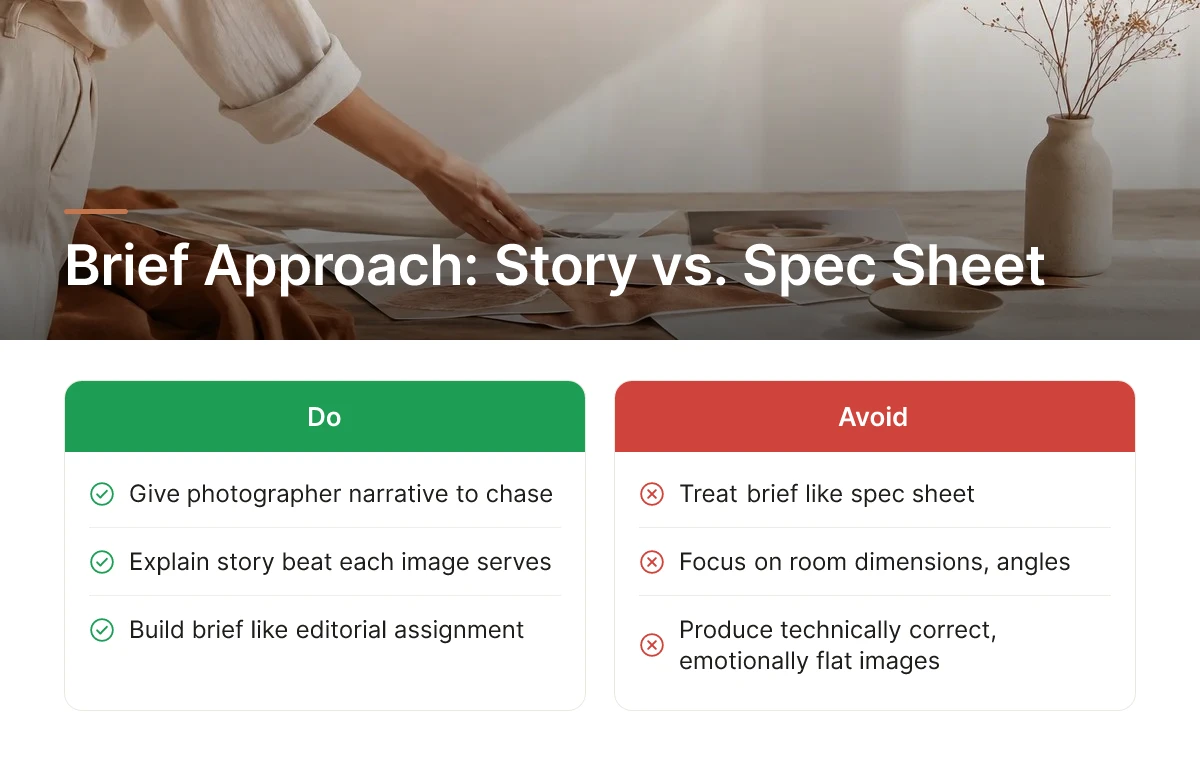
We’ve watched companies spend serious budget on a shoot, then end up with images that look like they came from a product catalogue. The brief is usually the culprit. Treat the photographer brief like a spec sheet, room dimensions, product angles, lighting requirements, and you’ll get exactly that: technically correct, emotionally flat images. A story brief works differently. It gives the photographer a narrative to chase: who the subject is, what moment matters, why this room or this founder or this product deserves attention. That distinction separates a magazine from a brochure, and it has to happen before anyone books a shoot date.
The second failure point shows up on set, not on paper. When five or six internal stakeholders each weigh in on visual direction mid-shoot, the photographer ends up serving committee consensus instead of a clear point of view. One decision-maker, briefed properly in advance, produces sharper, more consistent results than a room full of people offering notes between takes.
Third, photography shot in isolation from text and layout rarely reads as editorial once it lands on a page. A magazine spread works because image and copy are paired with intent, the photo answers a question the text raises, or the layout gives a wide shot room to breathe next to a tight detail. Commission photography brand magazine work without that pairing in mind, and you’ll end up with a folder of strong individual images that don’t function together.
Fourth, picking a photographer purely on portfolio polish ignores fit. A photographer brilliant with fashion campaigns may have no instinct for hospitality interiors or law firm partner portraits [4]. Match the photographer to the industry and the story, not just the aesthetic. This guide to choosing a luxury brand photographer and building a portfolio lays out what fit actually looks like in practice.
Finally, compressing the timeline, treating a magazine shoot like a quick marketing shoot, is where quality quietly erodes. Location scouting, talent coordination, and shot-list development against an editorial spine all take real time, and skipping that stage shows in the final pages.
Frequently Asked Questions
Why do some brand photographs feel like keepsakes while others feel disposable?
A photograph feels like a keepsake when it was shot with a clear editorial purpose, not just a content calendar slot to fill. Generic marketing imagery is built to be scrolled past; it’s lit flat, framed safely, and stripped of narrative. Keepsake images come from a brief that asks what story this picture tells and who it’s for, the same discipline a magazine editor applies before a photographer ever picks up a camera [1].
How does intentional pairing of words and images change the perception of a photograph?
Pairing a photograph with the right words gives it a point of view, turning a nice picture into part of a brand’s story. A striking image placed next to flat caption copy still reads as decoration. The same image set against writing with a clear narrative voice reads as credibility, which is why magazine layout and copy get planned together, not bolted on after the shoot.
What’s the real difference between commissioned photography and generic marketing imagery?
Commissioned photography is directed toward a specific brand narrative; generic marketing imagery is produced to be broadly usable and quickly forgotten. Luxury brands rely on imagery to signal exclusivity and craftsmanship rather than simply illustrate a product or service [4]. Commissioned work involves a brief, a visual identity, and editorial direction before the shoot, stock-style imagery skips straight to the output, which is why it rarely holds a reader’s attention past a few seconds.
Does a company need a full magazine to justify commissioning editorial-quality photography?
No, editorial-quality photography has value on its own, but a magazine gives it a permanent, intentional home. Without that context, strong images often end up scattered across a website or social feed, where they lose the narrative thread that made them worth commissioning in the first place.
Who should be involved in deciding how to commission photography for a brand magazine?
Keep the decision-making group small: one editorial lead, one brand stakeholder, and the photographer. Broader input is useful earlier, during reference gathering and concept approval, but once a shoot begins, too many voices dilute the point of view. The goal when you commission photography brand magazine work is a single clear editorial vision carried from brief to final page, not a compromise between competing opinions.
How do you brief a photographer who has never shot editorial work before?
Give them a narrative brief instead of a shot list, explain the story the image needs to serve, show reference pages from other magazines, and walk through how the photo will sit next to copy and headline. Photographers used to product or event photography can absolutely adapt once they understand that the goal is to commission photography brand magazine readers will remember, not simply document a scene.
Should every issue of a brand magazine use the same photographer?
Not necessarily, but consistency in visual direction matters more than consistency in who holds the camera. If you rotate photographers, carry the same reference set, mood boards, and editorial brief structure across shoots so the publication still feels cohesive. Many teams that commission photography brand magazine projects across multiple issues keep one creative director overseeing style even as photographers change.
What’s a reasonable timeline to budget for a single editorial photography commission?
Plan for several weeks from initial brief to final delivery, covering concept approval, location and talent scouting, the shoot itself, and at least one revision round. Compressing this timeline is one of the fastest ways to end up with generic results. Teams that consistently commission photography brand magazine work successfully tend to build this lead time into their editorial calendar rather than treating it as flexible.
Can a smaller company with a modest budget still commission editorial-quality photography?
Yes, budget tier matters less than discipline in the brief. A tightly scoped shoot with a clear narrative, a strong reference set, and one decision-maker can outperform a lavish but unfocused production. Whether the approach is budget-friendly or more premium, the same principles apply: commission photography brand magazine work around a story, not around however much is available to spend.
Conclusion
Strong brand photography and a strong brand magazine depend on the same discipline: a clear editorial point of view set before a single photo is taken or a single page is laid out. Treat the brief, the narrative, and the pairing of image with copy as one decision, not three separate vendors. If your last photoshoot produced images that are already sitting unused in a folder, that’s a sign the brief came after the camera instead of before it. Start by drafting the editorial spine for your next brand story, the headline, the narrative arc, the reader you’re writing for, before you book a single photographer. Rethink Publishing builds that spine first, on every issue.
Sources & References
- The Role of High-Quality Imagery in Building a Luxury Brand
- Luxury Marketing: A Deep Dive into High-End Branding | Sotheby’s Institute of Art
- Photogenics – Luxury Brand Photography: How to Choose and Portfolio
Recommended Articles
Explore more from our content library: