
| Key Insight | Explanation |
|---|---|
| Brand voice is a physical experience in print | Paper weight, typography, white space, and editorial rhythm all communicate brand personality before a reader reads a single word. |
| Print demands a defined editorial spine | Unlike digital content, a print magazine can’t be updated after the fact. Your brand voice must be clear and documented before production begins. |
| Brand voice and brand tone are not the same | Voice is consistent across all publications. Tone shifts by context — a feature interview reads differently than a product profile, but both sound like the same brand. |
| 74% of millennials read print magazines | The audience for quality print is larger than most marketers assume, and it skews toward high-value, relationship-driven consumers. |
| Most brand magazines fail on voice, not design | Beautiful layouts with inconsistent or vague copy undermine credibility. Voice must lead. Design amplifies it. |
| End-to-end editorial management protects voice consistency | When a single studio handles strategy, writing, design, and print, the brand voice stays coherent from brief to bound copy. |
Brand voice print publications succeed when voice is treated as a design element, not an afterthought. Your brand voice is the consistent personality your company projects across every word it publishes — and in print, that voice becomes physical. Readers feel it in the weight of the paper, the breathing room between paragraphs, and the editorial confidence of a well-placed headline. Done right, brand voice print publications don’t just communicate — they create an experience that digital channels simply can’t replicate. [1]
This guide walks you through how to define, translate, and maintain your brand voice across a print publication. Whether you’re producing your first company magazine or refining an existing one, the steps here are drawn from real editorial practice. Expect to invest serious thinking time upfront — the payoff is a publication that reads like a coherent, credible world, not a collection of disconnected pieces. This is particularly relevant for brand voice print publications.
Difficulty: Intermediate. Time investment: 2–4 weeks for voice definition; ongoing through each issue’s production cycle.
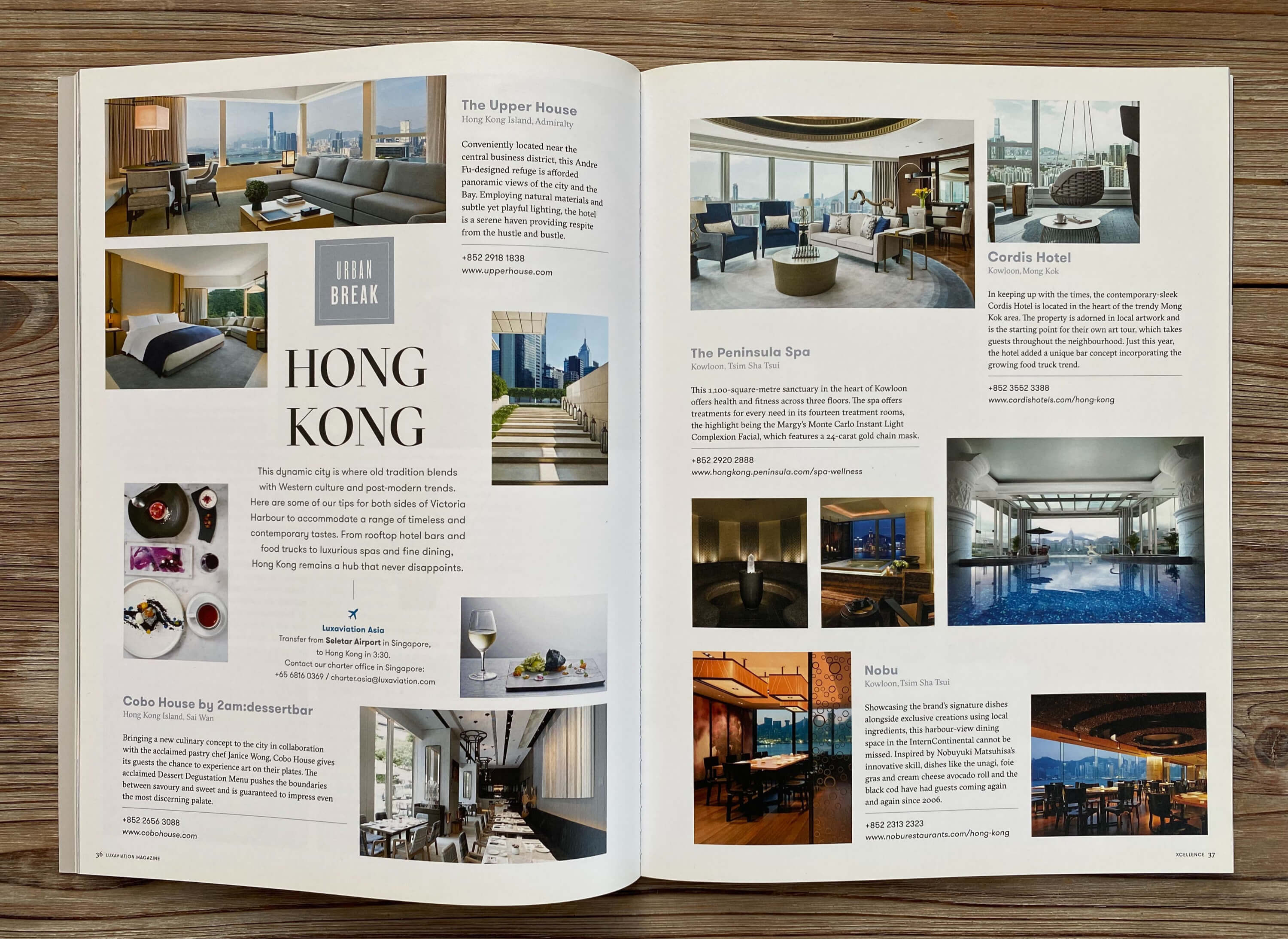
What Brand Voice Means in Print Publications: brand voice print publications
Brand voice in print publications is the sum of every deliberate editorial and design choice that makes a magazine sound and feel like it could only have come from your company. It’s more than word choice. It’s pacing, perspective, and the quiet confidence of knowing exactly what you will and won’t publish.
According to Qualtrics, brand voice is “the unique personality that your brand presents to the world.” [2] In a digital context, that personality lives in social posts and email subject lines. In print, it lives in every editorial decision from the opening essay to the caption under a photograph.
Voice vs. Tone: A Critical Distinction
These two terms get conflated constantly, and the confusion causes real problems in production. Here’s the practical difference:
- Brand voice is fixed. It’s the underlying personality — authoritative, warm, precise, irreverent, whatever defines your brand. It doesn’t change between issues or between sections.
- Brand tone is contextual. A profile of a long-standing client reads differently than a technical explainer. Both should sound like the same brand, but the emotional register shifts. [3]
The University of Arizona’s brand guidelines put it well: “Our brand voice is something that comes across in our written words as well as through our visual communications and lived experiences.” [3] That holistic framing matters enormously in print, where words and images are inseparable. When considering brand voice print publications, this point stands out.
Why Print Amplifies Brand Voice
Print does something digital can’t. It slows the reader down. A well-designed magazine creates a reading pace that’s entirely different from scrolling — and that slower pace means your brand voice has time to land properly.
- 81% of U.S. affluent readers consume print publications regularly
- 74% of millennials read print magazines, according to industry research
- Ultra-affluent readers consume 22% more print titles than average consumers
These aren’t nostalgic readers. They’re exactly the audience most premium brands are trying to reach — and they’re giving print their full, unhurried attention. [4]
What You’ll Need Before You Start
Before translating your brand voice into a print publication, you need four foundational elements in place. Missing any one of them will create inconsistency that no amount of good design can fix.
Prerequisites and Tools
- A documented brand voice guide: This doesn’t need to be a 50-page document, but it must clearly define your voice attributes (the 3–5 adjectives that describe how your brand speaks), what you will never say, and at least 3–5 examples of on-brand copy. MOO’s guide to tone of voice offers a solid framework for structuring this. [5]
- An editorial brief: The editorial brief (also called an editorial spine) defines the purpose, audience, and content pillars of your publication. It answers: Who is this for? What will they take away? What stories will we tell?
- A content hierarchy: Know which content types your magazine will include — features, interviews, opinion pieces, product profiles, data stories — and decide what voice register each requires.
- Visual identity assets: Your typeface system, color palette, and photographic style must be defined before design begins. Visual language and verbal language work together to carry brand voice.
- A decision-maker with editorial authority: Someone must have final sign-off on voice consistency. In practice, this is often the founder, CMO, or an editorial director at your publishing partner.
Pro Tip: Don’t start with design. Start with a single paragraph written in your brand voice, approved by your leadership team. That paragraph becomes the reference point for every editorial decision that follows. If a headline doesn’t sound like that paragraph, it’s wrong.
| Element | Why It Matters in Print | Common Gap |
|---|---|---|
| Brand voice guide | Provides the verbal reference point for all writers and editors | Exists only as a slide deck, never tested against real copy |
| Editorial spine | Ensures every article serves a defined editorial purpose | Missing entirely; content is assembled ad hoc |
| Visual identity | Typography and layout reinforce or undermine verbal voice | Brand colors applied, but typeface and spacing not specified |
| Editorial authority | Prevents voice drift through committee revisions | Too many approvers, each editing toward their own preference |
Step 1: Define Your Editorial Spine
An editorial spine is the structural framework that gives your publication its identity — the “why this magazine exists” statement that every content decision flows from.
The editorial spine (a term borrowed from traditional magazine publishing) is distinct from a content calendar or a list of topics. It defines the publication’s point of view, its relationship with the reader, and the emotional experience it’s designed to create. Without it, a magazine is just a collection of articles. With it, every page feels intentional. For those exploring brand voice print publications, this matters.
How to Build Your Editorial Spine
- State the publication’s purpose in one sentence. Not “to showcase our brand” — that’s a marketing objective. The editorial purpose is reader-facing: “To give our clients a deeper understanding of the forces shaping their industry, told through the stories of the people navigating them.”
- Define your reader’s mindset. How does your reader arrive at this magazine? Are they a client who already trusts you? A prospect encountering your brand for the first time? A partner in your industry? The answer changes everything about tone.
- Identify 3–4 content pillars. These are the recurring thematic territories your magazine will explore. For a hospitality brand, pillars might be: design, culture, craft, and place. For a law firm, they might be: insight, people, precedent, and perspective.
- Write your voice in action. Take one content pillar and write a 200-word sample article in your brand voice. This is your editorial north star — the piece every contributor and editor references.
- Define what you won’t publish. As Roy H. Williams notes, the most useful brand guidelines are as much about exclusion as inclusion. [6] Knowing what’s off-brand is as important as knowing what’s on-brand.
From experience, the brands that struggle most with editorial spine are those that try to make the magazine “about everything we do.” The strongest publications have a clear point of view that is adjacent to, not identical to, the company’s product offering.
Step 2: Translate Voice Into Visual Language
Translating brand voice into visual language means ensuring that every typographic and layout decision reinforces the verbal personality of your publication — so the magazine feels consistent even before a word is read.
This is where most companies get stuck. They hand off a brand voice document to a designer and expect the result to feel right. It rarely does, because verbal voice and visual voice require active translation, not passive application.
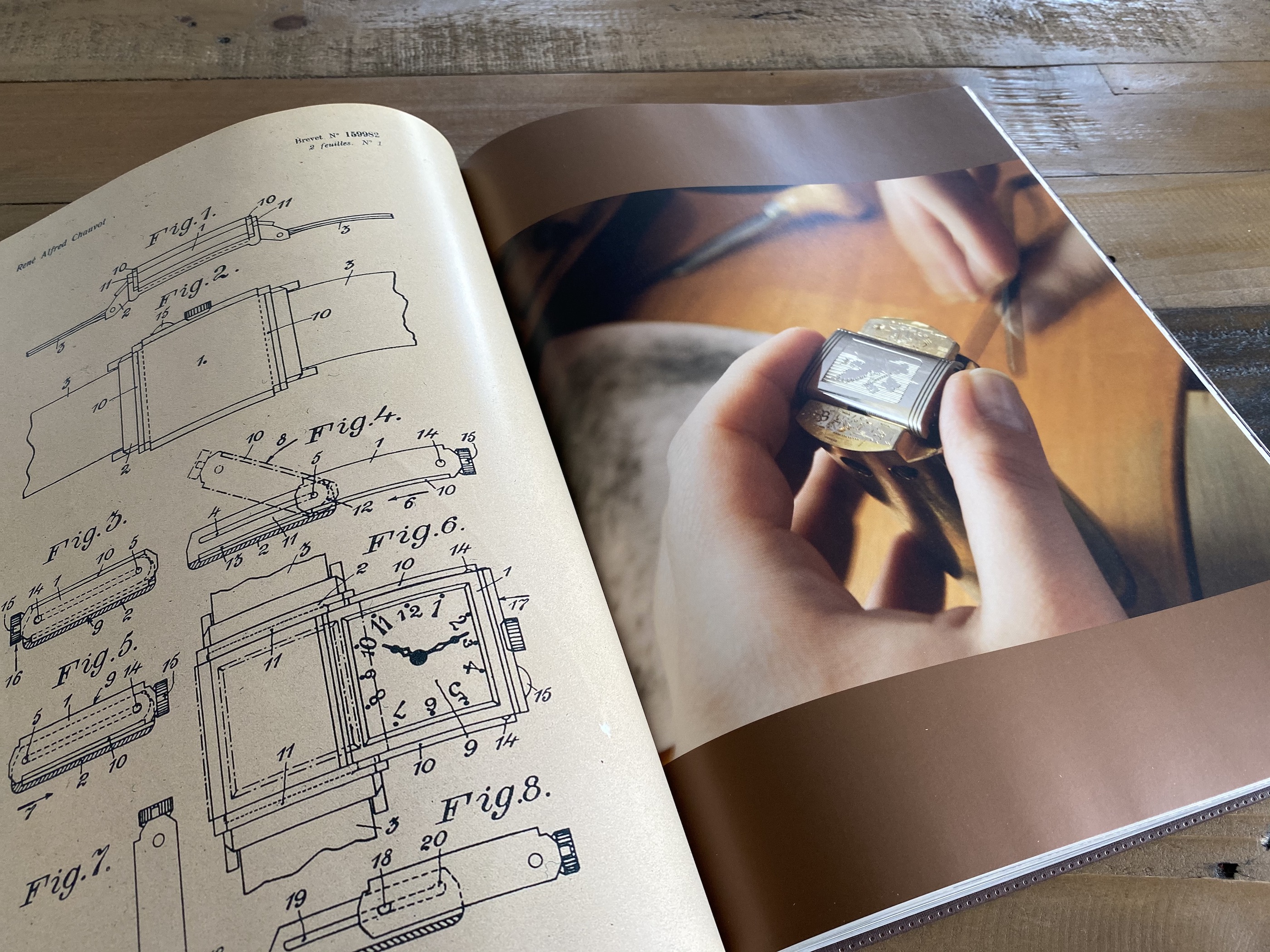
The Visual Voice Toolkit
- Typography as voice: A serif typeface with generous leading communicates considered, unhurried authority. A tight sans-serif grid signals precision and efficiency. Your typeface choice should match the adjectives in your brand voice guide. [7]
- White space as confidence: Brands that trust their content use white space generously. Crowded pages signal anxiety — the editorial equivalent of talking too fast. Premium publications breathe.
- Photography direction: The mood, color grading, and subject matter of your photography carries as much brand voice as your copy. A brand that describes itself as “warm and human” needs photography that reflects that — not cold, high-contrast architectural shots.
- Editorial rhythm: The sequence of content types within a magazine creates a reading rhythm. A long-form feature followed by a short visual essay followed by a data spread — that rhythm is itself a form of brand voice.
Pro Tip: Print a single spread from a magazine you admire and one from a magazine you find forgettable. Compare the two. The difference is almost never about the quality of the content — it’s about the visual confidence with which the content is presented. That confidence is brand voice made visible.
Texas A&M’s brand communications team captures this integration well: their guidelines note that brand voice must be “consistent across written language and visual language simultaneously.” [8] In a print publication, those two systems are inseparable.
Step 3: Apply Voice Across Every Content Type
Applying brand voice across every content type means writing consistent guidelines for features, interviews, captions, pull quotes, and even page furniture — so the publication sounds like a single editorial mind, not a committee. This directly impacts brand voice print publications outcomes.
A common mistake is writing brand voice guidelines for long-form content only, then leaving contributors to guess how to handle shorter elements. In practice, the short elements — headlines, captions, pull quotes, section intros — are where brand voice is most visible and most frequently broken.
Voice by Content Format
- Feature articles (1,000–2,500 words): These carry the fullest expression of brand voice. The opening paragraph sets the register for the entire piece. Contributors need a clear brief that specifies not just the topic but the perspective and emotional destination of the article.
- Interviews: The interviewer’s questions are as much a voice element as the answers. Questions that are curious, specific, and a little unexpected signal editorial intelligence. Generic questions (“What inspired you?”) undermine brand credibility.
- Captions: Captions are read more often than body copy. They should extend the voice of the article, not simply describe the image. A caption that says “The atrium at sunset” is a missed opportunity. A caption that says “Light arrives differently here. The architect counted on it.” carries brand voice.
- Pull quotes: Choose pull quotes that represent the editorial point of view, not just the most dramatic sentence. The pull quote is a promise about what the article delivers.
- Section headers and page furniture: Running heads, folio lines, and section titles should all be written in brand voice. These micro-copy elements accumulate into a strong sense of editorial personality.
Research published in the Journal of Customer Needs and Solutions found that brand voice consistency across touchpoints significantly strengthens reader identification with a brand — a finding that applies directly to multi-format print publications. [9]
Step 4: Maintain Voice Consistency Through Production
Maintaining voice consistency through production requires a structured editorial workflow with clear sign-off points — because brand voice drift happens gradually, one small compromise at a time.
In practice, voice consistency is a production management problem as much as a creative one. The further a piece of content travels from the original brief, the more likely it is to drift. Each revision round introduces a new set of preferences. By the time a CEO, a marketing director, a legal reviewer, and a designer have all touched a piece, the original voice can be unrecognizable.
Building a Voice-Consistent Workflow
- Brief every contributor with a voice reference. Don’t send a topic and a word count. Send the editorial spine, a voice example, and 3–5 words that describe the tone for that specific piece.
- Appoint a single editorial voice owner. This person — an editorial director or managing editor — has final authority on voice. Their job is to read every piece of copy before it goes to design and ask: “Does this sound like us?”
- Create a brand voice checklist for copy review. A simple checklist covering sentence length, vocabulary, prohibited phrases, and structural habits makes voice review faster and more consistent. Print Magazine’s guide to voice and tone guidelines outlines a practical framework for building this. [7]
- Review designed pages for voice, not just accuracy. When a piece goes to layout, review the designed spread — not just the Word document. Typography choices, image selection, and layout decisions can amplify or undermine the verbal voice.
- Lock voice before print. Unlike digital content, print can’t be corrected after the fact. Final voice approval must happen before files go to the printer, not after.
Pro Tip: At Rethink Publishing, we’ve found that the most effective voice protection tool isn’t a style guide — it’s a single editorial director who reads every word before it goes to press. Documents don’t protect voice. People do.
Step 5: Test and Refine Your Brand Voice in Print for 2026
Testing and refining your brand voice in print publications means gathering structured feedback after each issue and using it to sharpen your editorial guidelines — not to chase trends, but to deepen what’s already working. This is particularly relevant for brand voice print publications.
Most brands treat their first issue as a finished product. The most effective brand publishers treat it as a first draft of an ongoing editorial identity. As of 2026, the brands producing the strongest custom print magazines are those that have iterated their voice deliberately across multiple issues.
Practical Feedback Methods
- Qualitative reader interviews: Ask 5–10 readers to describe the magazine in three words. Compare their words to your intended brand voice adjectives. The gap between the two is your next brief.
- Internal voice audit: After each issue, read the magazine cover to cover as a stranger would. Mark every paragraph where the voice feels off. Look for patterns — is it always the captions? The interview intros? The product profiles?
- Contributor feedback loop: Ask your writers what was hardest to get right. Their answers reveal where your voice guidelines are unclear or incomplete.
- Competitive reading: Read three publications that your target audience also reads. Not to copy them, but to understand the editorial standard your magazine is being unconsciously compared to.
One hospitality brand we work with discovered through reader interviews that their magazine was consistently described as “beautiful but a bit distant.” Their intended voice was “authoritative and refined.” The gap was real — and fixable. Two issues later, after adjusting the opening paragraphs of feature articles to be more directly addressed to the reader, the feedback shifted to “authoritative and warm.” Same brand. Sharper voice.
According to VistaPrint’s brand voice research, brands that actively maintain and refine their voice documentation see measurably stronger audience recognition over time. [2] In print, where each issue is a permanent artifact, that compounding effect is even more pronounced.
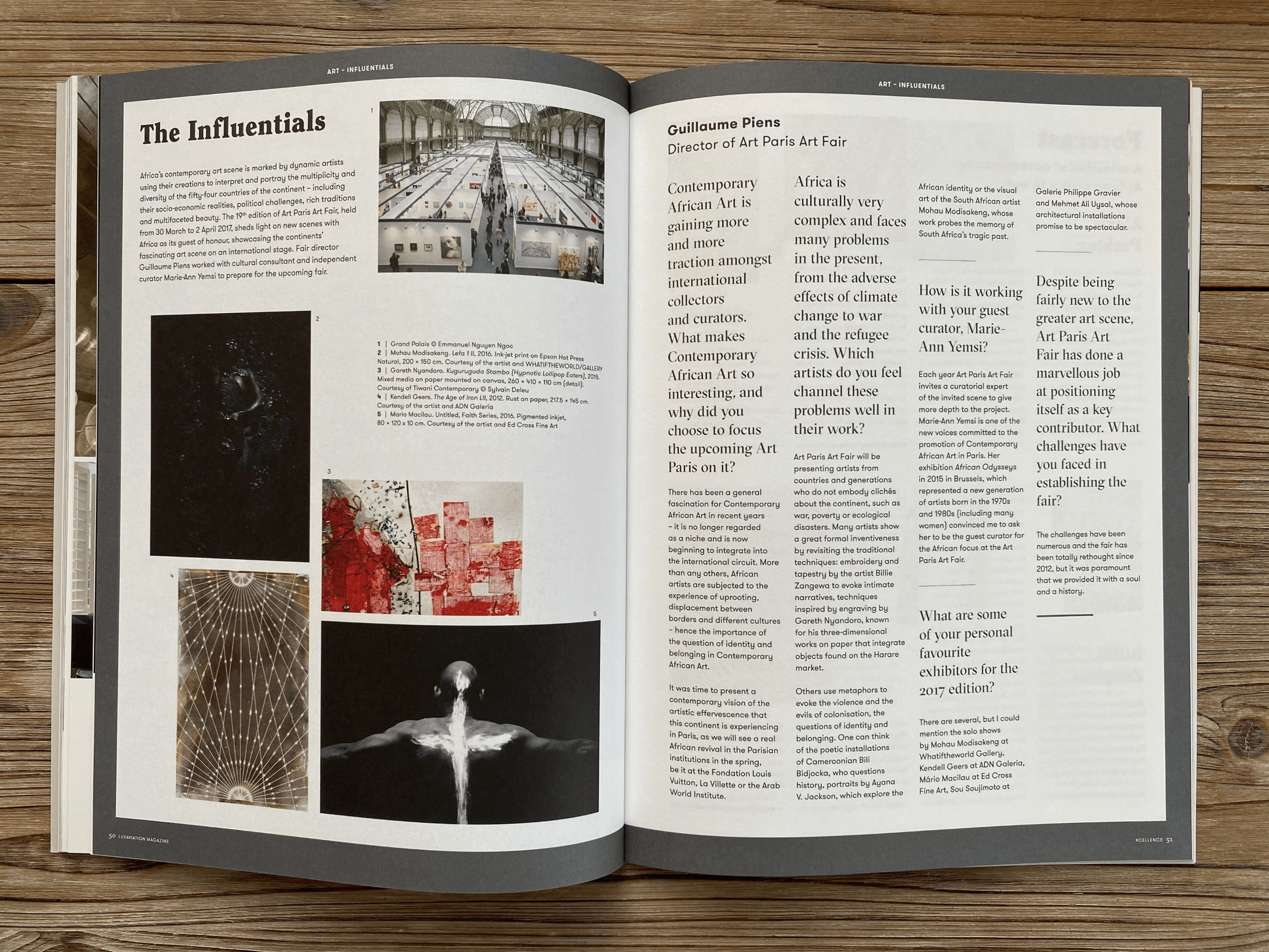
Common Mistakes to Avoid
The most common mistakes in brand voice print publications share a single root cause: treating voice as a communication problem rather than an editorial discipline.
The Five Most Damaging Voice Errors
- Starting with design, not voice. A beautiful layout built around unclear copy will always feel hollow. Voice must be defined before a single layout begins. The design’s job is to amplify the voice, not compensate for its absence.
- Using aspirational adjectives as a substitute for actual voice. “Innovative, dynamic, and client-focused” is not a brand voice. It’s a list of things every company claims to be. As Roy H. Williams observes, most style guides are “worthless documents” precisely because they describe a desired reputation rather than an actual way of speaking. [6]
- Letting too many people edit the copy. Every revision round introduces new voice preferences. A legal reviewer who rewrites for clarity, a CEO who softens a strong opinion, a marketing director who adds a product mention — each individual change seems reasonable, but collectively they sand down the voice until nothing distinctive remains.
- Ignoring the micro-copy. Captions, pull quotes, section headers, and running heads are read more frequently than body copy. Leaving them unguided means the most-read elements of your magazine are also the least voice-consistent.
- Confusing consistency with repetition. Brand voice consistency doesn’t mean every article sounds identical. It means every article sounds like it comes from the same editorial mind — one that has a range of registers but a recognizable personality underneath all of them. [5]
One pitfall to watch for specifically in premium brand publications: over-polishing. In practice, the editorial choices that make a magazine feel most authoritative are often the ones that take a clear, slightly unexpected position. Copy that has been revised into total safety sounds like no one in particular. That’s not brand voice. That’s brand silence.
Winston-Salem State University’s brand guidelines make a point that applies directly to corporate magazines: “Brand voice is consistent across its publications — from websites to advertising to printed materials.” [10] Consistency is the baseline. The goal is consistency with character. When considering brand voice print publications, this point stands out.
Sources & References
- Oneupweb, “Finding Your Brand Voice and Tone: A Guide,” 2024
- Qualtrics, “Brand Voice: Definition, Benefits & Tips to Create One,” 2024
- University of Arizona Marketing & Communications, “Voice & Tone,” 2024
- PRINTING United Alliance, “Media Brands,” 2024
- MOO Blog, “How to Write Your Brand Tone of Voice Guidelines,” 2024
- Wizard of Ads, “Why The Road Runner’s Style Guide Kicks Your Style Guide’s A$$,” 2024
- Print Magazine, “7 Steps for Establishing Your Voice and Tone Guidelines,” 2024
- Texas A&M Marketing and Communications, “Voice and Tone,” 2024
- Springer Nature, “Brand Voiceprint,” Journal of Customer Needs and Solutions, 2021
- Winston-Salem State University, “Brand Voice,” 2024
Frequently Asked Questions
1. What is brand voice in print publications?
Brand voice in print publications is the consistent editorial personality expressed through every written and visual element of a magazine or book — from feature articles and headlines to captions, pull quotes, and layout choices. Unlike digital content, brand voice print publications make that personality permanent and physical. Readers experience it as a feeling of coherence and authority that builds trust over time.
2. How is brand voice different from brand tone?
Brand voice is fixed — it’s the underlying personality of your brand that stays consistent across all publications and platforms. Brand tone is contextual — it shifts depending on the content type, audience, and emotional register of a specific piece. A feature interview and a product profile should both sound like the same brand, but one might be warmer and more narrative while the other is precise and informational.
3. How do you define brand voice for a print magazine?
Start with three to five voice adjectives that genuinely describe how your brand speaks — not how you want to be perceived, but how you actually communicate at your best. Test those adjectives against real copy samples. Write a single reference paragraph in your brand voice and use it as the editorial north star for every contributor, editor, and designer working on the publication.
4. Can brand voice be maintained across multiple issues?
Yes, but it requires active management. The most effective protection is a single editorial voice owner — an editorial director or managing editor — who reads every word before it goes to design. Supplementing that role with a written voice checklist and contributor briefing templates keeps voice consistent even when different writers contribute to different issues.
5. What makes brand voice print publications feel premium?
Premium brand voice print publications feel premium when verbal and visual voice are aligned. That means typography that matches the editorial personality, photography that reflects the brand’s emotional register, generous white space that signals editorial confidence, and copy that takes a clear point of view rather than hedging in all directions. The physical quality of the paper and binding matters too — readers feel authority before they read a word.
6. How many brand voice attributes should a print publication have?
Three to five is the practical range. Fewer than three and the voice lacks definition. More than five and contributors can’t hold them in mind while writing. Each attribute should be paired with a “what this means in practice” explanation and at least one example of on-brand copy — otherwise the attributes remain aspirational rather than actionable.
7. Should a company magazine sound like the company’s other marketing materials?
It should sound like the same brand, but not the same format. A company magazine is an editorial product, not an extended brochure. The brand voice should be recognizable, but the editorial register should be more considered, more narrative, and less promotional than a website or brochure. Readers can tell the difference — and they trust publications that feel genuinely editorial rather than thinly disguised marketing. For those exploring brand voice print publications, this matters.
8. How does working with a specialist publisher protect brand voice?
A specialist publisher brings editorial direction experience that most in-house teams don’t have. They can translate a brand’s identity into an editorial spine, brief contributors consistently, and review every element — copy, design, photography, and layout — through the lens of voice coherence. For brand voice print publications, end-to-end editorial management is the most reliable way to ensure the finished product sounds and feels like a single, coherent editorial mind.
Conclusion
Brand voice in print publications isn’t a communication strategy. It’s an editorial discipline. The brands that get it right don’t just produce beautiful magazines — they produce magazines that feel unmistakably like them, issue after issue, page after page.
The steps here give you a practical framework: define your editorial spine, translate voice into visual language, apply it consistently across every content type, protect it through production, and refine it deliberately over time. Results will vary depending on the clarity of your starting point and the editorial rigor of your process — but the direction is clear.
One limitation worth naming: this guide covers voice strategy and process. It doesn’t cover print production specifics — paper selection, binding formats, print run sizing — which are equally important to the final reader experience.
Our team at Rethink Publishing has spent over 20 years doing exactly this work across 80+ high-end magazines for brands in hospitality, architecture, law, real estate, and beyond. The publications that stay on clients’ coffee tables for years aren’t the ones with the biggest budgets. They’re the ones where brand voice was defined with precision, protected with discipline, and expressed with genuine editorial confidence. That’s what a well-made brand voice print publication delivers — and it’s worth every bit of the investment.
Recommended Articles
Explore more from our content library: