
Understanding how to repurpose magazine content digital is essential. A printed magazine earns its longest life when its best stories are deliberately rebuilt, not just copied, for the channels your audience already checks daily: your website, your email list, and your social feeds. The print edition stays the premium, collectible artifact; digital extensions exist to deepen engagement with people who already encountered that quality, reminding them of it between issues. Done well, this extends reach without cheapening the object itself. Done carelessly, dumping PDF spreads online, it signals the opposite of the craft the print edition represents.
Prerequisites: What to Confirm Before You Repurpose Magazine Content for Digital
Before you repurpose magazine content for digital, confirm the magazine has real editorial substance, a clear digital role, and owned channels built to hold it.
Skip this check and you’ll spend budget dressing up weak material instead of extending strong material. Four things need to be true first.
1. The magazine has an actual editorial spine
A magazine assembled from recycled press releases and stock photography has nothing worth extending online, digital will only expose the gap. The brand document distinction matters here: a magazine is an editorial product built around real stories and real reporting, not a marketing pamphlet with a cover price. If your publication doesn’t clear that bar, the fix is upstream of any digital plan, rebuild the editorial foundation first [1].
2. Sort stories by what survives the screen
Some features depend on the physical object, a gatefold spread, a tactile paper stock, the pacing of turning a page, and they lose their effect the moment you flatten them into a browser window. Others are carried by an idea, a strong quote, or a well-told narrative arc, and those travel intact to a website or an email. Go through the issue story by story and separate the two categories before you build anything, rather than defaulting to “post it all.”
3. Decide what job digital is doing
Set the role before production starts: digital exists to remind readers of the brand between print issues and deepen a relationship they’ve already started, not to replace the print run’s distribution. Treating a website excerpt as a reminder changes what you publish and how often, compared to treating it as a substitute magazine. Confusing the two is how brands end up diluting the exclusivity that made the print edition valuable in the first place [3].
4. Audit whether your channels can hold the content
Check your website’s image rendering, your email template’s design flexibility, and your social accounts’ visual consistency before committing to a rollout. Premium photography and considered layout lose impact fast on a channel that compresses images or buries them under ads [2]. If your owned channels can’t currently do the content justice, fix that infrastructure first, or the digital extension will undercut the very credibility it’s meant to reinforce.
Repurpose Magazine Content for Digital Without Losing the Premium Feel
Dropping a magazine’s PDF onto a webpage is the fastest way to undo the quality the print piece just built, format signals effort, and a scanned spread signals none. The content inside might be excellent. The presentation says otherwise.
What Happens to Brand Perception When Print Content Moves to a Screen
A reader holding a well-made magazine feels weight, paper stock, and layout decisions that took real craft to produce. That same reader, scrolling a flattened PDF on a phone, sees tiny text, awkward pinch-zooming, and a two-page spread cut in half by their screen edge. The gap between those two experiences is where brand perception breaks down.
This matters more for the audience Rethink Publishing works with, CEOs and brand leaders whose magazine functions as a relationship tool, not a brochure. A beautifully printed piece sitting on a client’s coffee table does specific work: it signals taste, permanence, and investment. If the digital version looks like an afterthought, it contradicts the message the printed object just delivered. Inconsistency between the two isn’t neutral, it actively undoes the credibility the print piece earned.
Which Elements Carry Over and Which Need Rebuilding
Some elements survive the move to a screen intact. Strong photography still reads as strong photography. A well-structured interview, built around clear questions and a real narrative arc, works in any format. A distinctive brand voice, the tone that made the print piece feel considered rather than promotional, carries over directly, because voice lives in the writing, not the paper.
Other elements don’t survive the transition unchanged. Double-page spreads lose their impact when compressed into a single scrollable column. Print-only typography choices, fine serifs, generous margins, specific kerning, often don’t render the same way across browsers and devices. Long-form pacing, written for a reader with a quiet ten minutes and a physical object in hand, needs a different rhythm online, where attention is shorter and interrupted.
The fix isn’t translation, it’s reconstruction around the destination channel. A web feature can afford breathing room and a properly sized hero image, closer to the print experience than most publishers attempt. An email, by contrast, should carry one idea and one photograph, not a miniature version of the whole spread. Content marketing research on repurposing supports this channel-specific approach: matching format to the moment a reader encounters it, rather than forcing one layout to serve every channel, is what keeps a message intact as it moves [5]. Decide what each channel can actually hold before you decide what to repurpose magazine content digital into, the content order should follow the channel, not the other way around.
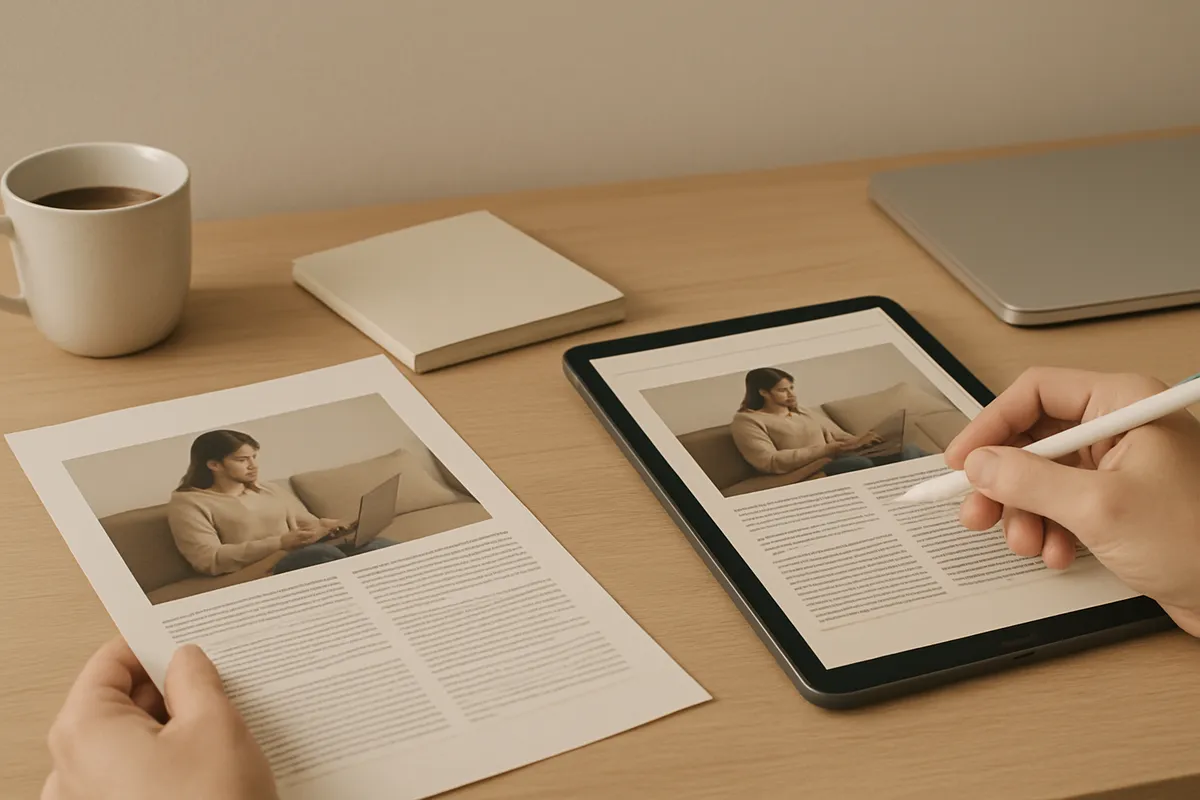
Choose the Right Digital Channels for Each Magazine Story
Not every magazine story belongs on every channel, match the story’s depth and visual weight to the channel built to carry it, and keep the rest on owned platforms you control. Choosing the right channel is, in practice, most of what it means to repurpose magazine content digital well.
That last point matters more than it sounds. A social feed decides, algorithmically, who sees a post and for how long, usually a matter of hours before it’s buried under the next hundred posts. Your website and your email list don’t work that way. When you repurpose magazine content digital, the version that lives on your own domain or lands in a subscriber’s inbox keeps the context, pacing, and quality control that made the print piece worth producing in the first place. A feed strips that away by design.
Matching Stories to the Right Channel
A simple rule solves most of the decision-making here. A feature profile, the 2,000-word piece on a client, a project, or a founder, belongs on a web long-form page, where the reader can sit with it the way they sat with the print spread. A single striking image, the kind that stopped readers mid-flip in the magazine, belongs on social, where visual impact travels fast but context doesn’t need to. A short narrative hook, one paragraph that captures the emotional center of a longer story, belongs in email, where it can do its job in fifteen seconds and send the reader somewhere deeper if they want it.
Trying to force a long-form feature into a social caption, or cramming a single photo into a full email layout, wastes the asset. Each channel has a job. Assign the story to the channel built for that job, not the other way around.
Where Social Media Fits, and Where It Doesn’t
Social media earns its place for reach and for teasing the physical object, a short video of pages turning, a close-up of the stock and the binding, a carousel of three images from the issue. It’s a poor vehicle for anything resembling depth. The qualities that made a story worth printing, pacing, texture, the slow build of an editorial narrative, don’t survive a six-second scroll. Treat social as the invitation, not the experience itself: its job is to make someone curious enough to visit the website or open the email where the fuller story lives [5].
Email, meanwhile, does something social can’t: it reintroduces a reader to the magazine’s world between issues, without any redesign of the original content. A short excerpt, framed with one new sentence of context, functions as a touchpoint that keeps the brand present in a way a disappearing social post never will [1].
Verify Whether the Digital Extension Is Working
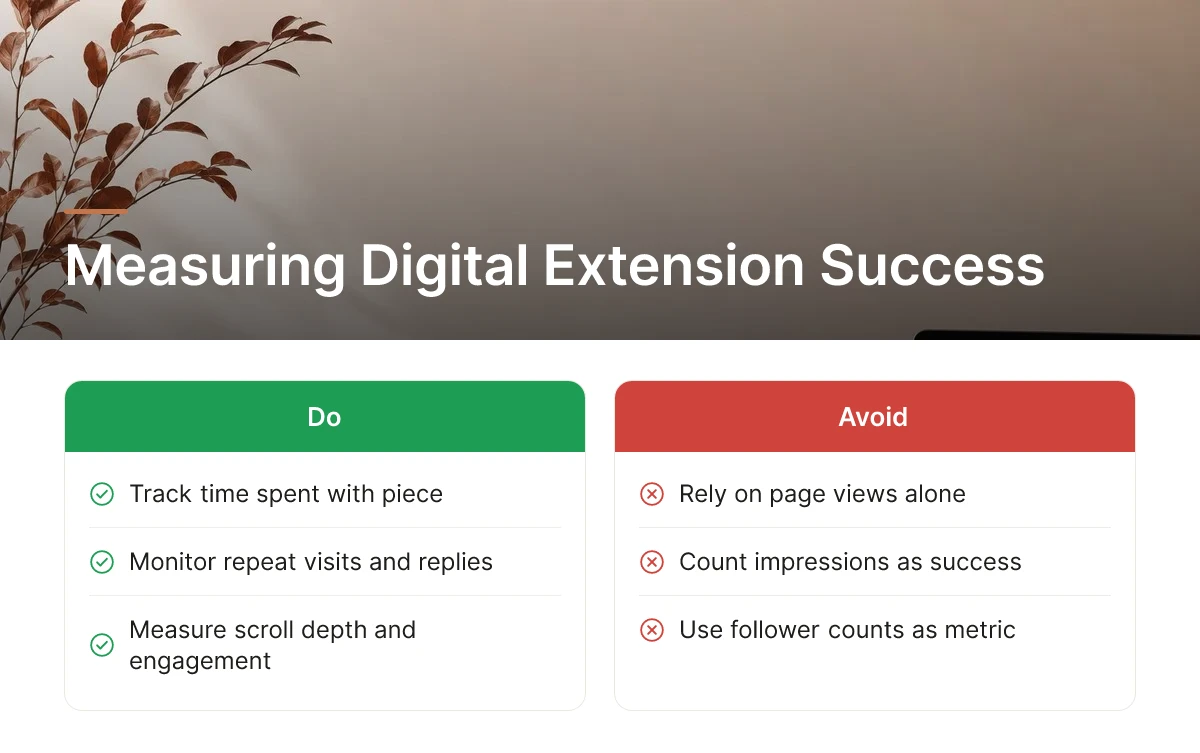
Success shows up in depth of engagement, not reach: watch time spent with a piece, repeat visits, and whether readers reply or forward it, not how many people merely saw it.
Page views and follower counts answer the wrong question. A luxury hospitality brand can post an excerpt from its latest issue and rack up thousands of impressions without a single person reading past the headline. Those numbers flatter a dashboard but say nothing about whether the brand built trust. The goal of digital extension is depth, so the metrics that matter are the ones that show someone sat with the content: average time on page for a feature article, scroll depth on a long-form piece, or an email open followed by a click into the full story. A forwarded email or a reply asking “where can I get the print copy” tells you more than a thousand passive views ever will.
Run a simple before-and-after check across issues. Pull the list of people who engaged with digital excerpts from issue one, then compare it against who engaged with issue two. If it is largely the same names returning, opening the email, clicking through, spending time on the page, the brand is building a readership. If each issue draws a fresh, unconnected audience with no overlap and no follow-through, the content is being consumed once and forgotten, which defeats the purpose of using a magazine to deepen client relationships in the first place.
Consistency is the other test, and it is where many brands lose ground. The decision to repurpose magazine content digital only pays off if the digital version holds the same visual standard and editorial voice as the print piece. A cropped, low-resolution excerpt dropped into a generic social template reads as a step down, and readers notice the gap even if they cannot name it. Repetition of the same quality and tone across every digital touchpoint is what builds the association between the brand and craftsmanship; any inconsistency, a sloppy PDF, an off-brand caption, erodes that association regardless of how much traffic the post drives. Rethink Publishing treats this consistency as part of the deliverable, not an afterthought, because a magazine’s credibility online depends on looking like an extension of the print object, not a dilution of it.
Common Mistakes to Avoid When Extending Print Content to Digital
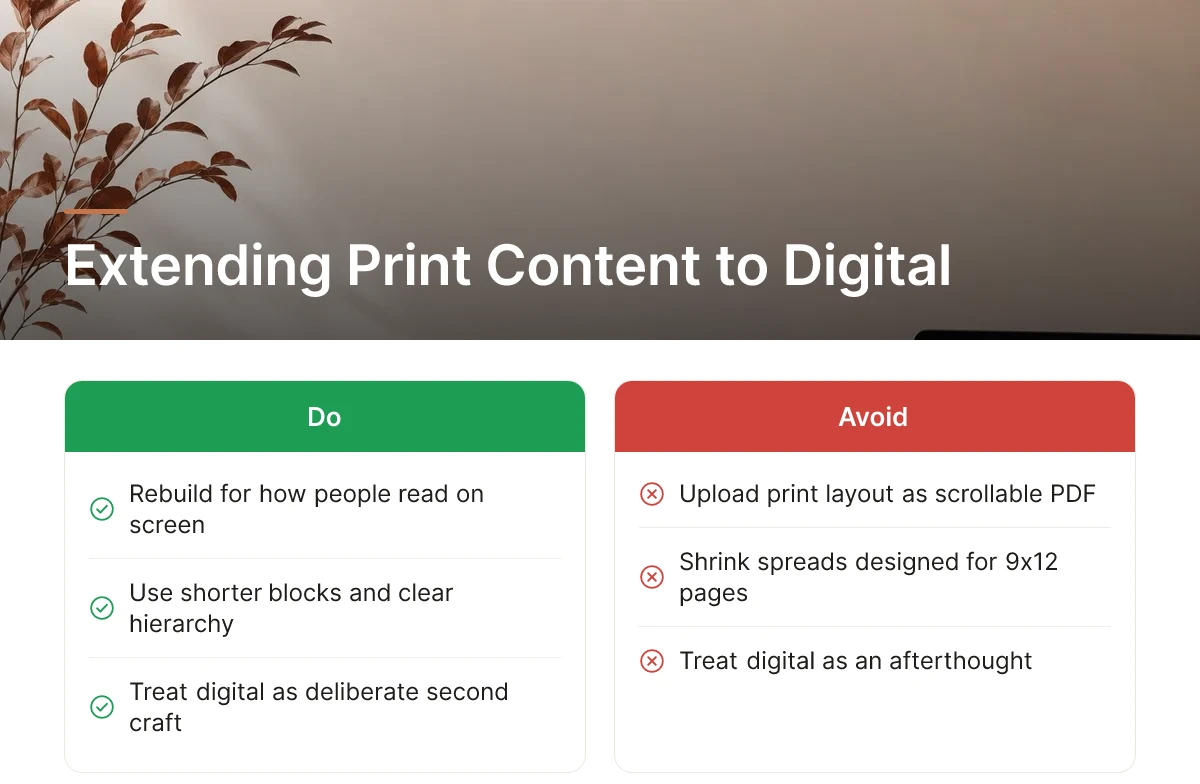
Most failed attempts to repurpose magazine content digital share the same root cause: treating digital as an afterthought instead of a second, deliberate craft.
- Uploading the print layout as a scrollable PDF. A spread designed for a 9×12 page, read by hand, at a relaxed pace, does not shrink gracefully onto a phone screen. Readers pinch and zoom, lose the typography, and abandon the page, and the print piece suffers too, because the digital version now feels like the lesser cousin instead of a companion. If a feature is worth repurposing, it’s worth rebuilding for how people actually read on screen: shorter blocks, a clear hierarchy, images sized for the device in hand.
- Posting the same content the same way everywhere. A company newsletter, an Instagram caption, and a website article serve different reading moments and different attention spans [5]. Dropping identical copy into all three signals that no one thought about the channel at all. Repurposing works only when format and pacing shift per platform, a long profile becomes a short visual story on one channel and a full excerpt on another, built around the moment in the buying process that channel supports [5].
- Optimizing for reach instead of depth. Chasing impressions and shares pulls editorial decisions toward whatever performs broadly, which is rarely what makes a brand magazine distinct in the first place. Content strategy built around vanity metrics drifts toward generic output over time, the opposite of the lifestyle storytelling [1] that made the original magazine worth reading. Visibility without depth rarely moves a relationship forward [5].
- Letting digital quietly replace the physical object. The print edition is the asset, the one readers keep on a coffee table and pass to a colleague [3]. Digital excerpts exist to point back to it, not to make the printed piece optional. Lose sight of that, and the company has spent the budget to build a magazine while slowly training its audience to expect only the online version.
Every one of these mistakes comes from skipping the planning step: deciding, before anything goes online, what the digital extension is for and what it protects. That’s the discipline Rethink Publishing builds into the editorial spine from day one, so the digital layer supports the print object instead of competing with it. Avoiding these mistakes is largely what separates brands that repurpose magazine content digital successfully from those that only dilute it.
Frequently Asked Questions
What makes a printed magazine worth extending into digital at all?
A printed magazine earns digital extension when its editorial quality can survive the jump without looking thin. Print’s physical permanence builds trust and perceived value in a way screens struggle to replicate [3], which means the source material has to be strong enough to carry that weight into a digital format without feeling like leftover content.
How does digital extension serve the brand differently than print alone?
Print builds the deep, unhurried connection; digital extends the window in which that connection stays visible. A reader keeps the magazine on a coffee table for months, but a digital excerpt can resurface the same story to a client who never received the physical copy, widening reach without replacing the original experience.
Does investing in editorial rigor during print production pay off in digital performance?
Yes, a clear editorial spine in the print edition is what makes digital excerpts worth reading on their own. Content built around overt sales messaging tends to perform worse once stripped of print’s physical context, while editorial-style storytelling that foregrounds the brand subtly carries over because it was never dependent on packaging to hold interest [1].
How do you decide which magazine stories belong on which digital channel?
Match the story’s depth to the channel’s attention span, not the other way around. A long-form founder profile suits a website feature or email to existing clients, while a single striking image or pull-quote suits social, the mistake is forcing an entire layout into a channel built for five-second scrolling, which flattens the editorial work rather than showcasing it.
How do you know if digital extension is strengthening brand perception or diluting it?
Perception holds when digital pieces still read like excerpts of something substantial, not standalone content competing with every other post in a feed. If a digital share makes someone want the physical issue, it’s working; if it makes the brand look like it’s chasing engagement, pull back and revisit what’s being extended and why.
Conclusion
Digital extension works when it protects scarcity rather than erasing it, excerpts and behind-the-scenes glimpses that make people want the physical issue, not substitutes for it. The editorial spine built during print production is what makes any of this worth doing; without it, digital pieces have nothing to extend. Before posting a single excerpt, audit your next issue’s content for which three or four stories actually carry enough depth to survive outside the printed page. If that list is short, the gap is in the magazine’s editorial planning, not the digital strategy. Start there, Rethink Publishing builds that editorial spine before layout or production begins, at www.rethink-publishing.com.
Sources & References
- How a brand magazine can be the missing link in your content marketing
- Digital Marketing for Luxury Brands: High-End Fashion Strategies | Power Digital
- Antares Media Holding – Why Luxury Brands Still Invest Heavily in Print
- How to Repurpose Content Across Channels & Keep Your Voice
Recommended Articles
Explore more from our content library: