
|
Key Insight |
Explanation |
|---|---|
|
Not every brand needs a magazine |
High end print magazines work best for companies focused on long-term brand building, trust, and reputation, not quick lead generation. |
|
Editorial spine is non-negotiable |
The best high end magazine publishers start with a clear editorial strategy before touching design, photography, or layout. |
|
End-to-end management saves time and quality |
Publishers who handle everything from concept to delivery produce more cohesive results and spare clients from managing dozens of vendors. |
|
Print isn’t dead; it’s more selective |
As of 2026, premium print publications are growing in perceived value precisely because digital content has become so disposable. |
|
Design-led doesn’t mean design-only |
A truly high end publication balances visual beauty with substantive writing. One without the other falls flat. |
|
Track record matters more than promises |
Look for publishers with decades of work, a visible portfolio, and cross-industry experience before signing any contract. |
A high end magazine publisher is a specialized firm that creates premium print publications with exceptional editorial, design, and production quality. These publishers serve brands, organizations, and individuals who want a tangible, lasting medium to communicate their story. In a media environment saturated with fleeting digital content, a well-crafted magazine becomes something people actually keep.
But here’s the honest truth: not every company needs a magazine. If you’re chasing quick conversions, there are faster tools. A high end magazine publisher is for those who understand that brand perception, loyalty, and emotional connection are built over time, not overnight. The companies that get the most from print are the ones willing to invest in something with real weight and real staying power.
This guide breaks down the 10 essential traits that separate a genuinely elite publisher from one that simply charges premium prices. Whether you’re a hospitality brand, a private club, a real estate developer, or a professional services firm exploring custom publishing for the first time, these criteria will help you evaluate your options with clarity. We’ve drawn on over two decades of industry experience, current 2026 market research, and insights from editorial and design professionals to build this list.
Table of Contents
1. Editorial-First Approach
An editorial-first approach means the publisher builds every issue around a clear content strategy before any design work begins. This is the single most important trait that separates a genuine high end magazine publisher from a glorified design studio.
Why the Editorial Spine Matters
Think of the editorial spine as the backbone of your publication. It defines the themes, the narrative arc, the tone of voice, and the audience you’re speaking to. Without it, you end up with a pretty brochure. With it, you have a publication that carries real meaning.
According to the Content Marketing Institute’s 2026 B2B Content Marketing Report, 72% of the most successful content marketers say having a documented editorial strategy is the primary driver of their results [1]. That principle applies to print just as powerfully as it does to digital.
-
Story selection comes first. The publisher should curate topics and angles that resonate with your audience, not just fill pages.
-
Voice consistency is essential. Every article, caption, and headline should sound like it belongs to the same publication.
-
Audience intent drives decisions. A strong editorial spine considers what readers will care about six months from now, not just today.
What to Ask a Prospective Publisher
Request examples of editorial plans or content strategies they’ve developed for past clients. If a publisher can’t show you how they think about story architecture, that’s a red flag. From experience, the publishers who skip this step produce magazines that feel scattered and generic, no matter how beautiful the photography.
Pro Tip: Before your first meeting with any high end magazine publisher, write down the three things you want readers to feel after putting the magazine down. This simple exercise reveals whether you need editorial depth or just visual flair.
2. Design-Led Production
Design-led production means that visual excellence is embedded in every stage of the publishing process, from layout and typography to image curation and paper selection. A high end magazine publisher treats design not as decoration but as a language that reinforces the editorial message.
The Difference Between Pretty and Purposeful
Anyone can make something look good on a screen. Making something feel good in someone’s hands is a different craft entirely. The physicality of print demands attention to details that digital designers rarely consider: paper weight, binding method, ink finish, the way a spread opens.
Research from the Paper and Packaging Board and IPSOS (2024) found that 67% of consumers say they find printed materials more trustworthy than digital alternatives [2]. That trust is built partly through tactile quality. Cheap paper and sloppy layouts undermine credibility faster than a typo.
-
Typography sets the tone. A luxury publication uses typefaces with intention, not default fonts.
-
White space is a design choice. Crowded layouts signal budget constraints. Generous spacing signals confidence.
-
Image curation is editorial. Every photograph should earn its place on the page, not fill a gap.
Pairing Words and Images With Intention
The best publishers pair text and visuals so that neither could stand alone as effectively. A photograph isn’t just illustrative. It advances the story. A caption isn’t just descriptive. It adds a layer of meaning. This level of intentionality is what makes a magazine feel like a keepsake rather than a catalog.
3. End-to-End Project Management
End-to-end management means one publisher handles the entire production chain: strategy, writing, design, photography, image rights, printing, quality control, and delivery. This is where many brands waste enormous time and money, by trying to coordinate five or six separate vendors.
Why Fragmented Production Fails
When you hire a writer here, a designer there, a printer somewhere else, and a project manager to hold it all together, quality slips through the cracks. Tone drifts between articles. Design doesn’t match the editorial intent. Print specs get miscommunicated. The result is a publication that feels assembled rather than crafted.
A fully managed process eliminates these gaps. The client focuses on their business. The publisher handles everything. According to a 2025 Deloitte study on outsourced creative services, organizations that use a single integrated partner for content production report 40% fewer revision cycles and 28% faster time to completion [3].
-
Single point of accountability. One team owns the outcome, which means no finger-pointing between vendors.
-
Consistent quality control. The same creative director who approves the editorial plan also signs off on the final print proof.
-
Simplified client experience. You have one relationship to manage, not a dozen.
What “Fully Managed” Should Include
At minimum, look for a publisher that covers these stages under one roof:
-
Editorial strategy and content planning
-
Professional writing and editing
-
Art direction and layout design
-
Photography sourcing and image rights management
-
Print production and paper selection
-
Quality control and press checks
-
Delivery logistics

4. Deep Industry Experience
Deep industry experience means the publisher has produced high-quality magazines consistently over many years, across multiple sectors. A track record of 10, 15, or 20+ years tells you something no portfolio alone can: this team knows how to deliver, repeatedly, under real-world conditions.
Why Longevity Signals Reliability
Publishing is an unforgiving business. Deadlines are hard. Print errors are permanent. Client expectations in the luxury space are exacting. Publishers who have survived and thrived for decades have built systems, relationships, and instincts that newer firms simply haven’t developed yet.
The U.S. Bureau of Labor Statistics reports that roughly 20% of new businesses fail within the first year, and about 45% within five years [4]. A publisher with two decades of continuous operation has proven its ability to deliver quality and maintain client trust through economic cycles, industry shifts, and the massive digital disruption of media.
-
Portfolio depth matters. Look for 50+ completed publications, not just a handful of showcase pieces.
-
Repeat clients signal satisfaction. If brands return for second, third, or tenth issues, that’s the strongest endorsement.
-
Cross-industry work shows adaptability. A publisher who has produced magazines for hospitality, architecture, real estate, and professional services understands how to translate different brand identities into print.
Questions to Evaluate Experience
Ask how many total publications they’ve produced. Ask to see work from different industries. Ask for client references. A confident, experienced high end magazine publisher will welcome these questions because their track record speaks for itself.
5. Premium Print and Paper Quality
Premium print and paper quality means the publisher selects materials and printing techniques that elevate the reading experience to something tactile and memorable. In 2026, as digital fatigue continues to grow, the physical qualities of a magazine have become even more important as a differentiator.
Paper, Ink, and Binding: The Details That Matter
The weight of the paper. The sheen of the cover. The way the spine holds when the magazine lies open on a coffee table. These aren’t superficial considerations. They’re the difference between a publication someone keeps for years and one that goes into recycling the same week.
|
Element |
Standard Publication |
High End Publication |
|---|---|---|
|
Paper weight (cover) |
200-250 gsm |
300-400 gsm with soft-touch or textured finish |
|
Paper weight (interior) |
90-115 gsm |
130-170 gsm, often uncoated or silk |
|
Binding |
Saddle-stitch or stapled |
Perfect bound or section-sewn binding for durability |
|
Color reproduction |
4-color CMYK |
6-color or Pantone spot colors for accuracy |
|
Finishing |
Gloss lamination |
Spot UV, foil stamping, embossing, debossing |
The Sensory Experience of Print
A study published by the International Journal of Advertising (2023) found that tactile engagement with printed materials activates emotional memory centers in the brain more effectively than screen-based content [5]. This is why coffee table books and high end magazines create stronger brand recall. They engage more senses.
Pro Tip: Always request a paper dummy before committing to a print run. A reputable high end magazine publisher will produce a blank mock-up with your chosen paper stock, binding, and cover finish so you can feel the final product before a single page is printed.
6. Brand Strategy Integration
Brand strategy integration means the publisher doesn’t just produce a magazine. They ensure every editorial and design decision reinforces your brand’s identity, positioning, and long-term goals. A magazine without strategic alignment is just expensive content.
Turning Brand DNA Into Print
The most effective custom publications feel like natural extensions of the brand they represent. They don’t announce “this is marketing.” They embody the brand’s values, aesthetic, and voice so completely that readers experience the brand rather than being sold to.
This requires the publisher to invest time upfront in understanding your brand. Not just your logo guidelines, but your audience, your competitive landscape, your aspirations. According to McKinsey’s 2026 report on brand-building effectiveness, companies that maintain consistent brand presentation across all platforms see revenue increases of up to 23% compared to those with inconsistent messaging [6].
-
Brand voice translation. The publisher should be able to articulate your brand’s tone in written content, not just replicate your visual identity.
-
Audience alignment. Every story selection should serve your target reader’s interests and aspirations.
-
Strategic positioning. The magazine should position your brand within a broader lifestyle or professional context, not in isolation.
Beyond the Brochure
This is a critical distinction. A brochure talks about your company. A magazine talks about the world your company inhabits. The best high end magazine publishers understand this difference instinctively. They create publications where your brand is the curator, not the subject. That’s what makes readers want to keep the publication on their shelf.
7. Transparent and Calm Process
A transparent process means the publisher communicates clearly at every stage, with defined timelines, approval milestones, and no surprises. For clients investing significant budgets in print, predictability is just as valuable as creativity.
What Swiss Precision Looks Like in Publishing
In practice, the best publishing studios run like well-oiled machines. There’s a clear production timeline. Approval gates are defined before work begins. Feedback rounds are structured. And when something changes (because something always changes), the team adapts without drama.
-
Defined milestones. You should know exactly when you’ll see the editorial plan, first layouts, revised layouts, and final proofs.
-
Structured feedback. Good publishers guide clients through feedback rather than leaving them to react to a 100-page PDF with no context.
-
No scope creep surprises. Pricing and deliverables should be clear from the start, with any additions discussed and agreed before execution.
Why Calm Matters
Publishing a magazine involves dozens of moving parts. Writers, photographers, designers, printers, paper suppliers, image libraries. If the publisher operates in a state of perpetual urgency, that chaos will bleed into the final product. The studios that produce the most polished work are often the calmest, because they’ve built systems that absorb complexity so the client doesn’t have to.
8. Curated Creative Team
A curated creative team means the publisher works with a handpicked network of top-tier writers, photographers, designers, and editors rather than relying on a rotating pool of generalists. Quality in publishing is deeply personal. It depends on the specific people doing the work.
Specialists Over Generalists
The difference between a good magazine and a great one often comes down to the individual talent behind it. A writer who understands luxury hospitality will produce fundamentally different work than a generalist content writer. A designer who has spent years in editorial layout thinks differently than a web designer adapting to print.
-
Editorial talent. Look for publishers who work with experienced journalists and editors, not content mills.
-
Design talent. Art directors with editorial backgrounds understand pacing, visual storytelling, and the relationship between text and image.
-
Photography expertise. Whether commissioning original shoots or curating from libraries, the publisher should have a sophisticated visual eye.
The Boutique Advantage
Larger agencies often assign your project to whoever is available. Boutique publishing studios choose the right people for each project. This selectivity is a hallmark of quality. According to the Association of Magazine Media (MPA), publications produced by specialized editorial teams consistently outperform generic corporate content in reader engagement metrics [7].
9. Cross-Industry Versatility
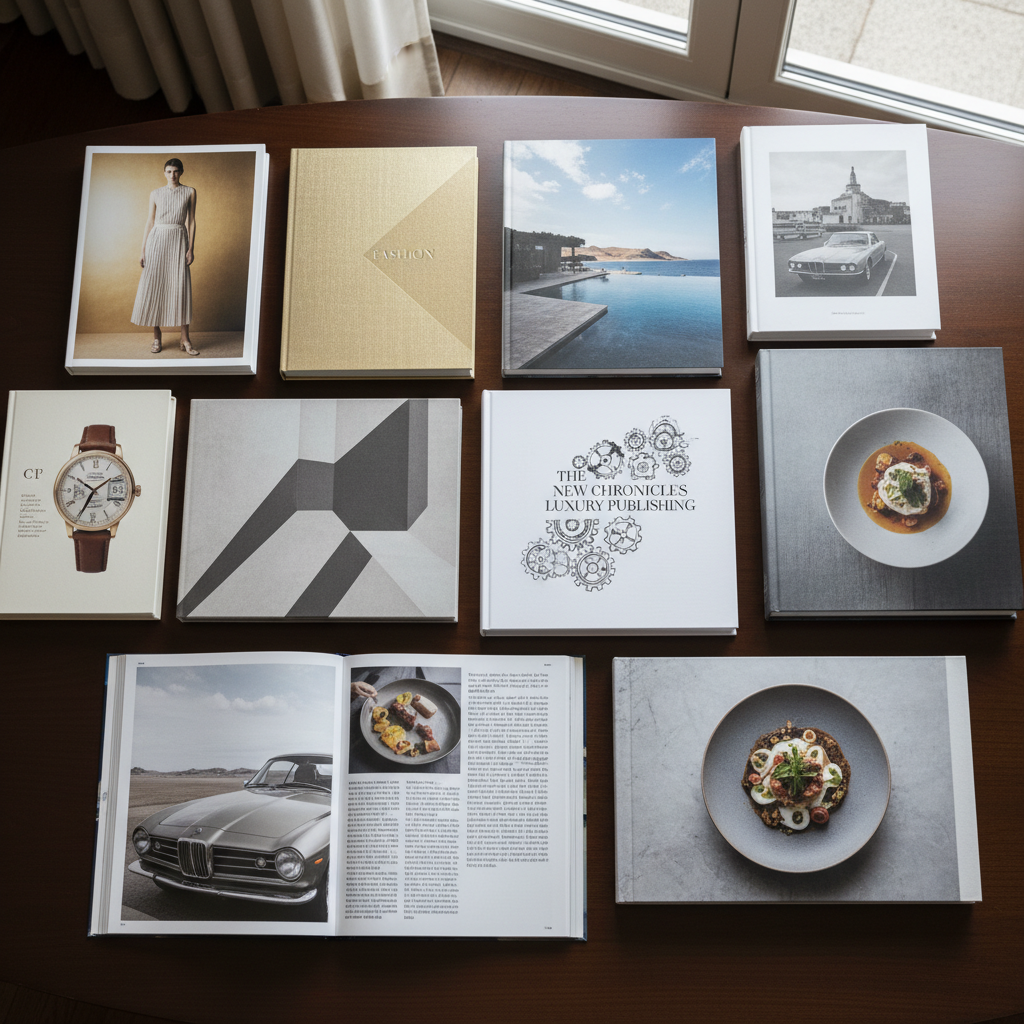
Cross-industry versatility means the publisher has successfully produced magazines for brands in very different sectors, from hospitality and design to professional services and technology. This breadth proves they can adapt their editorial and design approach to any brand context.
Why Range Signals Strength
A publisher who has only ever worked in one industry may struggle to bring fresh perspectives to your project. Conversely, a team that has produced coffee table books for hotels, magazines for private clubs, and publications for cybersecurity firms has demonstrated something valuable: the ability to listen, learn, and translate unfamiliar subject matter into compelling content.
-
Hospitality and real estate require aspirational storytelling and stunning visual presentation.
-
Architecture and design demand technical accuracy paired with aesthetic sensitivity.
-
Professional services (law, finance, cybersecurity) need the ability to make complex topics accessible and engaging.
The Portfolio Test
When evaluating a high end magazine publisher, look at the range of their portfolio. Can they show you work across at least three or four different industries? Do those publications each feel distinct, or do they all look like variations of the same template? Versatility without sameness is the mark of a truly skilled team.
10. Lasting Marketing Value
Lasting marketing value means the magazine continues to work for your brand long after publication day. Unlike a social media post with a 24-hour lifespan, a well-made print magazine stays in people’s hands, homes, and offices for months or even years.
The Longevity Advantage of Print
A 2024 study by MarketingSherpa found that 82% of consumers trust print advertising and editorial content more than any digital format [8]. But trust is only part of the equation. Longevity is the other. A magazine placed in a hotel lobby, a waiting room, or a client’s home continues generating impressions indefinitely. There’s no algorithm throttling its reach. No ad spend required to maintain visibility.
-
Physical presence. A magazine on a coffee table is a silent, persistent brand ambassador.
-
Shareability. People pass physical magazines to colleagues, friends, and family. Each pass is an organic impression.
-
Conversation starter. From experience, clients regularly report that their magazines come up in business meetings months after distribution.
Measuring the Return
The ROI of a high end magazine isn’t measured in click-through rates. It’s measured in brand perception, client retention, and the quality of conversations it generates. Industry analysts suggest that custom publications delivered to existing clients can increase retention rates by 25-40%, depending on the sector and distribution strategy [9]. That’s a return most digital campaigns can’t match over the same time horizon.
Pro Tip: Plan your magazine’s distribution strategy before you finalize the editorial plan. Knowing whether the publication will live in hotel suites, be mailed to top clients, or be handed out at events should influence everything from content selection to paper weight and size.
How to Choose the Right High End Magazine Publisher in 2026
Choosing the right high end magazine publisher requires evaluating creative quality, process maturity, and strategic alignment with your brand. Price alone is a poor indicator. The cheapest option almost always costs more in revisions, missed deadlines, and underwhelming results.
A Decision Framework
Use this framework to compare prospective publishers systematically:
|
Evaluation Criteria |
What to Look For |
Red Flags |
|---|---|---|
|
Portfolio quality |
50+ publications across multiple industries |
Fewer than 10 completed projects or all in one sector |
|
Editorial capability |
In-house or dedicated editorial team with journalism backgrounds |
No editorial strategy phase; jumps straight to design |
|
Process transparency |
Clear timeline, defined approval stages, written scope |
Vague timelines, no production schedule, pricing ambiguity |
|
Design sophistication |
Original layouts, strong typography, intentional use of white space |
Template-based designs, stock-heavy imagery, cluttered pages |
|
Print expertise |
Knowledge of paper stocks, binding methods, finishing techniques |
Outsources all print decisions to a third-party printer |
|
Client references |
Willing to connect you with past clients; repeat business visible |
No references available; all testimonials are anonymous |
|
Strategic thinking |
Asks about your brand, audience, and goals before discussing design |
Leads with aesthetics and never asks about business objectives |
The Questions That Matter Most
-
How do you develop the editorial direction for a new publication?
-
Can you walk me through your production timeline from kickoff to delivery?
-
Who specifically will work on my project, and what is their background?
-
How do you handle feedback and revisions?
-
What paper stocks and printing partners do you recommend, and why?
-
Can I speak with two or three past clients?
If a publisher can answer all six of these questions confidently and specifically, you’re likely in good hands. If the answers are vague or generic, keep looking.
5. Is print publishing still relevant in 2026?
Yes, but selectively. Mass-market print circulation has declined, but premium, targeted print publications are growing in perceived value. The very scarcity of quality print in a digital-saturated world has made it more distinctive. Brands that invest in high end print magazines report stronger emotional engagement, higher trust, and longer content lifespan compared to digital-only strategies. Print isn’t competing with digital. It’s doing something digital can’t.
Conclusion
Finding the right high end magazine publisher isn’t about choosing the biggest name or the lowest price. It’s about finding a partner who combines editorial depth, design excellence, and production expertise under one roof, with a process that respects your time and protects your brand.
The 10 traits outlined here, from editorial-first thinking to lasting marketing value, form a practical checklist for evaluating any publisher you’re considering. If a prospective partner checks all 10 boxes, you’re likely looking at a team that can produce something genuinely special. If they can only check four or five, proceed with caution.
Should your company have a magazine? If you care deeply about how your brand is perceived, if you’re building for the long term, and if you’re ready to invest in something with real physical and emotional weight, then the answer is yes. If not, save your budget for something