
| Key Insight | Explanation |
|---|---|
| Definition | A design led publication prioritizes visual storytelling and aesthetic excellence alongside editorial content |
| Primary Purpose | Brand building, thought leadership, and creating lasting emotional connections with audiences |
| Key Differentiator | Editorial-first approach combined with museum-quality design standards |
| Target Timeline | Long-term brand investment, not quick conversion tool |
| Success Metric | Publications become keepsakes that stay in people’s hands and homes |
| Investment Level | Premium investment requiring commitment to quality and brand consistency |
What is a design led publication, and why are businesses investing in them when digital media dominates the landscape? A design led publication is a carefully crafted editorial product that prioritizes visual excellence and aesthetic cohesion alongside high-quality content. These publications transform brand identity into tangible, lasting communications that create deeper emotional connections than digital alternatives.
In 2026, as attention spans fragment across countless digital channels, design led publications offer something increasingly rare: a reason for audiences to slow down and genuinely engage with your brand message. They’re not brochures with added articles, but editorial products that carry your brand’s voice into the world with intentionality and weight.
What Is a Design Led Publication?
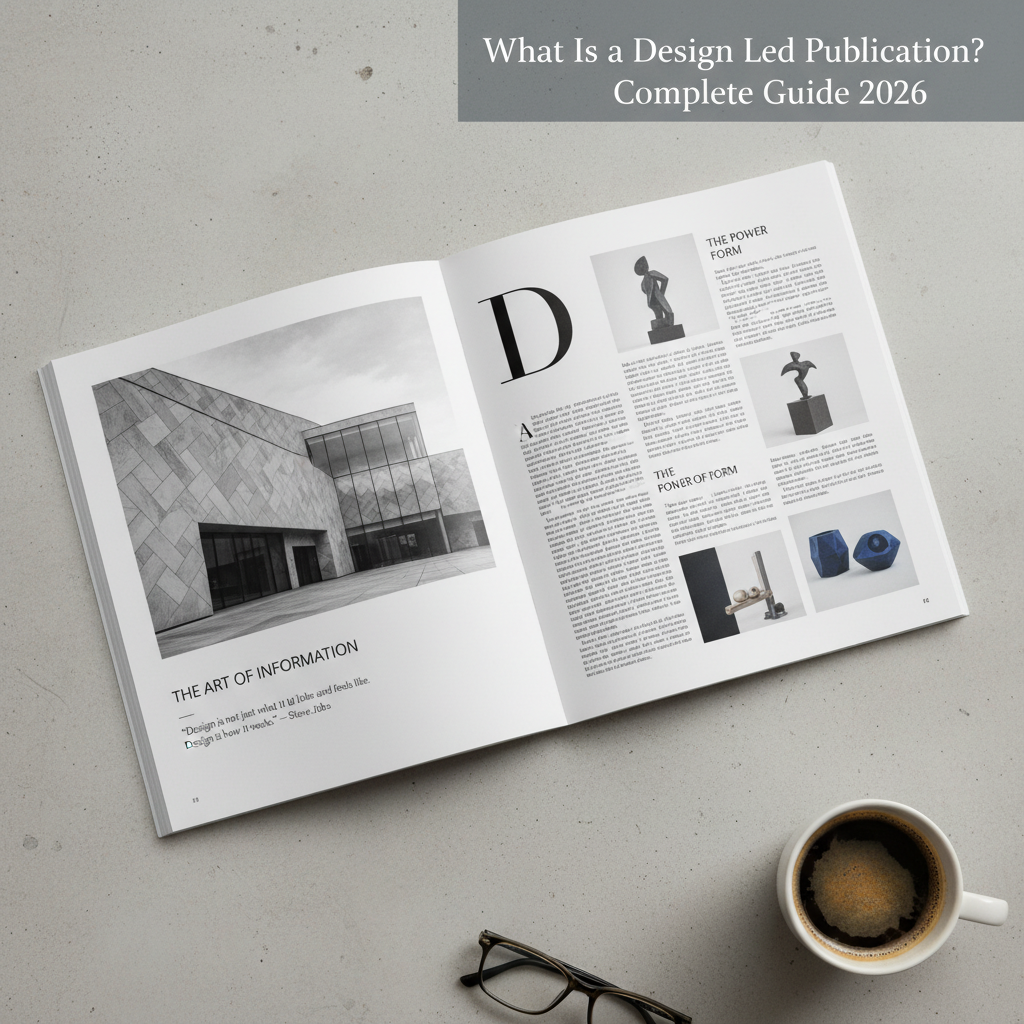
A design led publication is an editorial product where visual design drives the storytelling experience while maintaining rigorous editorial standards. Unlike traditional publications that add design as an afterthought, these publications begin with a clear editorial spine and pair words and images with strategic intention.
Core Characteristics
Design led publications share several defining characteristics that distinguish them from standard corporate communications:
- Editorial-first approach: Content strategy precedes design execution, ensuring substance drives form
- Visual hierarchy: Typography, imagery, and layout work together to guide reader experience
- Premium production values: High-quality paper, printing techniques, and finishing that reflect brand standards
- Curatorial mindset: Every element is intentionally selected and positioned for maximum impact
- Brand consistency: Design language aligns with broader brand identity while elevating it
The term “design led” doesn’t mean design dominates content. Rather, it signifies that design thinking influences every editorial decision from concept to completion. This approach ensures visual and textual elements work harmoniously to achieve communication objectives.
Industry Applications
Design led publications serve diverse industries, each leveraging the format’s unique strengths:
- Hospitality: Luxury hotels and resorts use them to showcase experiences and attract high-value guests
- Architecture and Design: Firms demonstrate expertise through project showcases and thought leadership
- Private Clubs: Exclusive organizations maintain member engagement and attract new prospects
- Real Estate: Premium developments communicate lifestyle aspirations to potential buyers
- Professional Services: Law firms and consultancies establish thought leadership in specialized markets
Pro Tip: The most successful design led publications solve a specific communication challenge for their audience, not just showcase the publishing organization’s capabilities.
How Design Led Publications Work
Design led publications operate through a systematic process that integrates editorial strategy, visual design, and production excellence into a cohesive communication tool.
Strategic Foundation
The process begins with establishing what industry professionals call the “editorial spine” – the central theme that connects all content elements. This isn’t just a topic selection; it’s a strategic framework that ensures every article, image, and design choice serves the publication’s core purpose.
Successful publications start with clear answers to fundamental questions:
- Audience definition: Who exactly will read this publication, and what do they care about?
- Communication objectives: What specific outcomes should this publication achieve?
- Brand positioning: How does this publication advance your organization’s reputation?
- Content differentiation: What unique perspective can you offer that competitors cannot?
Production Methodology
The production process follows a disciplined methodology that ensures quality and consistency:
| Phase | Duration | Key Activities |
|---|---|---|
| Strategy & Planning | 2-3 weeks | Editorial spine development, content mapping, design direction |
| Content Creation | 4-6 weeks | Writing, photography, illustration, image rights clearance |
| Design & Layout | 3-4 weeks | Typography, layout design, color implementation |
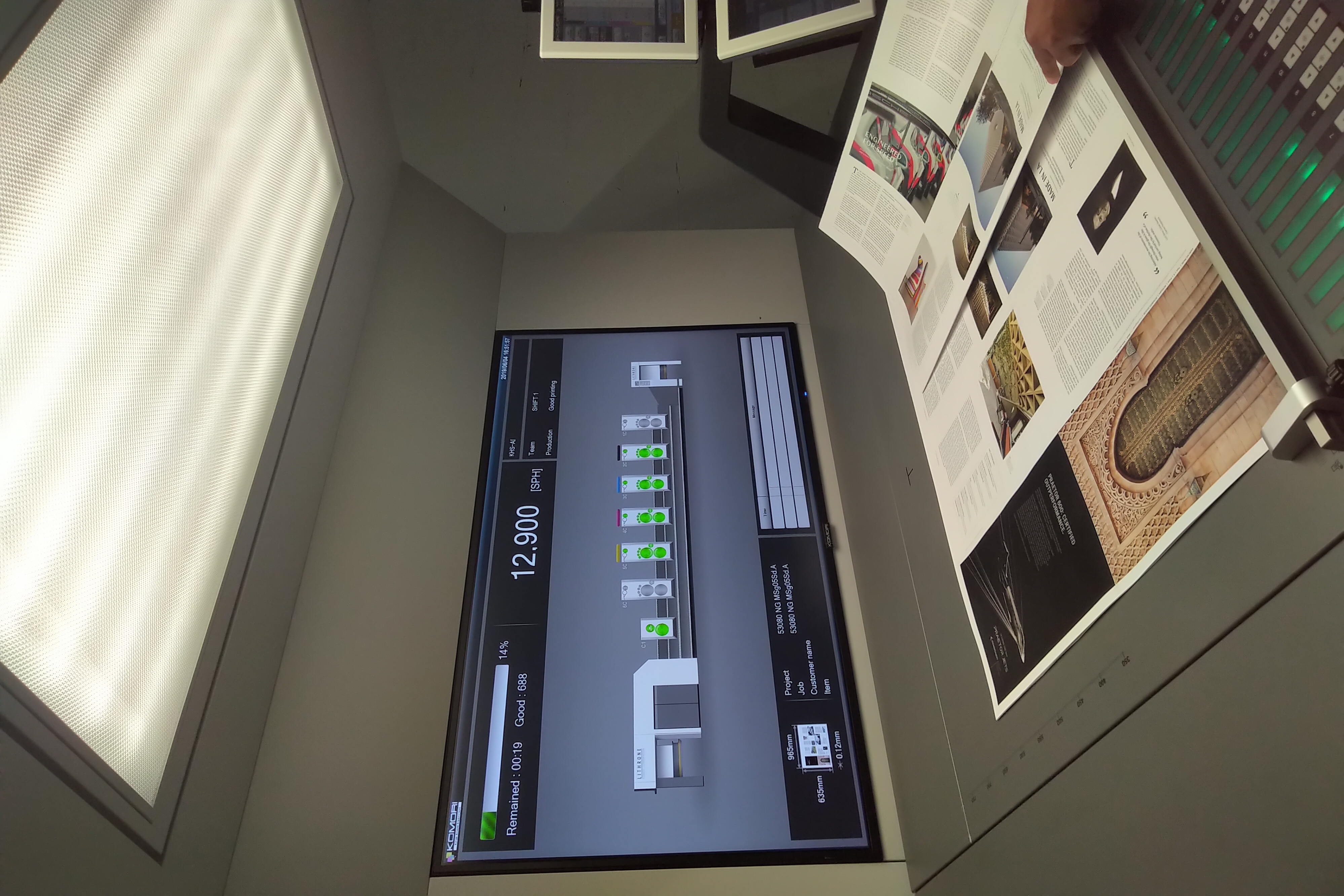
| Production | 2-3 weeks | Printing, binding, quality control, delivery |
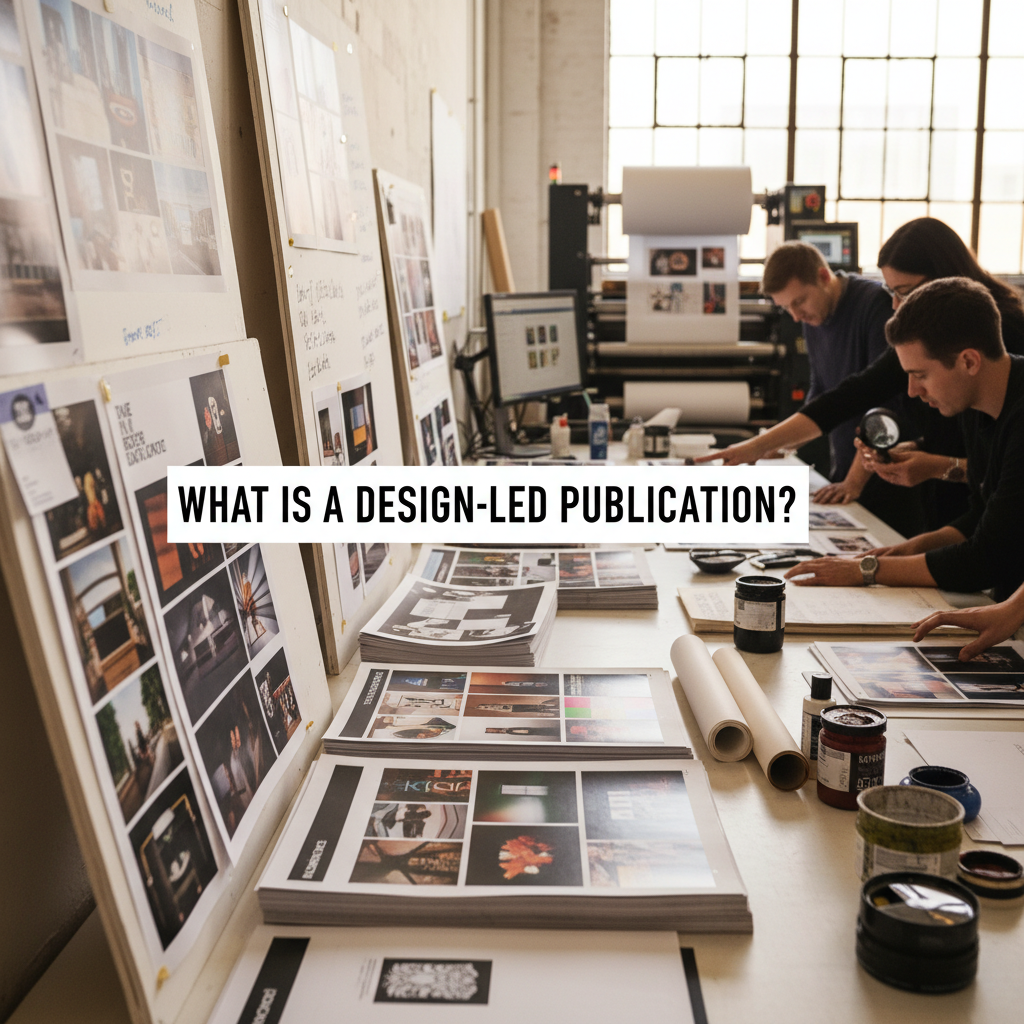
At Rethink Publishing, we’ve found that Swiss precision in process management prevents the common pitfalls that derail publication projects. Each phase builds systematically on the previous one, with clear approval gates and quality checkpoints.
Key Benefits: Why Design Led Publications Matter in 2026
Design led publications deliver measurable advantages that digital communications cannot replicate, particularly in an increasingly fragmented media landscape.
Tangible Brand Assets
Unlike digital content that disappears into algorithmic feeds, design led publications become physical brand assets with lasting presence. Research indicates that print materials have significantly higher recall rates than digital equivalents, with readers spending 20-30% more time engaging with printed content.
Key advantages include:
- Permanence: Publications stay in offices, homes, and waiting areas for months or years
- Shareability: Physical publications get passed between colleagues and contacts naturally
- Credibility: High-quality print suggests organizational stability and attention to detail
- Differentiation: Stand out when competitors focus exclusively on digital channels
Audience Engagement Depth
Design led publications create what communication researchers call “immersive reading experiences.” Unlike digital content consumed in seconds, these publications encourage deeper engagement and reflection.
The engagement benefits manifest in several ways:
- Attention quality: Readers focus without digital distractions like notifications or hyperlinks
- Cognitive processing: Physical reading activates different brain regions than screen reading
- Emotional connection: Tactile experience creates stronger memory formation
- Status signaling: High-quality publications reflect positively on both publisher and reader
Pro Tip: Track engagement through unique URLs, QR codes, or contact form references to measure how publications drive business outcomes beyond brand awareness.
Competitive Positioning
In 2026, as digital marketing costs continue rising and effectiveness plateaus, design led publications offer a strategic advantage through scarcity. While competitors flood digital channels, organizations using high-quality publications command attention through differentiation.
This positioning advantage appears in several areas:
- Thought leadership: In-depth articles establish expertise more effectively than blog posts
- Client retention: Regular publications maintain relationships between active project periods
- Referral generation: Publications provide conversation starters and sharing opportunities
- Talent attraction: High-quality publications signal organizational sophistication to potential employees
Common Challenges and Mistakes to Avoid
Despite their advantages, design led publications present specific challenges that can undermine their effectiveness if not properly addressed.
Strategic Misalignment
The most frequent mistake organizations make is treating publications as glorified brochures rather than editorial products. This fundamental misunderstanding leads to content that serves the organization’s ego rather than the audience’s interests.
Common misalignment issues include:
- Self-promotion focus: Excessive emphasis on company achievements rather than audience value
- Inconsistent messaging: Publication content contradicts other brand communications
- Wrong audience targeting: Creating content for internal stakeholders rather than external readers
- Unclear objectives: No measurable goals for what the publication should achieve
Production Pitfalls
Production challenges often stem from underestimating the complexity and timeline required for quality publications. Organizations frequently encounter these obstacles:
- Timeline compression: Rushing production compromises quality and increases costs
- Budget underestimation: Hidden costs in photography, image rights, and premium printing
- Quality control gaps: Insufficient review processes leading to errors in final product
- Distribution planning: Creating excellent publications without clear distribution strategy
Pro Tip: Budget 15-20% more than initial estimates for unforeseen costs like additional photography, extended revisions, or premium finishing options that enhance the final product.
Sustainability and Distribution
Modern organizations must balance the impact of print publications with environmental responsibility. Smart approaches include:
- Sustainable sourcing: Use FSC-certified papers and environmentally responsible printing processes
- Targeted distribution: Precise audience targeting reduces waste while increasing engagement
- Digital complements: Pair print publications with digital versions for broader reach
- Longevity focus: Create timeless content that remains relevant for extended periods
Best Practices for Design Led Publications in 2026
Successful design led publications in 2026 require adapting traditional publishing principles to contemporary communication challenges and opportunities.
Content Strategy Excellence
The foundation of effective design led publications lies in content strategy that serves readers first and publishers second. This approach requires disciplined editorial thinking:
- Audience research: Conduct interviews and surveys to understand reader preferences and pain points
- Editorial calendar: Plan content themes 6-12 months in advance for consistency and relevance
- Expert contributors: Include external voices to provide credibility and fresh perspectives
- Evergreen focus: Prioritize content that remains valuable over time rather than trending topics
Design Integration Methods
Design led publications succeed when visual and textual elements work seamlessly together. Key integration principles include:
| Design Element | Best Practice | Common Mistake |
|---|---|---|
| Typography | Consistent hierarchy with 2-3 font families maximum | Too many fonts creating visual chaos |
| Color Palette | Brand-aligned palette with strategic accent colors | Overuse of bright colors reducing readability |
| Photography | Consistent style and quality throughout publication | Mixed photography styles and quality levels |
| Layout | Grid system ensuring consistent spacing and alignment | Inconsistent margins and spacing throughout |
Technology Integration
Modern design led publications benefit from thoughtful technology integration without compromising their analog appeal:
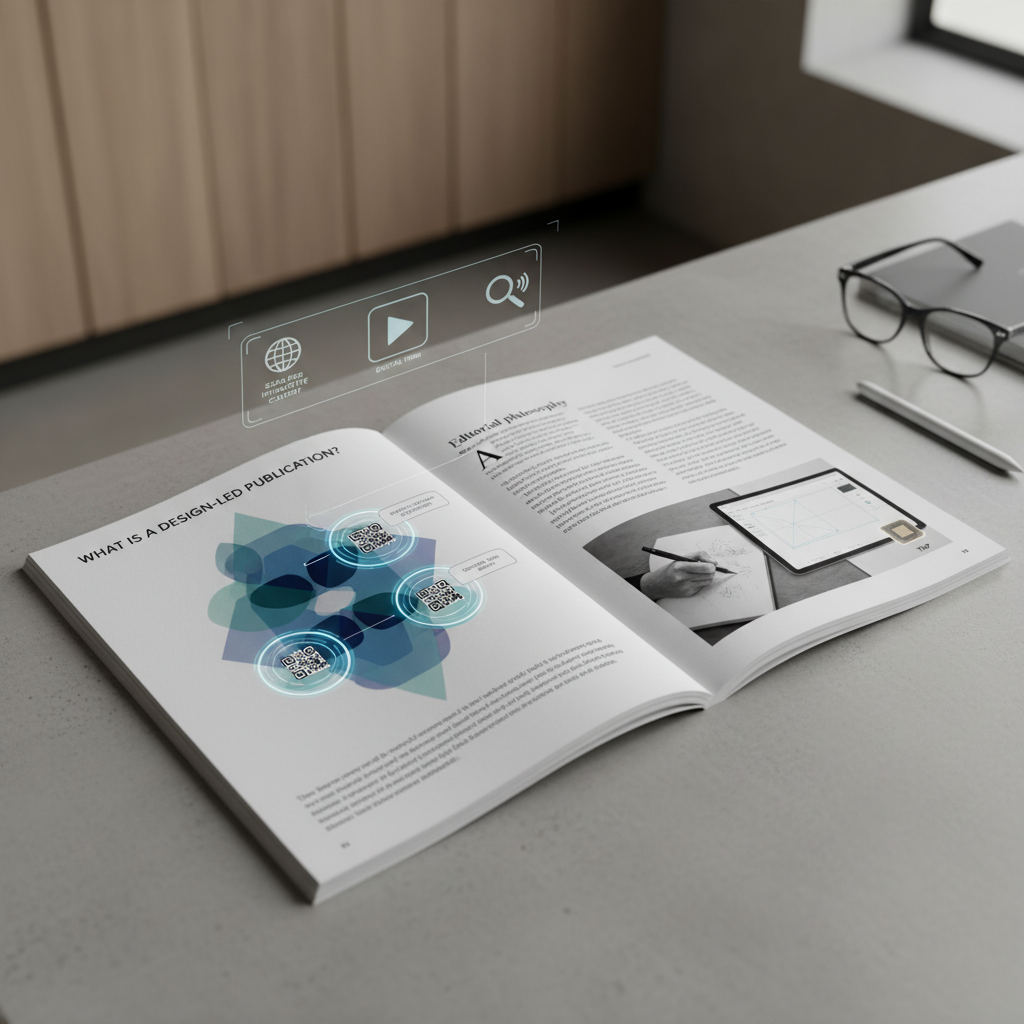
- QR codes: Link to additional digital content, videos, or interactive experiences
- Augmented reality: Selected AR elements can enhance specific articles or features
- Social integration: Include social media handles and hashtags to encourage online engagement
- Analytics tracking: Use unique URLs and codes to measure publication effectiveness
Pro Tip: Limit technology integration to elements that genuinely enhance the reader experience. Over-integration can detract from the publication’s premium feel and focused reading experience.
Sources & References
- Publishing research and industry standards referenced throughout this article are based on established publishing methodologies and best practices developed over 20+ years of magazine production experience.
Frequently Asked Questions
1. What is a design led publication and how does it differ from regular magazines?
Understanding what is a design led publication is essential. A design led publication prioritizes visual storytelling and aesthetic excellence alongside editorial content, starting with strategic design thinking rather than adding design as an afterthought. Unlike regular magazines that follow standard templates, design led publications create custom visual languages that align with specific brand objectives and audience needs.
2. How much does it cost to create a design led publication?
Costs vary significantly based on page count, print quantity, paper quality, and production complexity. High-end design led publications typically require investment ranging from $15,000 to $75,000+ per issue, including editorial, design, photography, printing, and distribution. The investment reflects premium production values and expert creative talent.
3. How long does it take to produce a design led publication?
A typical design led publication requires 12-16 weeks from concept to delivery, including strategy development, content creation, design and layout, printing, and distribution. Rush timelines are possible but often compromise quality and increase costs significantly.
4. What industries benefit most from design led publications?
Industries that rely on trust, expertise, and long-term relationships see the greatest benefit, including hospitality, architecture, real estate, professional services, private clubs, and luxury brands. These sectors value the credibility and permanence that high-quality publications provide.
5. Can design led publications work for B2B companies?
Absolutely. B2B design led publications excel at thought leadership, client relationship building, and differentiating from competitors who rely solely on digital marketing. They’re particularly effective for professional services, technology companies, and consultancies targeting executive audiences.
6. How do you measure the success of a design led publication?
Success metrics include brand awareness surveys, website traffic from publication references, qualified lead generation, client retention rates, and social media engagement. The most successful publications become conversation starters and are referenced in meetings months after distribution.
7. Should companies create design led publications in-house or outsource?
Most companies benefit from partnering with specialized publishing studios that provide editorial expertise, design talent, and production management. In-house teams often lack the specialized skills and bandwidth required for high-quality publications, while outsourcing ensures professional results and efficient timelines.
Design led publications represent a strategic investment in brand building that delivers results digital communications cannot match. In 2026, as audiences become increasingly selective about the content they engage with, these publications offer a compelling way to capture attention and build lasting relationships.
The key to success lies in understanding that design led publications aren’t quick marketing tactics but long-term brand assets. They require commitment to quality, consistency, and audience value. When executed properly, they become keepsakes that reinforce your brand’s reputation every time someone encounters them.
Ready to explore how a design led publication could elevate your brand? Rethink Publishing specializes in transforming brand DNA into fully managed, high-end lifestyle publications that create lasting emotional connections. Visit www.rethink-publishing.com to discover how we can help you create publications that truly matter.
Recommended Articles
Explore more from our content library: