
| Key Insight | Explanation |
|---|---|
| Physical objects build deeper trust | Tangible brand assets engage multiple senses, creating emotional connections that digital impressions rarely achieve on their own. |
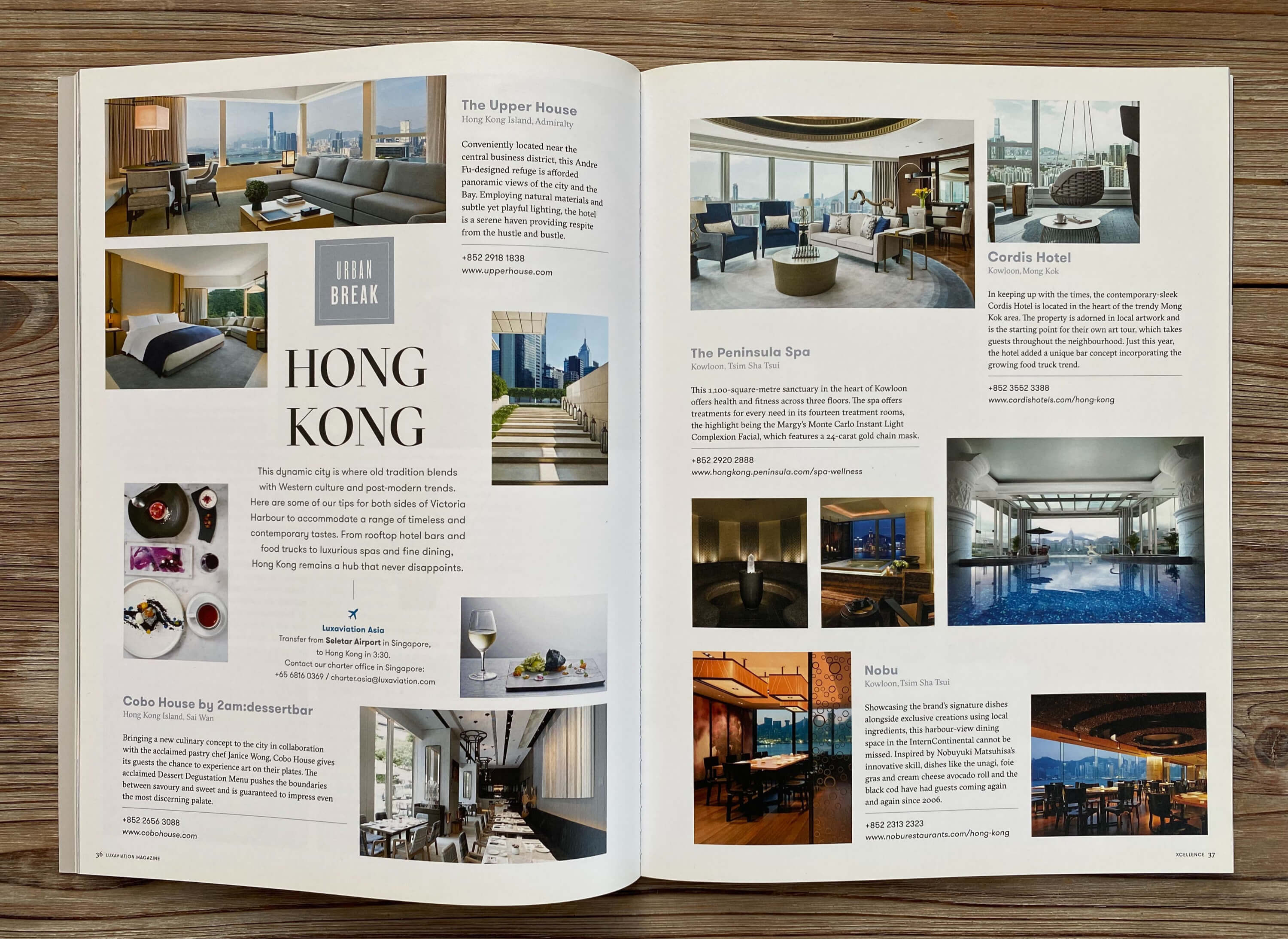
| Print has a permanence digital doesn’t | A well-made magazine or coffee-table book stays in homes and offices for months, keeping your brand visible without paying for each impression again. |
| Brand experience has four dimensions | Research identifies sensory, affective, intellectual, and behavioral dimensions. A great print publication activates all four in a single reading session. |
| Not every brand needs a magazine | Tangible marketing is a long-term brand investment, not a quick-conversion tool. It works best for brands building trust and reputation over time. |
| Editorial quality separates keepsakes from clutter | A poorly designed physical piece can damage brand perception. An editorially curated, design-led publication does the opposite: it elevates it. |
| Owned channel, no algorithm | A print magazine gives brands direct access to their audience with no platform dependency, ad auction, or feed algorithm deciding who sees it. |
Tangible brand experience marketing is the practice of building brand relationships through physical objects and in-person touchpoints that people can hold, keep, and return to. Unlike a digital ad that disappears in seconds, a well-made physical asset earns sustained attention and builds the kind of trust that moves a brand from vendor to fixture in someone’s life. The brands that understand this are quietly pulling ahead of competitors who spend every dollar chasing the next algorithm.
This article covers what tangible brand experience marketing actually means, why it works on a neurological and behavioral level, what the most effective physical formats look like in 2026, and the mistakes that cause well-intentioned print investments to underperform. Whether you’re a CMO reconsidering your channel mix or a founder who wants your brand to command a room, what follows is a practical, honest guide.
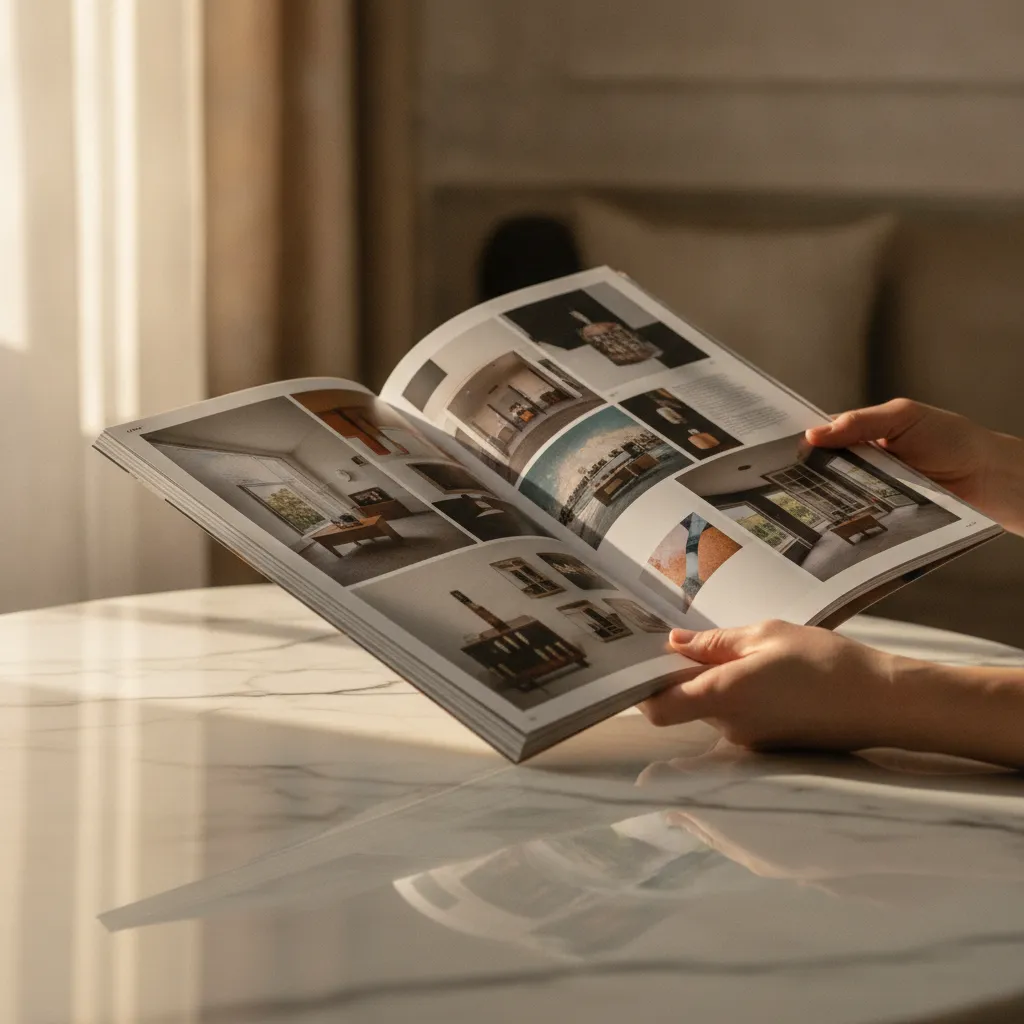
What Is Tangible Brand Experience Marketing?
Tangible brand experience marketing is any strategy that uses physical, touchable assets to create a direct, sensory connection between a brand and its audience. It encompasses print magazines, coffee-table books, branded merchandise, direct mail, and any other object designed to carry brand meaning into someone’s hands and home.
The distinction matters. HubSpot defines brand experience as “the tangible and emotional experience consumers have while interacting with your brand.” The key word is both: tangible and emotional. Physical objects trigger emotional responses in ways that pixels rarely replicate, because they engage more senses simultaneously. [1]
Why Physical Touchpoints Are Different
Digital marketing creates impressions. Tangible marketing creates memories. Research published in PMC examining octomodal mental imagery (OMI) found that multi-sensory engagement significantly strengthens brand experience and perceived authenticity. [2] When someone holds a beautifully printed magazine, they’re not just reading words. They’re feeling paper weight, noticing ink texture, and registering the effort behind the object.
According to the American Marketing Association, tangible marketing works best when it is thoughtful, and a poorly designed keepsake can undermine brand perception just as quickly as a great one can build it. [3] That’s the honest caveat. Physical presence is powerful, but only when the quality matches the brand promise.
The Range of Tangible Brand Assets
Not all tangible assets carry equal weight. Here’s how common formats compare:
| Format | Typical Lifespan | Brand Depth | Best For |
|---|---|---|---|
| Print magazine | Months to years | High | Brand positioning, thought leadership, loyalty |
| Coffee-table book | Years | Very high | Property launches, brand milestones, hospitality |
| Direct mail piece | Days to weeks | Medium | Campaign-specific, acquisition |
| Branded merchandise | Variable | Low to medium | Events, awareness, gifting |
| Brochure / lookbook | Days to months | Low to medium | Sales support, product overview |
A print magazine and a coffee-table book sit at the top of this spectrum because they require editorial commitment, not just design. That commitment is exactly what makes them worth keeping. [4]
The Four Dimensions of Brand Experience
Brand experience operates across four distinct dimensions: sensory, affective, intellectual, and behavioral. Understanding all four is essential to designing a physical brand asset that actually does something.
This framework, developed by Brakus, Schmitt, and Zarantonello and widely cited in brand management literature, gives marketers a structured lens for evaluating whether a physical touchpoint is earning its place. [5] Each dimension plays a different role.
Sensory and Affective Dimensions
The sensory dimension is the most immediate. It covers everything a person perceives through sight, touch, smell, and sound when they encounter your brand object. Paper stock, print finish, binding method, even the sound of pages turning: all of these register before a single word is read.
The affective dimension is what the object makes someone feel. Pride, curiosity, trust, desire. A beautifully made magazine communicates that the brand behind it is serious, considered, and worth a person’s time. As IBS India’s brand research notes, tangible brands cultivate a deep, distinctive connection with the consumer because there is a tactile sense to each interaction. [6]
Intellectual and Behavioral Dimensions
The intellectual dimension is about genuine engagement: does the content make someone think? A well-edited magazine with real editorial substance earns this. A brochure dressed up as a magazine does not.
The behavioral dimension is what the person does next. Do they share the magazine with a colleague? Leave it on their reception desk? Bring it up in a meeting six months later? These behaviors are the downstream outcomes of getting the first three dimensions right. Shamrock Companies describes this as a “firsthand, engaging, tangible connection” that prompts real action. [7]
Pro Tip: Before briefing any physical brand asset, map it against all four dimensions. If your planned publication only satisfies the sensory dimension (it looks nice) but fails the intellectual one (the content is thin), it will be admired briefly and then discarded. Editorial depth is what drives behavioral outcomes.
Why Tangible Brand Experience Marketing Works in 2026
Tangible brand experience marketing works in 2026 because physical scarcity is now a genuine strategic advantage. Most brands have moved almost entirely into digital channels, which means a well-executed physical touchpoint stands out in a way it simply couldn’t a decade ago.
The numbers support this. The global custom publishing market was valued at approximately $2.8 billion in 2023 and has continued growing as premium brands reinvest in print precisely because digital saturation has eroded attention. Feeds are skippable. A magazine on a coffee table is not.
The Attention Economy Argument
Imprint Engine describes brand experience marketing as how brands connect with customers through experiences that create genuine engagement. [8] The challenge in 2026 is that digital experiences have become so abundant and so brief that genuine engagement is increasingly rare online.
A print magazine commands a different quality of attention. Someone reading a physical publication is not multitasking in the same way they are when scrolling a feed. They’ve chosen to sit with it. That choice is worth more to a brand than thousands of two-second impressions.
Industry analysts at LBB Online note that tangible brand experiences are increasingly about “designing physical experiences that embody the values, identity and cultural relevance of a brand.” [9] The product itself is now the marketing.
The Owned Channel Advantage
A print magazine is an owned channel. No algorithm decides who sees it. No platform changes its distribution rules overnight. No ad auction puts a competitor’s message next to yours.
This matters more in 2026 than it did five years ago, when organic reach on major platforms was still reliable. Brands that built their entire audience on rented digital land are now paying to reach people they thought they already owned. A physical publication reaches exactly who you send it to, every time.

At Rethink Publishing, we’ve found that clients who distribute their magazine to a curated list of 500 key contacts often generate more meaningful conversations than those running broad digital campaigns to tens of thousands. Quality of reach matters more than volume when you’re building long-term brand relationships.
Common Mistakes in Tangible Brand Marketing
The most common mistake in tangible brand experience marketing is treating a print publication as a brochure with more pages. A brochure sells. A magazine builds. Confusing the two produces something that does neither well.
From experience working across hospitality, real estate, architecture, cybersecurity, and law over more than two decades, the failure patterns are consistent. They’re worth naming directly.
Treating Design as the Only Variable
Many brands commission a beautiful-looking publication and then fill it with thin content: product descriptions, staff bios, and promotional copy dressed up as articles. The result looks impressive for about 30 seconds, and then the reader realizes there’s nothing to actually read.
The Northwestern Medill IMC program emphasizes that a meaningful brand experience requires both consistent brand identity and genuine substance in the content itself. [10] Design without editorial depth is decoration, not communication.
A common mistake is also skipping the editorial spine entirely. Without a clear editorial idea running through the whole issue, a magazine becomes a collection of disconnected pieces rather than a coherent brand statement. Readers feel that incoherence, even if they can’t articulate why.
Underestimating Production Quality
One pitfall to watch for: cutting production costs on paper stock and print finishing. These decisions are invisible to the brand team approving a PDF on screen, but they’re immediately apparent to someone holding the finished object.
- Thin, lightweight paper signals low investment and undermines the brand premium you’re trying to communicate.
- Poor color management means images that look rich on screen print flat and lifeless.
- Rushed pre-press work produces binding issues, color inconsistencies, and trim errors that are impossible to fix after print.
- Generic stock photography, used without curation, makes a publication feel interchangeable with any other brand’s output.
The American Marketing Association is direct on this point: a poorly designed keepsake can undermine brand perception just as quickly as a great one can build it. [3] There is no neutral outcome with physical brand assets. They either work for you or against you.
Pro Tip: Request a physical print proof before approving the full print run. Reviewing a PDF on a calibrated monitor is not the same as holding the actual object. Paper feel, color accuracy, and binding quality are only fully assessable in print. This single step catches the majority of costly production errors.
Best Practices for Tangible Brand Experience Marketing in 2026
Effective tangible brand experience marketing in 2026 starts with editorial strategy, not design. The brands producing physical assets that people actually keep share a few consistent practices.
Start With an Editorial Spine
An editorial spine is the single organizing idea that runs through every page of a publication. It answers the question: what does this issue stand for, and why should someone care? Without it, a magazine is a collection of content. With it, it’s a brand statement.
- Define the brand’s point of view on the topics it covers. Not just what it does, but what it believes.
- Map the content to a flatplan before writing a word. Know what every article is, how it connects to the spine, and how it flows alongside the design.
- Commission original content rather than repurposing existing marketing materials. Readers recognize recycled content immediately.
- Pair words and images with intention. Every photograph should serve the story on the same spread, not just fill space.
- Build in multiple proofing rounds. Editorial quality is cumulative. Each pass catches something the last one missed.
Exhibitus describes meaningful brand experiences as those that engage multiple senses and foster emotional bonds through active participation. [11] A well-edited magazine does this naturally, because the reader is making choices about what to read, how long to linger, and what to share.
Distribute With Intention, Not Volume
A print magazine should go to the right people, not the most people. This is one of the places where tangible brand experience marketing differs most sharply from digital campaign thinking.
- Identify the 200 to 500 relationships that matter most to your business right now: existing clients, prospective clients, strategic partners, and key referrers.
- Send the magazine as a direct, personal touchpoint, not as bulk mail.
- Consider hand-delivery or premium packaging for your most important recipients. The unboxing experience is part of the brand experience.
- Place copies in physical spaces where your target audience spends time: reception areas, waiting rooms, executive lounges, design studios.
The Brandito research on promotional products confirms that tangible brand assets work because they demonstrate “creativity, thoughtfulness, and commitment to customer experience.” [12] A magazine sent to the right person at the right moment says something about your brand that no email can replicate.
Pro Tip: Track your distribution list the same way you’d track a CRM. Note when a key contact receives their copy, follow up naturally in conversation, and pay attention to which recipients bring it up unprompted. Those conversations are your clearest signal that the magazine is working as a brand asset.
Sources & References
- HubSpot, “Everything You Need to Know About Brand Experience,” 2026
- PMC / National Institutes of Health, “The role of octomodal mental imagery and social presence,” 2024
- American Marketing Association, “Marketing’s Most Overlooked Advantage: Brand Presence,” 2026
- 1338 Tryon, “The Importance of Tangible Marketing: A 2021 Business Guide,” 2021
- IIBMS, “Experiential Marketing,” PDF
- IBS India, “Tangible Branding,” 2023
- Shamrock Companies, “Experiential Marketing Forms Brand Connections,” 2023
- Imprint Engine, “What is Brand Experience Marketing?,” 2024
- LBB Online, “Merch Is Magic: Why Tangible Brand Experiences Matter More Than Ever,” 2024
- Northwestern Medill IMC, “Creating an Unforgettable Brand Experience: A Complete Guide,” 2024
- Exhibitus, “Craft a Brand Experience that Matters,” 2024
- Brandito, “The Tangible Advantage: Promotional Products in the Digital Age,” 2024
Frequently Asked Questions
1. What is an example of tangible marketing?
Tangible marketing includes any physical asset that carries brand meaning: print magazines, coffee-table books, direct mail pieces, branded merchandise, brochures, and event materials. Among these, a custom print magazine is one of the most powerful examples because it combines editorial depth, design quality, and physical permanence. Unlike a promotional pen or a flyer, a well-made magazine earns a place in someone’s home or office and keeps the brand visible for months without any additional spend.
2. What are the 4 dimensions of brand experience?
The four dimensions of brand experience, established by Brakus, Schmitt, and Zarantonello in foundational brand management research, are sensory (what the brand looks, feels, and sounds like), affective (the emotional response it generates), intellectual (whether it engages thought and curiosity), and behavioral (whether it prompts action or changes how someone interacts with the brand). A high-quality print publication is one of the few brand assets that can meaningfully activate all four dimensions in a single interaction. Most digital formats address only the first two.
3. How does tangible brand experience marketing differ from experiential marketing?
Experiential marketing typically refers to live events, activations, and in-person brand encounters. this practice is broader: it includes any physical object designed to create a brand connection, whether or not there’s a live event involved. A print magazine is a form of this method that works without an event, a venue, or a specific date. It creates the experience on the reader’s own terms, in their own time and space.
4. Is print marketing still effective for B2B brands in 2026?
Yes, and arguably more so than it was five years ago. As of 2026, B2B decision-makers are saturated with digital content: email newsletters, LinkedIn posts, webinars, and content downloads. A physical magazine that arrives on a desk or in a meeting room stands out precisely because almost no one is doing it well. For B2B brands in sectors like cybersecurity, financial services, law, and architecture, a custom print magazine signals credibility and seriousness in a way that a PDF or a social post simply cannot.
5. What makes a print magazine a brand asset rather than just a marketing piece?
The distinction comes down to editorial intent and production quality. A marketing piece is designed to sell something specific. A brand asset is designed to build how a company is perceived over time. A print magazine becomes a brand asset when it has a clear editorial spine, original content that reflects the brand’s genuine point of view, design that reflects the brand’s visual identity, and production quality that signals investment and care. When those elements align, people don’t throw it away. They keep it, share it, and associate the brand with the quality of the object itself.
6. How do you measure the ROI of tangible brand experience marketing?
ROI from this strategy is real but different from campaign-style measurement. The signals to track include: unprompted mentions of the publication in client conversations, increased engagement from key accounts after distribution, new conversations opened by the magazine as a conversation starter, and the longevity of the asset in physical spaces (reception desks, waiting rooms, executive offices). Over time, brands that invest consistently in high-quality print assets tend to see stronger client retention and a higher quality of inbound inquiry, because the publication shapes how prospects perceive the brand before the first meeting.
this approach isn’t a nostalgic throwback. It’s a deliberate strategic choice made by brands that understand the limits of digital and want something that lasts. A beautifully made print magazine or coffee-table book doesn’t compete with your digital channels. It does something different: it earns a place in someone’s physical world, where your brand stays present without paying for each impression.
At Rethink Publishing, we’ve spent more than 20 years making exactly these kinds of publications, across industries from hospitality and real estate to cybersecurity and law. The brands that get the most out of it are the ones who treat print as a long-term investment in how they’re perceived, not a quick campaign. If that’s how you think about your brand, the work is worth doing and worth doing properly.
Recommended Articles
Explore more from our content library: