
| Key Insight | Explanation |
|---|---|
| Sustainable luxury publishing is a deliberate brand strategy | It means creating print publications built to last, materially and editorially, not disposable marketing collateral. |
| Quality and responsibility reinforce each other | Premium paper stocks, responsible sourcing, and editorial depth all signal the same thing: a brand that takes the long view. |
| Print scarcity is now a strategic advantage | As digital saturation grows, a beautifully made physical magazine earns undivided attention that no feed can replicate. |
| Longevity is the real sustainability argument | A magazine kept on a coffee table for 18 months delivers far more brand impressions per unit than a single-use digital ad. |
| Editorial spine comes before paper choice | Sustainability in publishing starts with intentional content, not just certified stock. Substance and material responsibility go together. |
| End-to-end process control matters | From editorial strategy to print proofing and delivery, every step shapes the environmental and brand footprint of the finished publication. |
Sustainable luxury publishing means producing high-end print magazines and books that are built to last, physically, editorially, and ethically, rather than consumed and discarded. It is the convergence of responsible material choices, editorial depth, and deliberate design. For premium brands, it is not a trend. It is a positioning decision that signals how seriously a company takes its own identity.
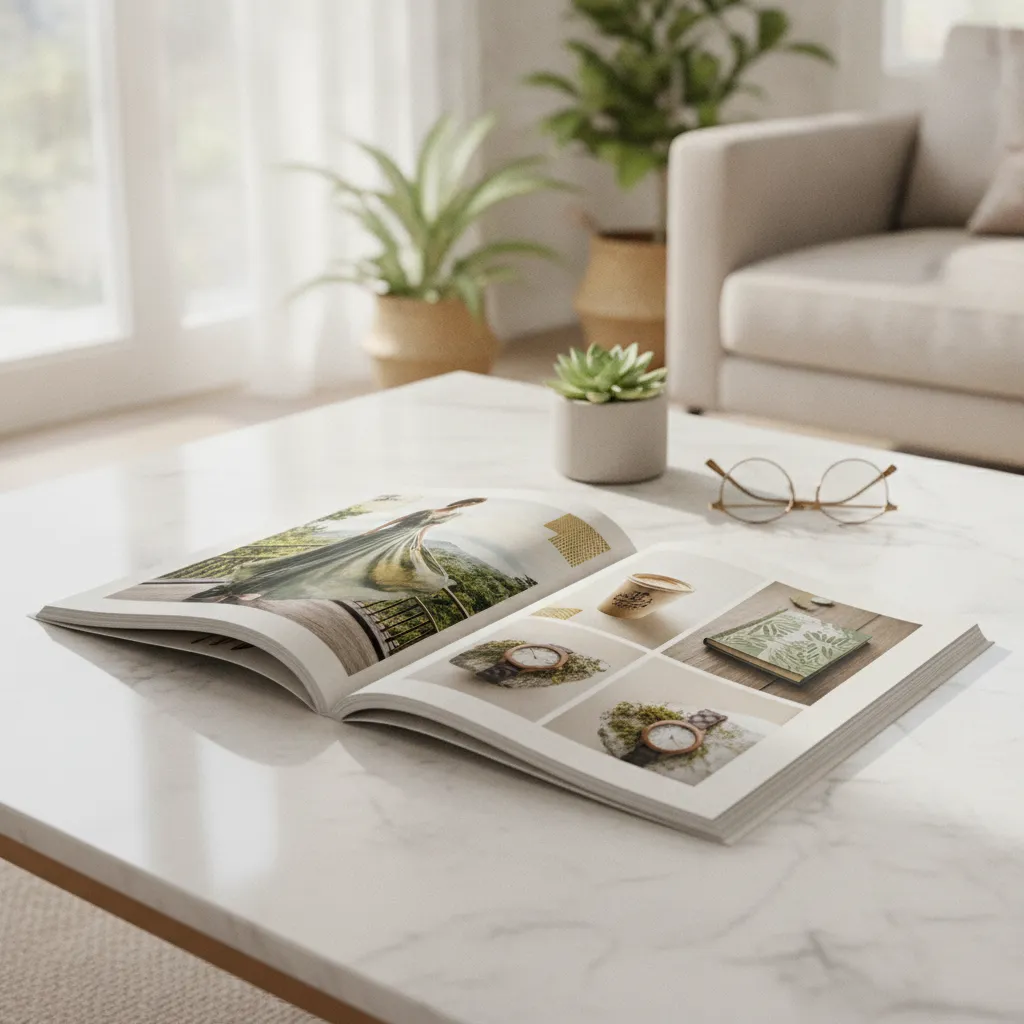
The case is straightforward. A beautifully made magazine printed on responsibly sourced paper, filled with writing and images chosen with real intention, does something a digital ad never will. It stays. It earns a place on a coffee table, a reception desk, a client’s bookshelf. That physical permanence is, in itself, the most honest form of sustainability a brand can demonstrate.
This article covers what sustainable luxury publishing actually means, why the apparent tension between “luxury” and “sustainability” is largely a myth, how the production process works when it’s done properly, and what brand leaders should know before commissioning a publication they want clients to keep for years.
What Is Sustainable Luxury Publishing?
Sustainable luxury publishing is the practice of creating premium print publications, magazines, coffee-table books, and branded editorial content, using responsible materials, intentional editorial direction, and a production process designed for longevity rather than volume.
Defining the Term Precisely
The phrase has two distinct dimensions that must work together. “Sustainable” refers to both environmental responsibility (certified papers, responsible inks, considered print runs) and the broader idea of durability: a publication that earns its place in the world by being genuinely worth keeping. “Luxury” in this context does not mean expensive for its own sake. It means exceptional quality, editorial credibility, and design integrity.
Research from Springer Nature defines sustainable luxury as the embedding of sustainability values and practices into a luxury good or brand at a fundamental level, not as a marketing overlay [1]. That definition maps precisely onto print publishing when applied correctly. A magazine that is sustainably produced but editorially thin is not a luxury publication. A magazine that is beautifully designed but printed on paper with no responsible sourcing credentials is not sustainably produced. Both criteria must be met.
The first academic book dedicated to sustainable management in the luxury sector identifies a core tension in the category: luxury has historically been defined by excess and exclusivity, while sustainability implies restraint and responsibility [2]. In publishing, that tension resolves naturally. A print run of 2,000 meticulously crafted magazines, sent to exactly the right people, is more responsible and more effective than 50,000 generic brochures mailed to a cold list.
Why the Category Is Growing
As of 2026, premium brands across hospitality, real estate, architecture, private equity, and professional services are reinvesting in print precisely because digital saturation has made physical media scarce and therefore valuable. The global custom publishing market was valued at approximately $2.8 billion in 2023, with the luxury segment growing faster than the broader category. Industry analysts note that high-net-worth audiences, the primary readers of luxury brand publications, actively distrust digital-only brand communication and respond more favorably to physical touchpoints that demonstrate considered effort.
Sustainable luxury publishing sits at the intersection of that resurgence and a genuine shift in how premium brands think about their environmental and social responsibilities.
Why Sustainability and Luxury Belong Together in Print
Sustainability and luxury are not opposites in publishing. They reinforce each other, because both require the same foundational commitment: doing things properly, with care, the first time.
The Myth of the Contradiction
A common misconception is that luxury publishing is inherently wasteful, heavy print runs, excess paper, lavish production for its own sake. That may describe certain legacy publishing models. It does not describe how a well-run boutique publishing studio operates. Research published in the International Journal of Management Reviews notes that the most credible sustainable luxury brands are those where sustainability is embedded in the brand’s core identity, not added as a certification badge [3].
The same logic applies to print. A magazine produced with FSC-certified paper (the Forest Stewardship Council standard for responsible forest management), vegetable-based inks, and a tightly controlled distribution list is a more responsible object than most digital advertising, which carries its own significant carbon footprint through server infrastructure and energy consumption.
Academic work from the Fashion Studies Journal identifies the central challenge: sustainable luxury must avoid greenwashing, the superficial adoption of environmental language without substantive practice change [4]. In publishing, greenwashing looks like a magazine that mentions sustainability in its editorial while being printed on uncertified stock with no clear distribution rationale. Authenticity is the standard.
Longevity as the Core Sustainability Argument
The most compelling environmental argument for a well-made luxury magazine is one that rarely gets stated directly: longevity. A publication that someone keeps for 18 months, reads multiple times, and passes to a colleague delivers hundreds of brand impressions from a single printed object. Compare that to a digital ad with a 1.5-second average view time, served thousands of times to generate equivalent recall.
When you frame print this way, the calculation changes. The resource investment per meaningful brand impression is often lower for a premium magazine than for a sustained digital campaign. That is a sustainability argument that resonates with CFOs as much as with brand directors.
Pro Tip: When briefing a publishing partner, ask specifically about paper certification (FSC or PEFC), ink type, and print run sizing methodology. A studio that can’t answer those questions clearly is not operating at the level sustainable luxury publishing requires.
How Sustainable Luxury Publishing Works in Practice
A sustainable luxury publication is built through a structured, end-to-end process where every decision, from editorial direction to paper weight, serves both the brand and the responsible production standard.

The Production Process, Step by Step
In practice, sustainable luxury publishing follows a clear sequence. The order matters. Decisions made early (editorial strategy, distribution scope, paper specification) determine the environmental and brand outcomes at the end.
- Editorial spine development. Every publication starts with a clear editorial idea: what the brand stands for, who the audience is, and the thread that runs through the entire issue. This is not a content brief. It is a strategic foundation that shapes every subsequent decision, including how many pages are needed and therefore how much material is used.
- Content proposal and flatplan. The full issue is mapped before a word is written. This prevents editorial waste: pages added to fill space, content that doesn’t serve the brand, or design decisions made without a content rationale.
- Editorial and research. Interviews, writing, image sourcing, and rights clearance. Words and images are paired with intention, not assembled from a stock library.
- Design and layout. Design-led spreads, refined through multiple review rounds. Strong layout reduces the need for excessive visual elements that add to print complexity and cost.
- Colour management and proofing. Softproofing against print colour profiles ensures that what is designed matches what prints. This reduces waste from reprints caused by colour discrepancies.
- Paper and finish specification. FSC-certified stocks, appropriate weights, and finishes chosen for durability and tactile quality, not just appearance.
- Pre-press and print production. Full preflight, print proofs, and considered production management.
- Distribution and delivery. Targeted distribution to exactly the right recipients. A smaller, precise print run sent to 500 high-value contacts is more effective and more responsible than a large run sent to a broad, unqualified list.
Material Choices That Define the Standard
Paper certification is the most visible material decision in sustainable luxury publishing. FSC certification (Forest Stewardship Council) and PEFC certification (Programme for the Endorsement of Forest Certification) are the two primary international standards for responsible forest management. As of 2026, most credible luxury print publishers specify one or both on every project.
Beyond paper, vegetable-based and soy-based inks have largely replaced petroleum-based inks in premium print production. They produce comparable colour fidelity with a significantly lower environmental impact. Binding choices (sewn binding versus perfect binding, for example) also affect both durability and recyclability.
Research from the Taylor and Francis journal on sustainable luxury brand marketing identifies material transparency as one of the key trust signals for luxury consumers: brands that can articulate exactly what their products are made of, and why, earn significantly higher credibility than those that make vague environmental claims [5].
Key Benefits for Brands in 2026
A well-executed sustainable luxury publication delivers measurable brand benefits that digital channels cannot replicate, particularly for companies whose clients make high-value, relationship-driven decisions.
What a Premium Print Magazine Actually Does for a Brand
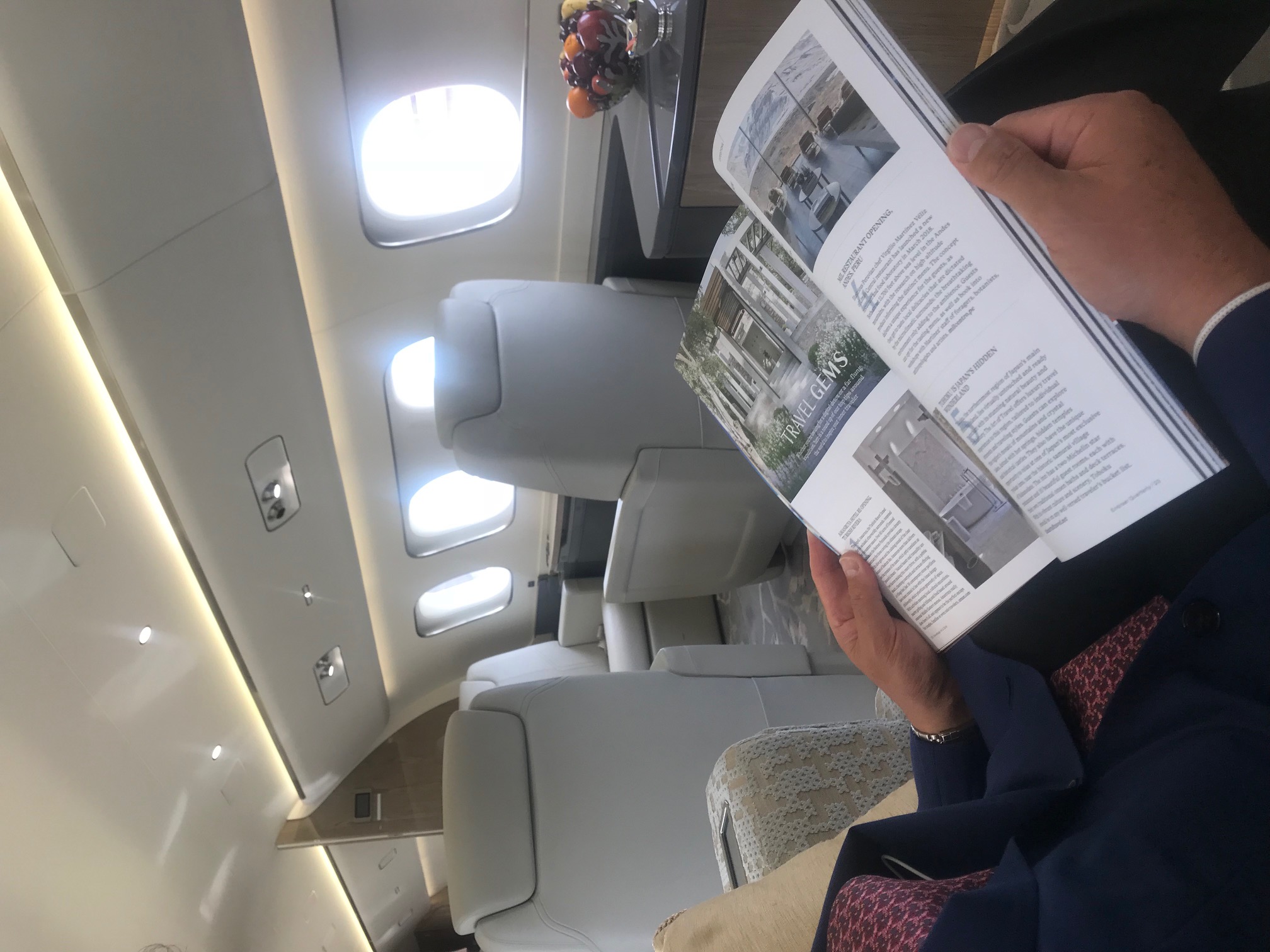
- Top-of-mind awareness over time. A magazine on a client’s coffee table keeps the brand present for months without additional spend. Unlike a social post that disappears in 48 hours, print accumulates presence.
- Earned attention. Physical media commands a qualitatively different kind of attention than a screen. A reader who picks up a magazine has made a deliberate choice to engage. That attention is not bought; it is earned by the quality of the object.
- Trust through craft. A beautifully made publication signals that the brand behind it takes quality seriously. That inference transfers directly to how clients perceive the brand’s services or products.
- An owned channel. No algorithm, no ad auction, no platform deciding who sees the content. The brand controls the editorial, the design, the distribution, and the story.
- Differentiation in a saturated market. As of 2026, almost no company in any sector does this well. A great magazine sets a brand apart in a category of sameness.
- Sustainability credentials made tangible. For brands with genuine environmental commitments, a responsibly produced print publication demonstrates those values in a form clients can hold. It is more credible than a sustainability page on a website.
Comparing Print and Digital Brand Touchpoints
| Attribute | Premium Print Magazine | Digital Content (Social / Email) |
|---|---|---|
| Average engagement time | 20-45 minutes per issue | 1.5-8 seconds per post |
| Lifespan of content | 12-24 months (kept, displayed) | 24-72 hours (algorithm-dependent) |
| Audience control | Full (brand-controlled distribution) | Partial (platform algorithm decides reach) |
| Brand perception signal | High (premium, considered, editorial) | Variable (depends on execution and platform) |
| Sustainability credentials | Demonstrable (certified materials, targeted runs) | Hidden (server energy, data infrastructure) |
| Shareability (physical) | High (passed between colleagues, left in reception) | Low (screen-to-screen sharing, low retention) |
The evolving narrative around sustainable luxury points consistently toward one conclusion: the brands that invest in physical, high-quality brand artifacts are building something that outlasts any campaign cycle [6].
Common Mistakes and How to Avoid Them
Most failures in sustainable luxury publishing come down to one of three things: confusing sustainability with greenwashing, treating print as a brochure with better paper, or underestimating the importance of editorial direction.
The Greenwashing Trap
A common mistake is adding a sustainability claim to a publication without changing the underlying production decisions. Printing a “sustainably produced” banner on a magazine that uses uncertified paper and has no clear distribution rationale is greenwashing. It damages credibility rather than building it.
The Center for Studies on Sustainable Luxury identifies authenticity as the non-negotiable standard: sustainable luxury claims must be backed by verifiable practice, not aspirational language [7]. In publishing, that means being able to name the paper certification, the ink type, the print partner’s environmental credentials, and the logic behind the distribution list.
One pitfall to watch for: commissioning a publication from a studio that outsources all production decisions to third parties without quality control. When no one in the chain owns the full process, responsible material choices get value-engineered out in favor of cost savings.
Treating Print Like a Brochure
The second major mistake is approaching a magazine as a glorified brochure: product descriptions, company milestones, and a letter from the CEO, dressed up with better photography. That is not a publication. It will not be kept. It will not build brand trust. And it will not justify the investment.
A genuine sustainable luxury publication starts with an editorial spine: a clear point of view about what the brand stands for and the ideas worth exploring in this issue. That editorial foundation is what separates a keepsake from a piece of direct mail.
Pro Tip: Before commissioning any print publication, ask this question internally: “If this magazine had no logo on it, would our target audience still want to read it?” If the answer is no, the editorial work hasn’t started yet.
Oversized Print Runs
Printing 10,000 copies of a magazine and distributing 3,000 is not luxury. It is waste. Sustainable luxury publishing requires honest thinking about who actually needs to receive this publication and why. A targeted run of 1,000 magazines sent to exactly the right clients, prospects, and partners will outperform a broad distribution of 8,000 every time, on brand impact, cost efficiency, and environmental responsibility.
Best Practices for Sustainable Luxury Publishing in 2026
The brands producing the most effective sustainable luxury publications in 2026 share a set of common practices: editorial clarity first, material transparency throughout, and a production partner who manages the full process without cutting corners.
Editorial and Strategic Foundations
- Define the editorial spine before anything else. What does this publication stand for? What is the one idea running through every article, image, and design decision? Without that, the magazine will feel like a collection of content rather than a publication with a point of view.
- Map the full issue before writing begins. A flatplan (the editorial map of every page in the issue) prevents waste, both editorial and material. Every page should earn its place.
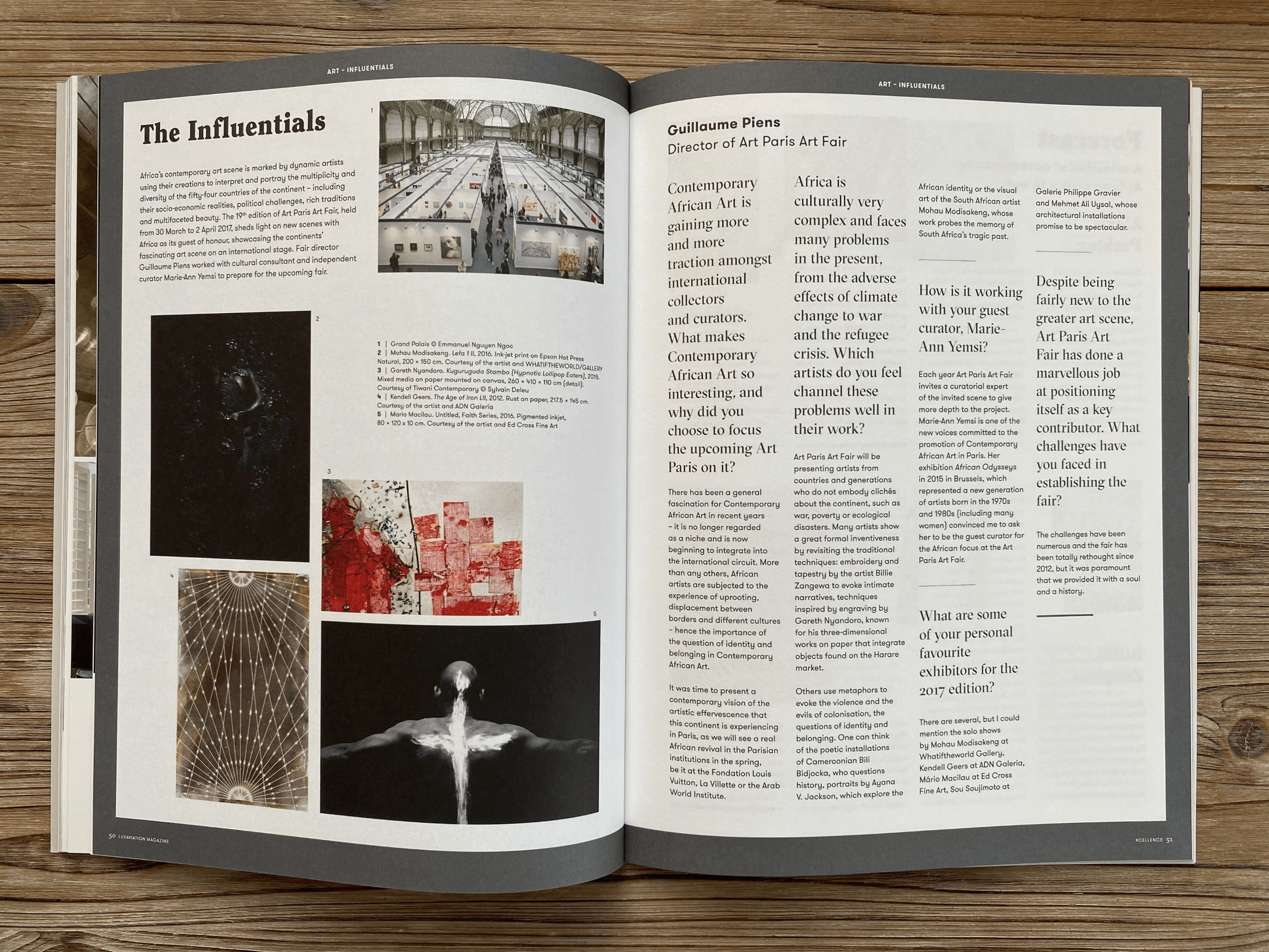
- Commission original content. Interviews, reported features, and commissioned photography are what make a publication worth keeping. Stock imagery and repurposed blog posts are not sustainable luxury publishing. They are a shortcut that readers notice immediately.
- Pair words and images with intention. The relationship between editorial content and visual design is what makes a spread work. This requires a design-led approach where the art director and editor are working from the same brief, not in sequence.
Material and Production Standards
- Specify FSC or PEFC certified paper stocks. These are the internationally recognized standards for responsible forest management. Specifying them on every project is a baseline, not a differentiator.
- Use vegetable-based or soy-based inks. These are now standard in premium print production and carry a lower environmental impact than petroleum-based alternatives without compromising colour quality.
- Conduct softproofing against print colour profiles. This reduces the likelihood of reprints caused by colour discrepancies between screen and press, which is both a quality issue and a waste issue.
- Right-size the print run. Work from a defined distribution list, not an aspirational one. Print what you will actually distribute to people who will actually read it.
- Choose binding for durability. Sewn binding significantly extends the life of a publication compared to perfect binding. For a magazine intended to be kept for years, the binding choice matters.
Pro Tip: At Rethink Publishing, we’ve found that the brands who get the most out of a print publication are the ones who treat it as a brand platform, not a one-off project. A second issue almost always performs better than the first because the editorial voice has found its register and the audience knows what to expect.
Research on sustainable luxury brand marketing from Taylor and Francis confirms that consistent, long-term brand storytelling through owned channels builds significantly stronger brand equity than campaign-based approaches [5]. A magazine is, by definition, a recurring commitment. That recurring presence is precisely what makes it effective.
The Springer Professional analysis of sustainable luxury notes that luxury brands with the strongest sustainability positioning are those that embed responsible practice into their production processes rather than treating it as a communications exercise [8]. For publishing, that means the material and editorial decisions are inseparable from the brand’s sustainability story.
Sources and References
- Springer Nature, “Sustainable Luxury: An International Perspective,” 2022
- Springer Nature, “Sustainable Management of Luxury,” 2017
- Wiley, “Sustainable Luxury Marketing: A Synthesis and Research Agenda,” International Journal of Management Reviews
- Fashion Studies Journal, “Everything is Wrong: A Search for Order in the Ethnometaphysical Chaos of Sustainable Luxury Fashion,” 2018
- Taylor and Francis, “Creating a sustainable future: insights into brand marketing in the luxury sector,” 2024
- IDEAS/RePEc, “Sustainable Luxury: An Evolving Narrative,” Springer
- Center for Studies on Sustainable Luxury, Books and Research Publications
- Springer Professional, “Sustainable Luxury,” 2022
Frequently Asked Questions
1. Is a sustainability-focused magazine a credible editorial product?
Yes, provided the publication is editorially rigorous and backed by verifiable production practices rather than aspirational language. Credible sustainable luxury publishing titles are indexed in academic databases, commission original reporting, and can demonstrate responsible material choices across their supply chain. The distinction between a credible publication and a greenwashing exercise lies in whether sustainability is embedded in the production process or simply claimed in the editorial.
2. What is sustainable luxury, and how does it apply to publishing?
Sustainable luxury means embedding environmental and social responsibility into the core of a luxury product or brand, not adding eco-friendly credentials as a marketing layer. Research from Springer Nature defines it as the integration of sustainability values into a luxury good at a fundamental level, across design, production, and distribution. In publishing, this means FSC-certified paper stocks, responsible inks, targeted print runs, and editorial content built to last rather than to be discarded. The longevity of a well-made magazine, often kept for 12 to 24 months, is itself a sustainability argument: fewer impressions wasted, more brand value per printed unit.
3. How is sustainable luxury publishing different from a standard branded magazine?
The difference is in the intent and the production decisions that follow from it. A standard branded magazine may prioritize volume, broad distribution, and fast production cycles. Sustainable luxury publishing prioritizes editorial depth, responsible materials, targeted distribution, and physical quality that justifies the object’s existence. The goal is a publication that someone keeps, not one that gets recycled within a week of arrival. That distinction shapes every decision from paper weight to print run size.
4. What certifications should a sustainable luxury print publication carry?
The two primary international standards are FSC (Forest Stewardship Council) and PEFC (Programme for the Endorsement of Forest Certification). Both certify that paper stocks originate from responsibly managed forests. Beyond paper, credible sustainable luxury publishing studios can also specify vegetable-based or soy-based inks, detail their print partner’s environmental credentials, and demonstrate a clear rationale for their print run sizing. As of 2026, these are baseline expectations for any publication claiming sustainability credentials, not optional extras.
5. Is print publishing actually more sustainable than digital marketing?
The comparison is more nuanced than it first appears. Digital advertising carries a significant and often invisible carbon footprint through server infrastructure, data centers, and device energy consumption. A targeted print run of 1,000 premium magazines, produced on certified stock and distributed to exactly the right audience, can deliver a lower carbon cost per meaningful brand impression than a sustained digital campaign reaching the same audience. The key variable is longevity: a magazine kept for 18 months delivers ongoing brand impressions from a single production run, while digital requires continuous spend to maintain presence.
6. How do you know if your brand is ready for a sustainable luxury publication?
The honest answer: not every brand is. If the goal is quick lead generation or fast conversions, a magazine is not the right tool. But if the brand serves a relationship-driven, high-value audience, has a genuine point of view worth expressing editorially, and is willing to treat print as a long-term brand investment rather than a one-off campaign, then a sustainable luxury publication can do something no digital channel will. It puts the brand in clients’ hands, homes, and offices, and keeps it there.
Rethink Publishing has spent more than 20 years helping brands answer that question honestly. The studio has produced over 80 high-end magazines and 30 coffee-table books across hospitality, real estate, architecture, private clubs, law, and enterprise technology. Founder Nathalie Grolimund built the studio on a straightforward belief: a magazine made with real editorial intention and responsible production is a brand asset that earns its place in the world. That is what sustainable luxury publishing means in practice, and it is what every publication the studio produces is built to be.
Recommended Articles
Explore more from our content library: