
| Key Insight | Explanation |
|---|---|
| Keepsakes outlast digital content | A beautifully made print magazine stays in a client’s home or office for months, even years. A digital post disappears in hours. |
| Quality signals brand credibility | The physical quality of a printed publication transfers directly to how readers perceive the brand behind it. Poor craft undermines trust. |
| Editorial spine drives retention | Publications built around a clear editorial idea, not just brand promotion, earn genuine reader attention and get kept rather than discarded. |
| Print is an owned channel | No algorithm, no ad auction, no platform decides who sees your magazine. You control distribution, story, and reach entirely. |
| This is a long-term brand investment | Keepsake marketing works slowly and compounds over time. It is not a campaign. It is a brand-building tool with a multi-year horizon. |
| Not every company should do this | If your goal is fast leads or quick conversions, print is the wrong tool. This strategy is for brands that care deeply about perception and long-term loyalty. |
A keepsake marketing strategy is a brand-building approach that creates physical or experiential assets so compelling that audiences choose to keep them, display them, and return to them over time. Unlike disposable campaign materials, keepsake assets earn a permanent place in a client’s world, keeping the brand present without paying again for every impression. This article covers what the strategy involves, how it works in practice, why it outperforms short-cycle digital content for certain brands, and exactly how to build one that holds up.
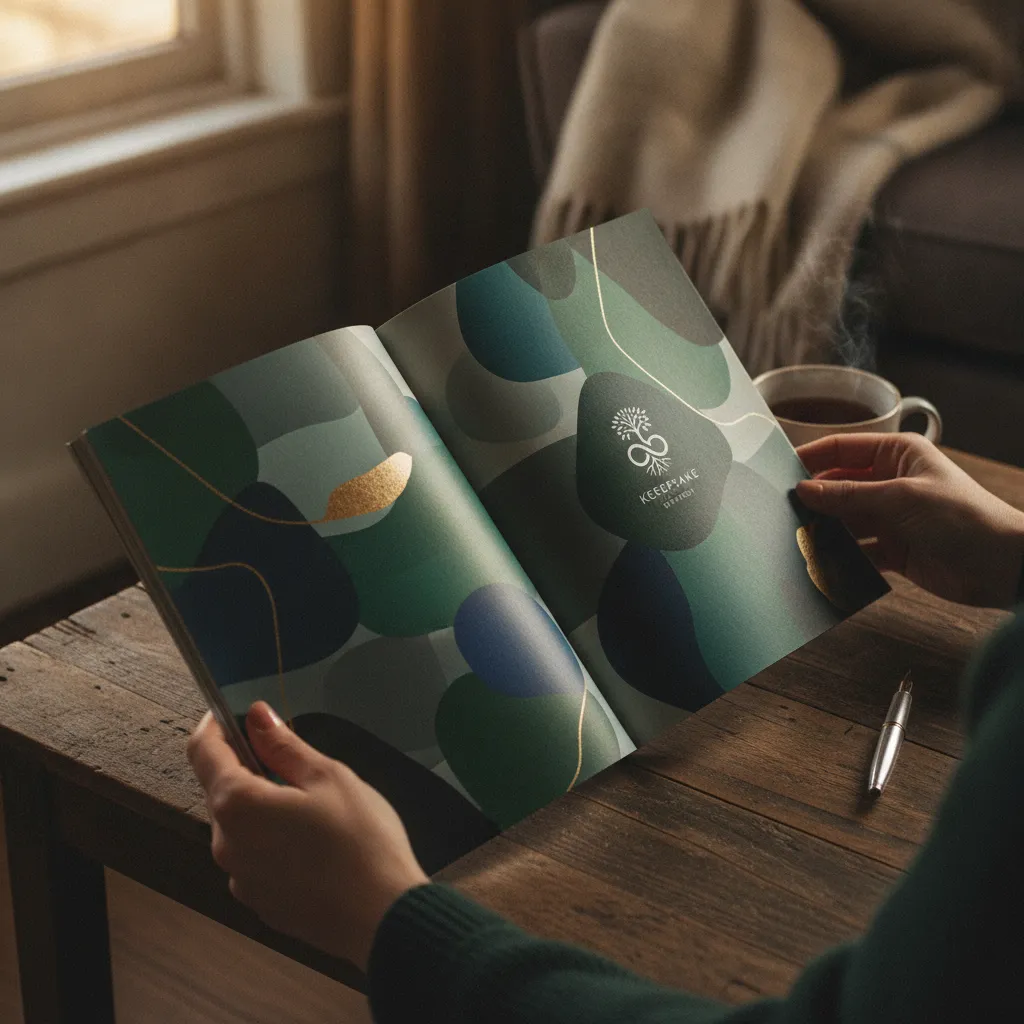
What Is a Keepsake Marketing Strategy?
A keepsake marketing strategy is a deliberate, long-cycle approach to brand building where the primary marketing asset is designed to be retained, not discarded. The asset, typically a high-end print magazine, a coffee-table book, or an editorially curated publication, is made with enough quality and substance that recipients treat it as an object of value rather than promotional material.
The Core Distinction: Asset vs. Campaign
Most marketing operates on a campaign cycle. You spend, you reach, you measure, you repeat. The moment the budget stops, so does the visibility. A keepsake marketing strategy works differently. The asset keeps working after it leaves your hands. It sits on a reception desk, gets passed between colleagues, reappears on a coffee table months after delivery.
The American Marketing Association noted in 2026 that tangible marketing works best when it is thoughtful, and that a poorly designed keepsake can undermine brand perception just as quickly as a great one builds it [1]. That’s the critical qualifier. The strategy only works when the quality of the object matches the quality of the brand it represents.
Who This Strategy Is For
Honestly? Not every company. If you need fast leads or quick conversions, a magazine is the wrong tool. There are faster and cheaper ways to do that. But if you’re building brand trust, deepening client relationships, or positioning in a competitive market where differentiation matters, a keepsake marketing strategy does something no digital channel can replicate. It gives your audience a reason to slow down and actually pay attention.
- CEOs and founders who want brand perception to reflect the quality of their work
- Marketing executives at luxury hospitality, real estate, architecture, or professional services firms
- Brand directors at B2B companies in sectors like cybersecurity, fintech, or law who want to humanize a complex offering
- Enterprise brands preparing for a flagship launch, anniversary, or major client relationship milestone
Event Marketer describes this as the “keepsake long game,” where brands invest in show messaging and physical assets that remain sticky and shareable well after the initial interaction [2]. The principle extends far beyond events. It applies to any brand that wants to remain present in a client’s world without constantly interrupting it.
How Keepsake Marketing Works
Keepsake marketing works by replacing forgettable promotional material with a high-quality physical asset that earns a permanent place in the recipient’s environment, keeping the brand visible and emotionally resonant over months or years.
The Mechanics: From Brief to Brand Presence
The process starts before a single word is written or a layout is designed. It starts with an editorial spine, a clear, governing idea that defines what the publication stands for and what thread runs through every article, image, and spread. Without that, you get a brochure with better paper. With it, you get something people actually read.
- Define the editorial idea. What does the brand stand for? What does the audience genuinely care about? The editorial spine answers both questions simultaneously.
- Build the content map. A flatplan (the publishing term for a structured content outline) maps every article, feature, and visual section before production begins. Nothing is improvised.
- Pair words and images with intention. Editorial photography, commissioned writing, and design direction work together. Each spread earns its place.
- Apply production precision. Paper selection, print color profiles, softproofing, and finishing details determine whether the object feels premium or merely adequate.
- Distribute with purpose. The publication reaches exactly the right people, whether that’s top clients, prospects, partners, or all three.
Why the Physical Format Matters
Research consistently shows that physical media generates stronger emotional encoding than digital equivalents. According to a study by Canada Post and True Impact Marketing, direct mail requires 21% less cognitive effort to process than digital media, and print advertising produces 70% higher brand recall compared to digital ads [3]. Readers spend more time with print, recall content more accurately, and report higher trust in printed sources compared to digital ones. A study referenced by the Penn State Small Business Development Center found that objects tied to memory and identity carry lasting perceived value for recipients [4].
That’s not nostalgia. That’s neuroscience applied to brand strategy. A magazine that looks and feels genuinely excellent signals, in a fraction of a second, that the company behind it is serious. People extend that feeling to the brand itself.
Pro Tip: The editorial spine is not a tagline or a brand mission statement. It’s the specific, governing idea that makes every content decision in the publication easy to make. If an article doesn’t serve the spine, it doesn’t belong in the issue. Define it before anything else.
Key Benefits of a Keepsake Marketing Strategy
The primary benefit of a keepsake marketing strategy is sustained brand presence: a single publication can keep your brand visible in a client’s environment for months, generating repeated impressions at no additional cost after the initial investment.
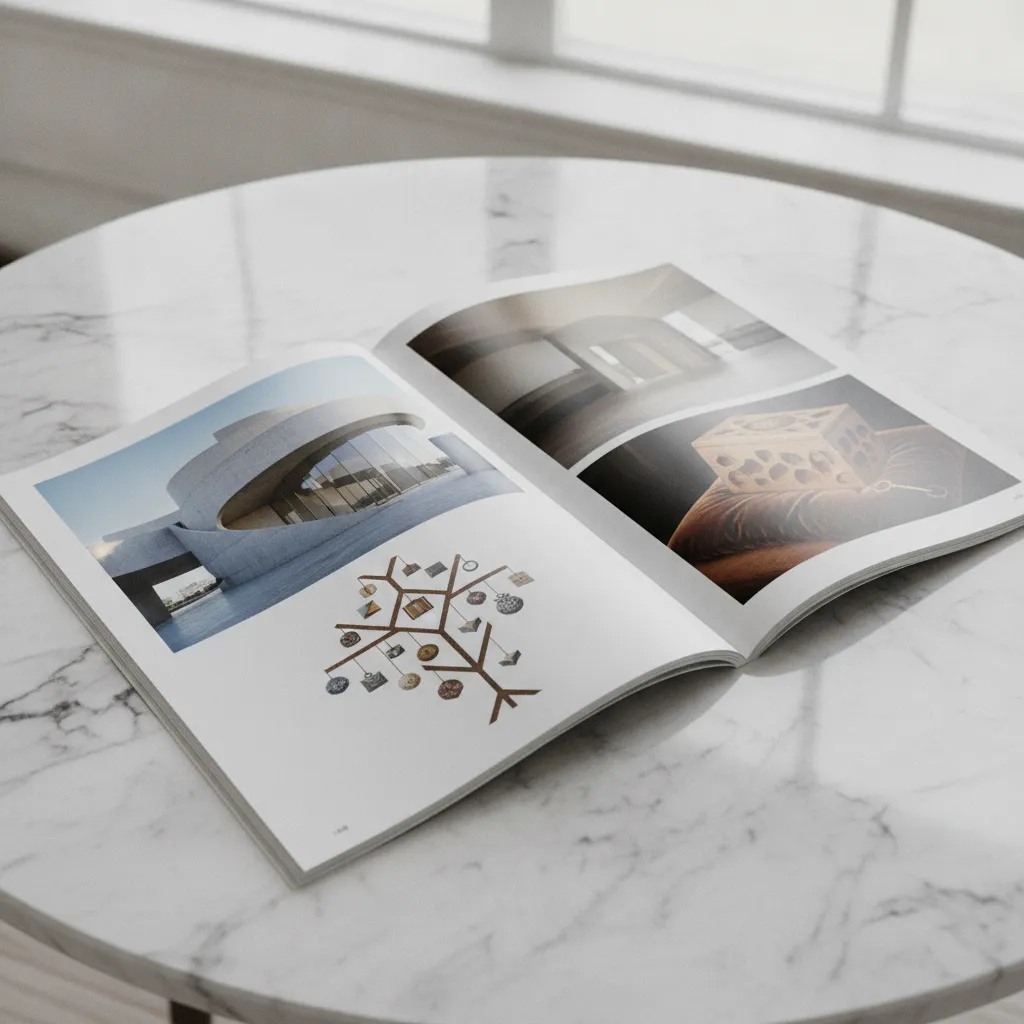
Advantages That Digital Channels Can’t Replicate
- Sustained visibility without recurring spend. A magazine placed in a client’s office generates impressions every time someone walks past it. You pay once; it works indefinitely.
- Undivided attention. Feeds and inboxes are saturated and skippable. A physical publication earns minutes of focused reading, not a two-second scroll.
- Trust through tangible quality. The physical quality of the object communicates brand values instantly. You can feel whether something was made with care.
- An owned channel with no algorithm. No platform decides who sees your magazine. No ad auction competes for your audience’s attention. You control everything.
- Social currency. A genuinely beautiful publication gets shared, referenced in meetings, and passed to colleagues. It becomes a conversation starter.
- Brand differentiation. Almost no company does this well anymore. A great magazine sets a brand apart in a category of sameness.
Comparing Keepsake vs. Standard Marketing Formats
| Format | Average Lifespan | Attention Earned | Recurring Cost | Brand Trust Signal |
|---|---|---|---|---|
| Social media post | 24-48 hours | Seconds | Yes (ongoing) | Low |
| Email newsletter | Minutes to hours | 30-60 seconds | Yes (ongoing) | Moderate |
| Digital ad | Impression only | Under 3 seconds | Yes (per click/impression) | Low |
| Corporate brochure | Days to weeks | 1-3 minutes | Per print run | Moderate |
| High-end brand magazine | Months to years | 15-45 minutes | Per issue | Very high |
| Coffee-table book | Years | 30-60+ minutes | One-time | Very high |
Industry analysts note that gifting and tangible brand assets consistently outperform digital touchpoints for top-of-mind awareness among high-value clients [5]. That effect compounds when the asset is genuinely beautiful. Brands that have turned physical gifting into a deliberate strategy report stronger client retention and higher referral rates than those relying solely on digital channels [5]. Notably, the Data & Marketing Association reports that direct mail achieves a 4.4% response rate compared to email’s average of just 0.12%, underscoring the sustained engagement advantage of physical brand assets [6].
From experience working across 80+ high-end publications over more than two decades, the brands that get the most out of a keepsake marketing strategy are the ones who understand that brand building takes time. They’re not looking for next quarter’s results. They’re building the brand that people remember when the buying decision finally arrives.
Common Mistakes to Avoid in 2026
The most common mistake in keepsake marketing is treating a high-end publication like a brochure with better paper, filling it with product information and promotional messaging instead of genuine editorial content that earns the reader’s time.
Where Most Brand Publications Fail
A common mistake is skipping the editorial spine entirely. The brand approves a design direction, commissions some articles, and assembles a publication that looks reasonable but reads like a collection of press releases. Nothing connects. Nothing earns a second read. And the object ends up in a recycling bin rather than on a coffee table.
The AMA’s 2026 analysis of brand presence makes this point clearly: a poorly designed keepsake can undermine brand perception just as quickly as a great one builds it [1]. Quality isn’t optional. It’s the entire mechanism.
- Confusing a magazine with a brochure. A brochure sells. A magazine informs, inspires, and earns trust. The moment a publication reads like an extended advertisement, it loses the reader.
- Underinvesting in photography and design. Images sourced from stock libraries and layouts assembled without design discipline signal exactly the opposite of premium. Every visual choice communicates something.
- Distributing without intention. Sending a magazine to a generic mailing list wastes the investment. Distribution should be curated: top clients, key prospects, strategic partners.
- Producing one issue and stopping. A single issue is a statement. A recurring publication is a relationship. The compounding effect of consistent presence is where the real brand-building happens.
- Treating it as a campaign, not a strategy. Keepsake marketing works on a long cycle. Brands that expect immediate ROI measurable in leads and conversions will be disappointed. The metric is brand equity, not click-through rate.
The In-House Trap
Many brands attempt to produce a magazine using internal marketing teams or general design agencies. The result is usually technically competent but editorially flat. A design agency builds assets. A publishing studio builds publications. The distinction matters enormously in the final object a reader holds.
One pitfall to watch for: internal teams often lack the editorial discipline to say no. Every department wants a feature. Every product wants a spread. The result is a publication without a point of view, and without a point of view, there’s no reason to keep it.
Pro Tip: Before commissioning a single word or image, write a one-paragraph editorial brief that defines who the publication is for, what it stands for, and what it is NOT. That brief should be the filter for every content and design decision that follows. If a piece of content doesn’t pass that filter, it doesn’t go in.
Best Practices for Building a Keepsake Marketing Strategy
The most effective keepsake marketing strategies share a common structure: they start with editorial intent, invest in craft at every stage, distribute with precision, and commit to consistency over multiple issues or editions.
The Framework: Five Principles That Hold Up
- Start with the editorial spine, not the design. Define the governing idea before any visual decisions are made. The design should serve the editorial intent, not the other way around.
- Invest in the object itself. Paper weight, print finish, binding method, and color accuracy are not production details. They are brand signals. Every physical property communicates something about the brand behind it.
- Curate distribution as carefully as content. A high-end publication sent to the wrong audience is wasted. Map the exact list of recipients and treat distribution as a strategic decision, not a logistics task.
- Build a recurring cadence. One issue creates awareness. Three issues build familiarity. Six issues establish authority. Plan for at least two to three issues before evaluating the strategy’s effectiveness.
- Measure what actually matters. Track client conversations triggered by the publication, referrals attributed to it, and qualitative feedback from recipients. These are the real indicators of brand-building success.
Expert Perspectives on Keepsake Brand Assets
Marketing practitioners who specialize in experiential and tangible brand assets consistently emphasize the importance of emotional resonance over information density. Event Marketer’s analysis of the “keepsake long game” found that brands making their messaging sticky and shareable through physical assets saw sustained audience engagement well beyond the initial touchpoint [2].
Research from Kellogg School of Management’s coverage of brand-led publishing initiatives highlights that the most successful keepsake assets are those built around a clear sense of identity and purpose, not just aesthetic quality [7]. The object needs to mean something. Beauty alone isn’t enough if there’s no substance behind it.
At Rethink Publishing, we’ve found that the clients who get the most from a keepsake marketing strategy are those who treat the publication as a brand artifact, not a marketing deliverable. The mindset shift changes everything: from “what do we want to say?” to “what does our audience genuinely want to read?” That shift is what separates a magazine people keep from one they recycle.
Pro Tip: Think about where your publication will physically live. A magazine designed for a client’s home office needs different editorial content and visual language than one designed for a hotel lobby or a law firm’s reception desk. Design for the environment, not just the brand.
The Beacon Design framework for keepsake marketing emphasizes launching with a clear announcement strategy: let your audience know the publication exists, explain what it stands for, and give them a reason to engage with it beyond the object itself [8]. That context transforms a beautiful object into a brand conversation.
Sources and References
- American Marketing Association, “Marketing’s Most Overlooked Advantage: Brand Presence,” 2026
- Event Marketer, “Experiential Marketing Trend of the Week: The Keepsake Long Game”
- Canada Post and True Impact Marketing, “A Bias for Action: The Neuroscience Behind Direct Mail,” 2015
- Penn State SBDC, “Otzzy: Turning Sports Memories into Interactive Keepsakes”
- Create Your Meta, “These 3 Brands Turned Gifting into an Effective Marketing Strategy”
- Data & Marketing Association, “Response Rate Report,” 2018
- Kellogg School of Management, “Keepsake Tales: Value Through Representation in Children’s Books,” 2021
- Beacon Design, “Ornament and Keepsake Marketing Tips”
Frequently Asked Questions
1. What exactly is a keepsake marketing strategy?
A keepsake marketing strategy is a brand-building approach centered on creating physical assets, typically high-end print magazines, coffee-table books, or curated publications, that recipients choose to keep, display, and return to over time. Rather than generating a single impression, a keepsake asset keeps the brand visible in a client’s environment for months or years, compounding brand presence without recurring spend. The strategy works best for brands focused on long-term trust and relationship depth rather than immediate conversion.
2. How is a brand magazine different from a corporate brochure?
A brochure sells. A magazine informs, inspires, and builds trust over time. The critical distinction is editorial intent: a magazine is built around a clear editorial spine, a governing idea that makes every content decision purposeful and gives readers a genuine reason to engage. A brochure is promotional by design. A magazine earns its place in a reader’s world because it’s worth their time, not because it’s selling something. When it’s done properly, people don’t throw it away. They keep it.
3. Which industries benefit most from a keepsake marketing strategy?
Any brand where trust, perception, and long-term relationships drive revenue can benefit. In practice, this includes luxury hospitality, high-end real estate, private members’ clubs, architecture and design firms, law firms, and B2B sectors like cybersecurity, fintech, and professional services. The common thread is a sophisticated audience that responds to quality and substance over volume and noise. If your clients make high-stakes, relationship-driven decisions, a keepsake marketing strategy is worth serious consideration.
4. How long does it take to produce a high-end brand magazine?
A properly produced, editorially curated brand magazine typically takes around 17 weeks from strategy to delivery. That timeline covers editorial planning, content development, design and layout, photography and image sourcing, multiple proofing rounds, pre-press, print production, and shipping. Rushing any stage of that process shows up in the final object. The timeline is a feature, not a limitation: it reflects the level of craft and precision that makes the publication worth keeping.
5. How do you measure the ROI of a keepsake marketing strategy?
Traditional digital metrics don’t apply here. The relevant indicators are qualitative: client conversations the publication triggered, referrals attributed to it, new relationships opened by it, and the brand perception shift it creates over time. Some brands track how often the magazine appears in meeting rooms or client offices during visits. Others survey recipients directly. The honest answer is that keepsake marketing builds brand equity, and brand equity is measured over years, not quarters. Results may vary depending on distribution quality and editorial substance.
6. Can a B2B company in a technical sector use a keepsake marketing strategy?
Yes, and this is one of the most underused opportunities in B2B marketing. Cybersecurity companies, law firms, and financial services brands have successfully used high-end print publications to humanize complex offerings, build credibility with senior decision-makers, and differentiate in categories where most competitors look identical. The editorial challenge is translating technical expertise into content a non-specialist executive genuinely wants to read. That’s an editorial problem, not a print problem, and it’s solvable with the right publishing partner.
7. How many issues should a brand commit to before evaluating the strategy?
A minimum of two to three issues before drawing conclusions. One issue creates awareness. The second issue signals commitment and starts building familiarity. By the third, recipients begin to anticipate it, which is when the strategy’s real power becomes visible. Brands that produce a single issue and then stop send an unintentional message: that the commitment wasn’t genuine. Consistency is as important as quality in a keepsake marketing strategy.
8. What makes a publication a keepsake rather than just good-looking print?
Three things: substance, craft, and relevance. Substance means the editorial content is genuinely worth reading, not promotional filler dressed up as articles. Craft means every physical property of the object, paper, print quality, binding, finish, reflects the care that went into making it. Relevance means the content speaks directly to the reader’s world, interests, and aspirations. Remove any one of those three and the publication becomes something people flip through once and set aside. Keep all three and you have something people return to.
The Brand That Stays in the Room
A keepsake marketing strategy is not a trend. It’s a return to something that has always been true: people trust what they can hold, and they keep what earns their respect. In a marketing environment saturated with disposable digital content, a beautifully made print publication does something genuinely rare. It stays.
The brands that understand this aren’t nostalgic for print. They’re pragmatic about attention. They know that a magazine sitting on a client’s coffee table for six months generates more brand presence than six months of social media posts. They know that quality communicates before a single word is read. And they know that the brands people remember are the ones that gave them something worth keeping.
This is what Rethink Publishing has built for clients across hospitality, real estate, architecture, law, cybersecurity, and beyond, over 20 years and 80+ publications. A this approach, done properly, is one of the most durable brand investments a company can make. The question isn’t whether print works. The question is whether your brand is ready to be taken seriously enough to do it well.
Recommended Articles
Explore more from our content library: