
| Key Insight | Explanation |
|---|---|
| Brand voice is not tone | Voice is constant across every issue; tone shifts by context. Confusing the two produces inconsistent magazines that feel unsteady. |
| Start with an editorial spine | Every strong brand magazine is built on a clear editorial idea first. Voice follows from that idea, not the other way around. |
| A magazine earns real attention | A physical publication demands minutes of focused reading. That makes brand voice far more powerful in print than in a skimmed social feed. |
| Voice must be documented | Without a written brand voice guide, every contributor defaults to their own instincts. The result is a publication that reads like a committee wrote it. |
| Print amplifies voice like no other channel | A well-produced magazine stays in homes and offices for months. A consistent, compelling voice keeps the brand present long after a digital post has disappeared. |
| Voice and design must work together | Typography, white space, and image choice all communicate brand personality. Voice and visual language need to be developed in parallel, not in sequence. |
Understanding develop brand voice magazine is essential. To develop a brand voice for a magazine, start by defining the editorial idea that sits at the center of your publication, then translate your brand’s values and personality into documented language guidelines every contributor follows. Done properly, a consistent brand voice transforms a magazine from a collection of articles into a coherent publication your audience recognizes, trusts, and keeps. This guide walks you through the complete process, from first principles to final issue review. Expect to invest serious thinking time upfront; the production work that follows becomes significantly more efficient once the voice is clear.

What Is a Brand Voice in a Magazine?: develop brand voice magazine
Brand voice is the distinct, consistent personality your publication expresses through every word, headline, caption, and pull quote. It is not the same as tone, which shifts depending on context. Voice stays fixed; tone adapts. This is particularly relevant for develop brand voice magazine.
According to research published in the Journal of Marketing Communications, a personified brand voice significantly increases consumer engagement and purchase intention compared to generic corporate language [1]. In a magazine, that effect is amplified. Readers spend minutes, not seconds, with a physical publication. Every paragraph is an opportunity to reinforce who you are or to quietly undermine it.
The stakes are significant: a 2023 Lucidpress study found that consistent brand presentation across all platforms increases revenue by up to 23%, and brand consistency — of which voice is a central pillar — is a primary driver of that lift. For a magazine published on a recurring cycle, that compounding effect is especially powerful.
The distinction matters practically. A luxury real estate brand might always sound authoritative and considered (voice), but warmer in a personal interview feature than in a market analysis column (tone). Both feel like the same brand. That consistency is what you’re building.
Brand Voice vs. Brand Personality
Brand personality (the human traits associated with your brand) and brand voice (how those traits sound in written language) are related but not identical. Personality is the brief; voice is the execution. A brand voice guide template, as outlined by the City of Jackson’s communications standards, typically documents both: the personality traits and the specific language choices that express them [2]. When considering develop brand voice magazine, this point stands out.
- Brand personality: authoritative, warm, precise, curious
- Brand voice: short declarative sentences, first-person plural, specific data over vague claims, no jargon
- Brand tone: more formal in analysis features, more conversational in profiles
What You’ll Need Before You Start
Before you can develop a brand voice for your magazine, you need a clear picture of three things: what your brand actually stands for, who your readers are, and what editorial territory the magazine will occupy.
Core Prerequisites
- A defined brand positioning statement. Not a tagline. A clear articulation of what you do, for whom, and why it matters differently than the alternatives.
- An audience profile. Specifically, how your readers think, what they already know, and what they expect from a publication in your category. The U.S. Chamber of Commerce recommends identifying your customer base as a foundational step before any brand voice work begins [3].
- An editorial concept. A magazine without a clear editorial idea is just a brochure with more pages. You need to know what the publication is about, not just who it’s for.
- Examples of communication you admire. Three to five publications, not necessarily in your industry, whose voice you find compelling. These become reference points, not templates.
- A committed decision-maker. Brand voice decisions require someone with authority to say “yes, this is us” and “no, that isn’t.” Without that, the process drifts.
Pro Tip: Collect three to five pieces of your existing written communication before the first voice workshop. Emails, website copy, past marketing materials. Read them aloud. The gap between how you sound and how you want to sound is usually the most useful starting point in the room.
Step 1: Define Your Editorial Spine
The editorial spine is the central idea that holds every issue together. It is the answer to the question: what does this magazine believe, and why does that matter to the reader?
This is where most company magazines fail. They skip this step and go straight to “what topics should we cover?” The result is a publication that reads like a press release with photographs. An editorial spine is not a theme. It is a point of view. For those exploring develop brand voice magazine, this matters.
How to Articulate Your Editorial Spine
- Write one sentence that captures what your brand believes about the world your readers inhabit. Not what your company does. What it believes.
- Test it against three questions: Does it differentiate you? Does it give writers genuine direction? Does it make some stories obviously right and others obviously wrong for this magazine?
- Map it to your audience’s real concerns. The editorial spine should sit at the intersection of what your brand cares about and what your readers genuinely want to understand.
- Write three story ideas that could only exist in a magazine with this spine. If the ideas could run anywhere, the spine isn’t specific enough.
In practice, this work takes a focused half-day session with the right people in the room. It is the single most valuable investment in the entire magazine development process. Everything else, voice, design direction, content strategy, flows from it.
Asana’s brand voice framework notes that voice “should complement your overall company values” [4]. In a magazine context, the editorial spine is the mechanism that makes that connection concrete and actionable for every writer and editor involved.
Step 2: Audit Your Existing Communications
Auditing your existing written materials reveals the gap between your current voice and the voice your magazine needs to carry. This step prevents you from building a brand voice guide in a vacuum. This directly impacts develop brand voice magazine outcomes.

Running a Practical Voice Audit
- Gather samples from every written channel: website, email, social media, previous print materials, sales decks.
- Read each sample aloud and note the adjectives that naturally come to mind. Collect these without editing.
- Identify patterns in what works. Which samples feel most like the brand you want to project?
- Flag inconsistencies. Where does the writing feel like different companies wrote it? That inconsistency is what a brand voice guide will resolve.
- Note what’s missing. Sometimes the audit reveals not just inconsistency but absence. The brand has no clear voice at all in certain contexts.
Acrolinx’s research on brand voice consistency found that inconsistent messaging directly undermines audience trust and makes content harder to remember [5]. In a magazine, where readers spend real time with the material, inconsistency is especially damaging. A reader who encounters three different “voices” in a single issue will not consciously identify the problem, but they will feel that something is off.
The scale of the challenge is real: according to the Content Marketing Institute’s 2024 B2B Content Marketing Report, only 40% of B2B organizations say they have a documented brand voice or content style guide — meaning the majority of brand magazines are produced without the foundational tool that makes voice consistency possible.
One useful audit tool is a simple comparison table. Map your current voice against your desired voice across four or five dimensions.
| Dimension | Current Voice | Target Magazine Voice |
|---|---|---|
| Sentence length | Long, complex, clause-heavy | Mixed: short punchy statements with longer explanations |
| Formality | Corporate, passive voice | Direct, first-person, active |
| Use of data | Vague claims, no sources | Specific, cited, grounded |
| Emotional register | Neutral, transactional | Considered, confident, warm |
| Jargon level | High, unexplained | Industry-fluent but plain-English explanations always follow |
Step 3: Build Your Brand Voice Attributes
Brand voice attributes are the three to five adjectives that define how your magazine sounds, each paired with a plain-English explanation and a “this, not that” example. They are the core of any working brand voice guide. This is particularly relevant for develop brand voice magazine.
Selecting and Defining Your Attributes
Amazon Ads’ brand voice framework recommends creating a brand voice chart that pairs each attribute with practical guidance for writers [6]. The chart format works because it translates abstract personality traits into concrete writing decisions.
- Generate candidates. Start with ten to fifteen adjectives drawn from your audit, your brand positioning, and your editorial spine. Don’t edit yet.
- Eliminate generic options. “Professional,” “friendly,” and “innovative” describe almost every brand. Remove anything that could apply to a competitor without adjustment.
- Select three to five. Choose the adjectives that are most specific to your brand and most useful as writing direction.
- Define each one in practice. For each attribute, write: what it means in this magazine, what it looks like in a sentence, and what it does not mean.
- Test with real copy. Take a paragraph from your audit and rewrite it using the attributes as guidance. If the rewrite feels like a different brand, the attributes are working.
Pro Tip: The “not that” column in a brand voice chart is often more useful than the “this” column. Writers know what “authoritative” means in general. They need to know what it means in your magazine specifically. “Authoritative, not condescending” is a writing instruction. “Authoritative” alone is not.
Research from Kennesaw State University’s brand voice model proposes that voice attributes function as a “personality anchor” that keeps all brand communications coherent across contexts [7]. In a magazine with multiple contributors, this anchor function is not optional. Without it, every writer defaults to their own instincts.
Step 4: Document a Brand Voice Guide for 2026
A brand voice guide is the working document that makes your voice repeatable across every issue, every contributor, and every context. As of 2026, the most effective guides are specific, short, and built around examples rather than principles alone. When considering develop brand voice magazine, this point stands out.
What a Working Brand Voice Guide Contains
- The editorial spine in one or two sentences
- The audience profile in plain language, not demographic data
- Three to five voice attributes with definitions and “this, not that” examples
- A tone map showing how tone shifts across different content types (features, interviews, data pieces, editorial notes)
- A banned words list. Every strong brand voice has words it never uses. Document them.
- Before and after rewrites of actual magazine copy, showing the voice in action
- Guidance on numbers, dates, and data (how specific? how cited? what format?)
The PPAI’s guidance on brand tone notes that voice guidelines should be treated as living documents, reviewed and updated as the brand evolves [8]. For a magazine, that means revisiting the guide at least once a year, or whenever a significant editorial shift occurs.
At Rethink Publishing, we’ve found that the most useful brand voice guides are the ones that fit on four pages, not forty. A forty-page document gets filed. A four-page document gets read before every issue brief.
Step 5: Apply Your Brand Voice Across the Magazine
Applying your brand voice consistently across a full magazine issue requires more than a guide. It requires a structured briefing process, editorial oversight, and a clear understanding of how voice operates differently across content types. For those exploring develop brand voice magazine, this matters.
Voice Across Content Types
A magazine contains multiple content formats, and each one carries the brand voice differently. The UX Magazine’s five-phase brand voice methodology recommends mapping voice application to specific content contexts rather than applying a single set of rules uniformly [9].
The business case for this discipline is compelling: research by Demand Metric found that content marketing — including brand publications — costs 62% less than traditional marketing while generating approximately 3 times as many leads, but only when the content is consistent and credible enough to build audience trust over time. A fragmented brand voice undermines that trust-building at every touchpoint.
- Long-form features: Voice is carried primarily through sentence rhythm, paragraph structure, and the choice of what to include and what to leave out.
- Interviews: Voice lives in the questions and the framing, not the subject’s answers. The editorial voice introduces, contextualizes, and concludes.
- Short-form columns and notes: These are where voice is most concentrated. Every word counts. This is where the banned words list matters most.
- Captions and pull quotes: Often overlooked, these are the first things a reader’s eye hits on a spread. They must carry the brand voice as clearly as any full article.
- Cover lines and headlines: The most compressed expression of brand voice in the entire publication. A headline that doesn’t sound like the brand is a missed opportunity on every page.
Pro Tip: Brief every contributor with the voice guide before they write a word, not after they’ve submitted a draft. Rewriting for voice after the fact is expensive and demoralizing. A ten-minute briefing conversation prevents ninety minutes of revision.
Step 6: Review and Refine Each Issue
To develop a brand voice magazine that improves with every issue, you need a structured review process that evaluates voice consistency as rigorously as it evaluates factual accuracy.
Building a Voice Review into Your Production Cycle
- Assign a voice editor. This person reads every piece of copy specifically for voice consistency, separate from the copy editor’s factual and grammatical review.
- Use the brand voice guide as a checklist. For each piece, confirm that the voice attributes are present and the banned words are absent.
- Read the full issue aloud. Inconsistencies that survive a visual read often surface immediately when read aloud. This is the fastest quality check available.
- Conduct a post-issue debrief. After each issue, note where voice held and where it drifted. Update the guide accordingly.
- Track reader response. Over time, reader feedback and engagement data will tell you which voice choices are landing and which aren’t. Let that inform the guide’s evolution.
Klaviyo’s brand voice framework emphasizes that consistency across touchpoints is what builds recognition over time [10]. In a magazine published on a recurring cycle, that recognition compounds. By issue three or four, readers should be able to identify the publication from a single paragraph, without seeing the masthead. This directly impacts develop brand voice magazine outcomes.
Common Mistakes to Avoid
Most brand magazines that fail at voice make the same small set of mistakes. Knowing them in advance saves significant revision time and, more importantly, prevents the kind of inconsistency that quietly erodes reader trust.
The Most Common Voice Mistakes in Brand Magazines
- Confusing voice with tone. Voice is constant. Tone shifts by context. A brand that tries to maintain the same tone across an in-depth feature and a short editorial note will produce copy that feels either too casual or too stiff in one of those contexts.
- Writing the voice guide but not briefing contributors. A guide that lives in a shared folder and is never discussed is not a guide. It is a document. The difference matters.
- Letting subject matter dictate voice. A cybersecurity company’s magazine should sound like that brand, not like a technical manual. The subject matter can be complex. The voice should remain accessible and consistent with the brand’s personality.
- Over-relying on adjectives in the guide. “Warm, authoritative, and precise” is a starting point. Without examples, those adjectives mean different things to different writers. Examples are what make a voice guide actually usable.
- Treating the first issue as the final word. Voice develops over time. The first issue establishes a direction. Subsequent issues refine it. Brands that treat issue one as a locked template miss the opportunity to improve.
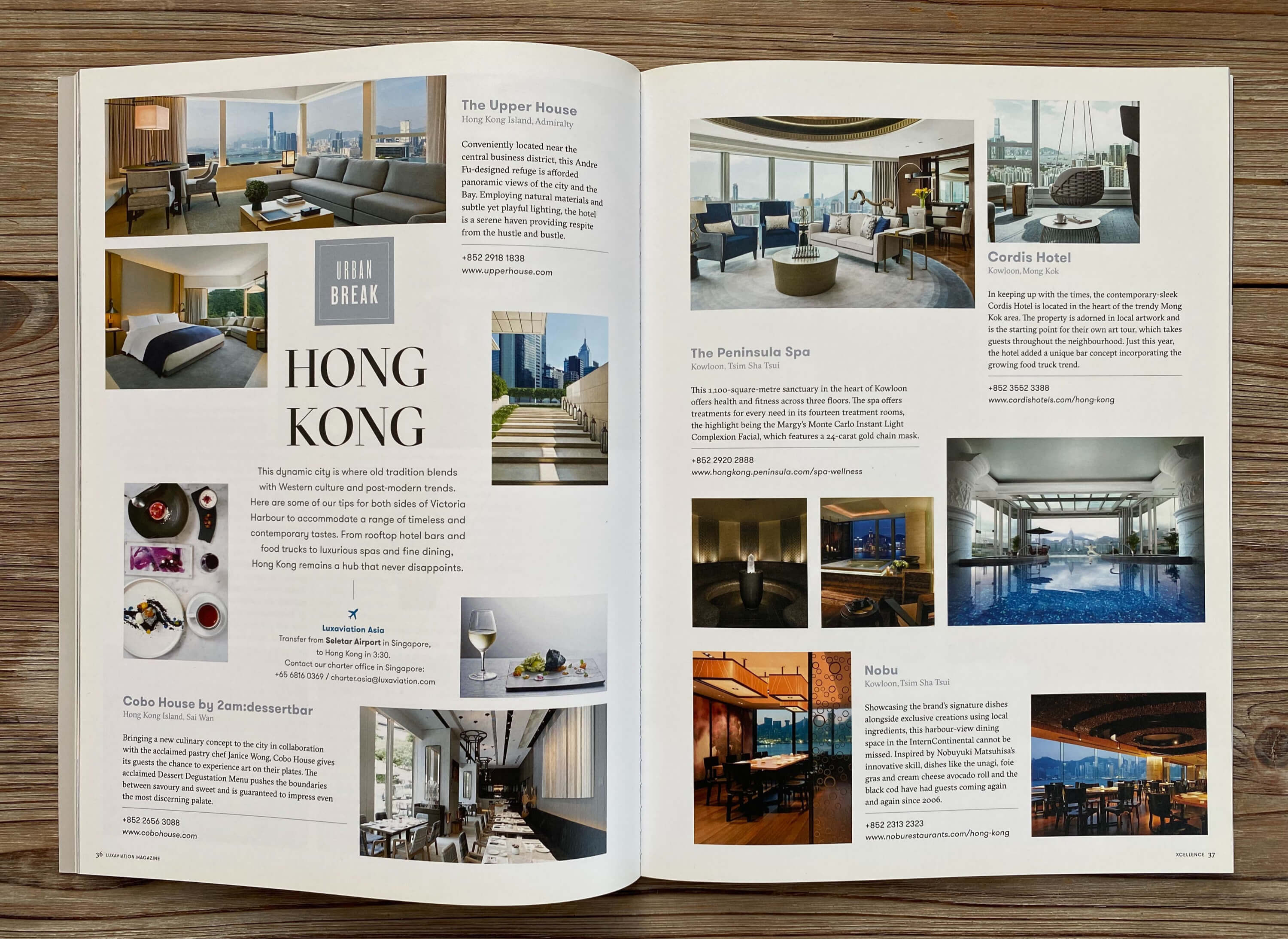
- Separating voice from visual language. Typography, white space, image selection, and color palette all communicate brand personality. A brand voice guide that doesn’t acknowledge its visual counterpart produces publications where the words and the design feel like they belong to different brands.
From experience working across hospitality, real estate, architecture, and enterprise sectors, the most common failure point is the last one. Voice and design are developed in parallel at Rethink Publishing precisely because a magazine is a designed object, not a document with pictures attached.
Sources & References
- International Journal of Communication, “Voice on Consumer Engagement and Purchase Intentions,” 2022
- City of Jackson MS, “Brand Voice Guide Template,” 2023
- U.S. Chamber of Commerce CO, “How to Create a Memorable Brand Voice,” 2024
- Asana, “What Is a Brand Voice? Plus, 7 Tips to Develop One,” 2024
- Acrolinx, “Creating a Brand Voice: A Quick Guide,” 2024
- Amazon Ads, “What Is Brand Voice? How to Create and Amplify Your Brand,” 2024
- Kennesaw State University Digital Commons, “Brand Voice: A Proposed Integrative Model Approach,” 2023
- PPAI, “Marketing: Strike The Right Tone,” 2023
- UX Magazine, “5 UX Development Phases to Create Your Brand’s Voice,” 2023
- Klaviyo Academy, “Build a Strong Brand Voice,” 2024
Frequently Asked Questions
1. How long does it take to develop a brand voice for a magazine?
Realistically, two to four weeks of focused work to define the editorial spine, run the voice audit, build the attributes, and document the guide. That assumes the right decision-makers are available and engaged. Rushing this phase is the single most common reason brand magazines feel inconsistent in their first issue. The time invested upfront pays back across every issue that follows. This is particularly relevant for develop brand voice magazine.
2. How many voice attributes should a brand magazine have?
Three to five is the practical range. Fewer than three and the guide doesn’t give contributors enough direction. More than five and writers can’t hold them all in mind while working. The goal is a set of attributes specific enough to be useful and small enough to be memorable. Each one should be paired with a concrete example, not just a definition.
3. Can we develop a brand voice magazine if we don’t have an in-house editorial team?
Yes. The voice guide does the work that an in-house team would otherwise carry in their institutional knowledge. With a well-documented guide, external writers, freelance contributors, and agency partners can all write consistently to the brand. The key is briefing every contributor directly, not just sending the document. A fully managed publishing partner can also handle this entire process end-to-end, from voice development through production and delivery.
4. What’s the difference between brand voice and editorial voice in a magazine?
Brand voice is the personality of the company expressed in language. Editorial voice is the specific perspective and style of the publication. In a brand magazine, they should be the same thing. The editorial voice is how the brand voice sounds when it is doing journalism, not marketing. The distinction matters because editorial voice has credibility; marketing copy, even well-written marketing copy, does not earn the same level of reader trust. When considering develop brand voice magazine, this point stands out.
5. How does brand voice work differently in print than in digital content?
In digital content, readers skim. Voice has a fraction of a second to register before the scroll moves on. In print, readers slow down. A magazine earns minutes of focused attention, which means voice has room to develop and deepen across a feature. That is an advantage, but it is also a higher standard. Inconsistency that might go unnoticed in a social post becomes obvious across twelve pages of a magazine spread.
6. Should brand voice change between issues of the same magazine?
Voice should remain consistent across issues; tone can shift to reflect the editorial focus of each issue. A magazine with a consistent voice builds recognition over time. Readers come to know what to expect from the publication, and that familiarity is a significant asset. Gradual voice evolution is natural and healthy as a brand matures, but issue-to-issue swings in voice signal a lack of editorial direction.
7. What should a brand voice guide include for a magazine specifically?
Beyond the standard brand voice elements (attributes, tone map, banned words), a magazine-specific guide should address: how voice operates across different content formats (features, interviews, columns, captions), how to handle subject matter expertise without losing accessibility, and how the editorial spine connects to the brand’s broader positioning. Before-and-after rewrites of actual magazine copy are the most useful element of all. Abstract principles don’t help writers. Concrete examples do. For those exploring develop brand voice magazine, this matters.
Build a Magazine Worth Keeping
The process to develop a brand voice magazine is not complicated. But it does require discipline. Define the editorial spine first. Audit what you already have. Build voice attributes that are specific enough to be useful. Document them in a guide short enough to be read. Apply them with consistency across every content format. Review and refine with each issue.
What separates a brand magazine that earns a place on a reader’s coffee table from one that gets recycled is not production quality alone. It is the sense that someone with a clear point of view made every decision in that publication. Voice is what creates that sense. It is the difference between a magazine and a brochure with photographs.
At Rethink Publishing, we’ve spent over 20 years building that editorial discipline into every publication we produce. Across 80+ high-end magazines and 30+ coffee-table books, the lesson holds: voice is not a finishing touch. It is the foundation. Get it right, and everything else in the production process becomes clearer, faster, and more purposeful. Visit rethink-publishing.com to see how we approach it. This directly impacts develop brand voice magazine outcomes.
Recommended Articles
Explore more from our content library: