
Tactile brand differentiation is the deliberate use of physical touch, texture, weight, paper stock, finish, and material quality to make a brand feel distinct and memorable in ways that visuals alone cannot achieve. When a customer holds something that feels premium, their brain registers it as premium. That physical signal bypasses rational evaluation and lands directly in emotional memory, which is why brands that invest in print and physical materials consistently outperform digital-only alternatives on recall and perceived value.
What Tactile Brand Differentiation Actually Means and Why Touch Outperforms Vision Alone
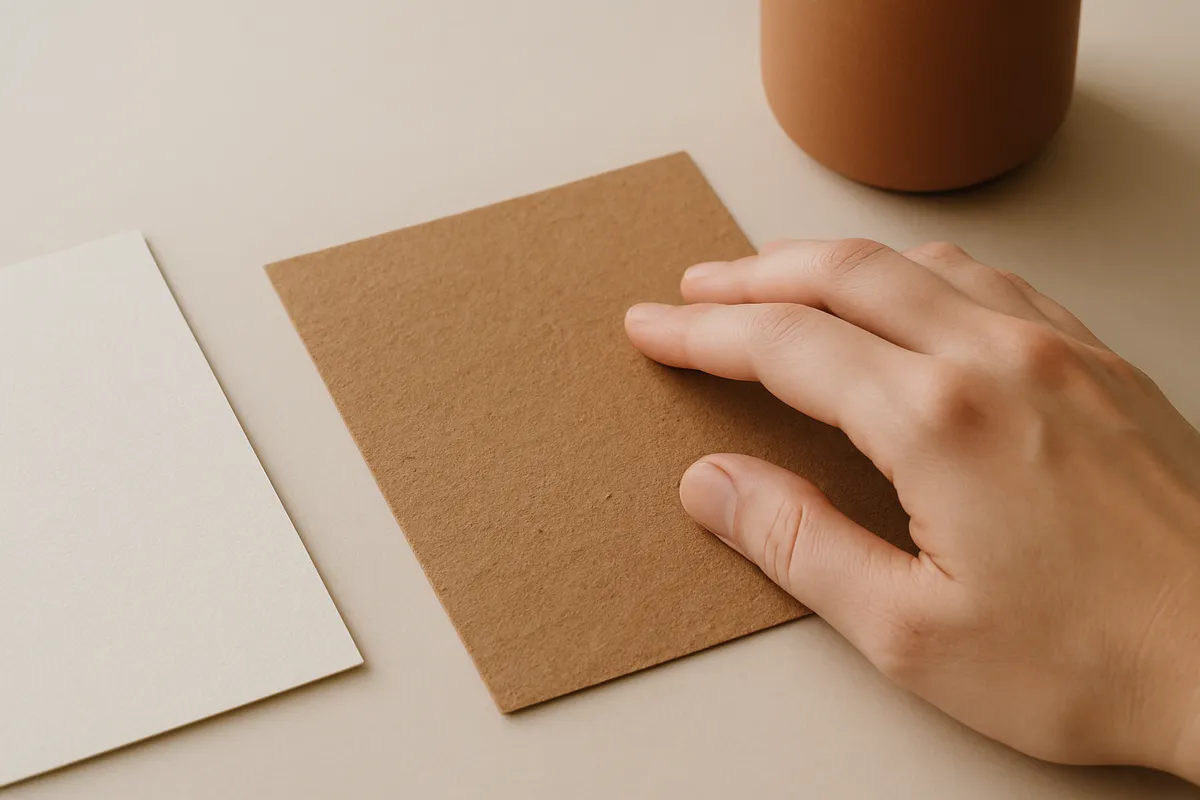
Tactile brand differentiation uses physical material properties — weight, texture, surface finish, paper stock — to communicate brand values without a single word or image.
That definition matters because it draws a precise boundary. This is not about color palettes or logo design. It is about what a brand feels like in someone’s hands, and the immediate judgment that sensation triggers.
How tactile differentiation works in physical versus digital brand environments
Touch is processed through a distinct neural pathway, the somatosensory cortex, that operates separately from visual processing [3]. That separation has a practical consequence: tactile impressions form faster than visual ones and are significantly harder to revise once formed.
A flimsy business card handed over at the end of a premium pitch meeting is a concrete example. The visual brand may be immaculate, but the physical object contradicts it in under a second, and that contradiction sticks.
Digital environments cannot replicate this. A brand operating exclusively online has no surface, no weight, no resistance. Tactile brand differentiation, by definition, requires a physical object to exist. That is not a limitation of digital; it is simply a different channel with different sensory reach.
Texture-based branding versus other sensory marketing approaches
Sensory marketing covers scent, sound, taste, and touch. Tactile branding is the narrowest of those — it only activates when someone physically contacts the material [2].
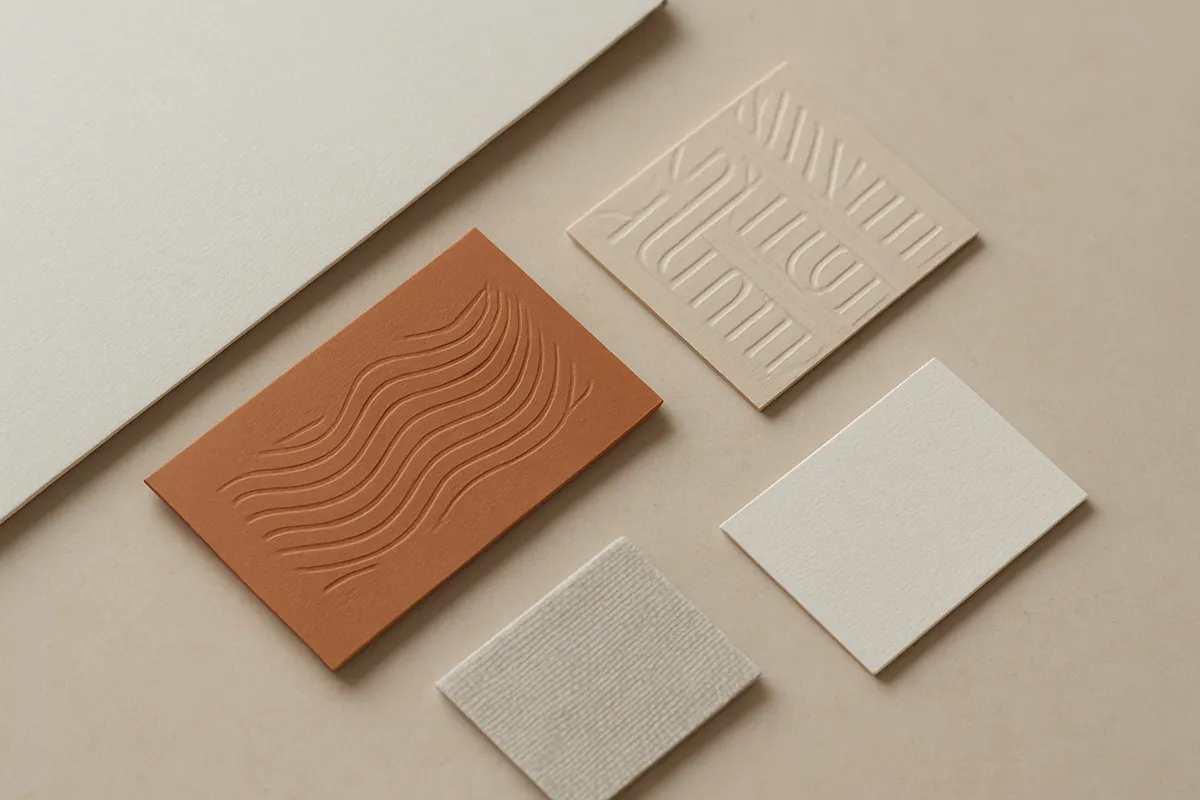
Texture also works in both directions. A deliberately rough, uncoated stock signals craft and authenticity. A smooth, soft-touch laminate signals luxury and restraint. Neither is inherently superior — the material choice must match what the brand is actually claiming.
Print publications sit at the top of the tactile asset hierarchy for one practical reason: people hold them, keep them, and return to them. A magazine or coffee-table book is not discarded the way packaging is. That repeated physical contact compounds the brand impression over months, not seconds.
The Psychology of Touch and How Physical Sensation Shapes Brand Loyalty
Physical touch activates a distinct neurological pathway that shapes how consumers judge quality, assign value, and form lasting emotional bonds with a brand.
What neuroscience reveals about the consumer-brand relationship through tactile experiences
The brain processes physical texture through the haptic system, a sensory pathway that operates largely below conscious awareness [3]. When a person runs their fingers across a heavy, uncoated paper stock or a cloth-bound cover, the brain interprets that sensation as a direct signal of quality. This is a cognitive shortcut: the feel of an object becomes a proxy for the credibility of what it represents.
Behavioral research has identified a related mechanism called the endowment effect [3]. Once a person physically holds an object, their perceived value of it increases — they feel a sense of ownership that a screen can never replicate. A well-produced print magazine triggers this effect the moment it lands in someone’s hands. A PDF does not. That gap in perceived value is precisely where tactile brand differentiation earns its return.
Physical sensation is also tied to episodic memory in ways that screen-based content is not [3]. When a brand material engages the sense of touch, it creates a richer memory trace — one that a reader is more likely to recall days or weeks later, without being prompted by an algorithm.
How tactile elements trigger emotional responses and build brand loyalty
The trust mechanism works through inference. A publication that feels considered — weighted paper, precise binding, deliberate layout — signals that the brand behind it is equally considered. The object becomes evidence of character, not just a communication vehicle.
That inference compounds over time. When a brand consistently delivers a high-quality physical experience, customers begin to anticipate it. Studios like Rethink Publishing build this cycle deliberately: each issue of a custom magazine reinforces the expectation of quality, turning the publication itself into part of the client relationship rather than a one-time marketing piece.
Which Industries Get the Most from Tactile Branding and When to Invest
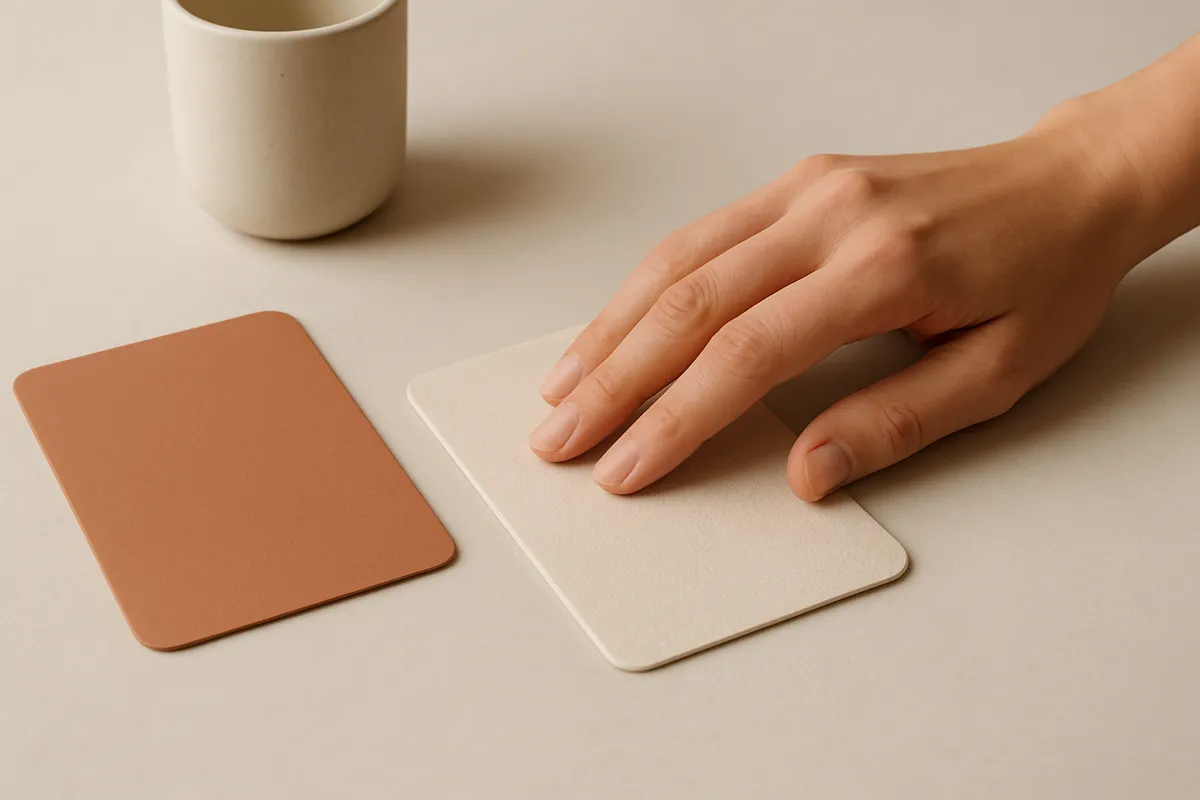
Luxury goods, hospitality, financial services, professional services, real estate, and healthcare return the most from tactile brand differentiation, because trust is their actual product.
These sectors share a common structure: long sales cycles, high-value clients, and relationships measured in years rather than transactions. A premium printed publication or coffee-table book placed in a client’s hands does work that a digital ad cannot — it signals permanence, care, and conviction in a way that persists long after a meeting ends.
Mass-market consumer goods use tactile branding differently. On a retail shelf, packaging texture communicates quality in under three seconds — a matte finish, an embossed logo, or a weighted lid shapes the purchase decision before the buyer reads a single word. That is shelf differentiation. Premium B2B brands use tactile materials for a different purpose: sustaining relationships over months and years, not winning a split-second comparison.
The technology sector is worth addressing directly. Tech companies increasingly commission premium print publications and coffee-table books to signal that they are more than a product — they represent a culture and a point of view [2]. Digital channels can distribute that message, but they struggle to make it felt. A printed publication does.
Rethink Publishing works with technology companies for exactly this reason — a beautifully produced magazine positions a tech brand alongside culture and authority in a way that no email campaign replicates.
When brands should invest in tactile differentiation versus digital-only alternatives
Tactile investment makes sense when four conditions align: long sales cycles, high-value clients, competitive markets saturated with digital noise, and a brand strategy built on perceived quality rather than price.
Digital-only approaches are appropriate when the opposite is true — high-volume, low-margin, transactional relationships where the cost of physical materials cannot be recovered through lifetime customer value. A subscription app serving millions of users at low price points has no business case for a printed publication. A private members’ club with 400 clients does.
How Tactile Brand Differentiation Can Be Tested and Measured Effectively
You can measure tactile branding effectiveness through blind material testing, A/B distribution trials, and behavioural signals like retention and referral — no lab required.
Consumer testing methodologies for evaluating touch-based brand elements
The cleanest way to isolate a tactile signal is to remove the visual one. In focus group settings, participants handle material samples with branding covered or absent, then rate perceived quality. This blind approach separates what the paper, texture, or finish communicates from what the logo implies, giving you a direct read on whether your tactile brand differentiation is doing real work.
A/B distribution testing applies the same logic at scale. Send two versions of a print piece — different paper weights, different finishes — to matched audience segments, then track downstream behaviour: response rates, follow-up meeting requests, and conversion over the following weeks. The variable is the material; everything else stays constant.
You don’t always need a formal study to know it’s working. Watch for three observable signals: recipients keep the material rather than discard it, they reference it by name in follow-up conversations, or they pass it to a colleague. Each behaviour is a proxy for perceived value, and none requires a survey to spot.
Sales teams are an underused measurement tool. Frontline staff who hand a publication to a client can report whether the material changed the room, whether questions shifted, whether the tone lifted. That qualitative feedback is faster than any analytics dashboard.
Set expectations honestly: tactile branding operates on brand perception over months, not click-through rates over days. Track client retention, referral frequency, and shifts in how prospects describe your brand — not last-touch conversion.
Interpreting results and iterating on tactile brand choices
Once you have initial data from testing, the next step is iteration rather than wholesale change. If a heavier paper stock consistently scores higher on perceived quality in blind tests but your current print run uses a lighter sheet, that is a straightforward upgrade to prioritize. If the finish — matte versus gloss, soft-touch laminate versus uncoated — produces mixed results across audience segments, segment your distribution accordingly rather than defaulting to a single specification.
Iteration also applies to binding and format. A saddle-stitched booklet communicates something different from a perfect-bound magazine, and a perfect-bound publication reads differently from a case-bound coffee-table book. Each format carries its own tactile signal, and the right choice depends on how long you want the piece to live in a client’s environment and what level of authority you are trying to project.
Tactile Branding in Practice: What Works, What Fails, and What Print Does That Nothing Else Can
Tactile brand differentiation succeeds when every physical signal confirms the brand promise, and fails — often irreversibly — when it contradicts it.
How brands can apply the psychology of touch to packaging, print, and experiential marketing
The most common failure mode is material quality that undercuts positioning. A premium service firm distributing a brochure printed on thin, flimsy paper doesn’t just miss an opportunity — it actively signals carelessness or cost-cutting. Clients notice, even when they can’t articulate why their trust shifted.
The second failure is subtler: tactile elements that feel expensive but land wrong for the audience. Heavy embossed packaging looks impressive until your customers prioritize sustainability — then the same material creates cognitive dissonance rather than positive association [3]. Texture must align with what the audience already values, not just with what reads as “premium” in the abstract.
Success looks different. A custom print magazine that a client keeps on their coffee table for three months, returns to between meetings, and passes to a colleague is a brand asset that keeps working long after the print run ships. No email, no PDF, and no social post matches that dwell time.
Custom print publications are the strongest sustained tactile asset available to a brand because they combine multiple physical signals simultaneously — paper weight, texture, binding, and print finish — with editorial content that positions the brand as an authority in its field [3]. Rethink Publishing builds each magazine around an editorial spine first, then pairs that content with intentional design and material choices, so every element reinforces the same message.
The practical starting point for any brand is an audit of every physical touchpoint it controls. Identify where tactile signals are currently neutral or negative, then prioritize the materials that stay in a client’s hands the longest. Dwell time is the real metric, and nothing in a brand’s physical toolkit holds attention longer than a publication worth keeping.
Frequently Asked Questions
Is tactile branding only relevant for luxury brands?
Tactile branding applies across market segments, but the return on investment scales with how much physical quality signals trust in a given category. Luxury brands use it most visibly — heavy paper stocks, embossed covers, soft-touch finishes — because their buyers are conditioned to read material quality as a proxy for product quality. That said, any brand whose clients make high-consideration, relationship-driven purchasing decisions can use physical texture to stand apart. The strategy fits wherever the stakes of first impressions are high.
How does paper stock choice affect brand perception in print marketing?
Paper weight and finish directly shape how a reader perceives the brand behind the publication before they read a single word. A heavier coated stock reads as authoritative and premium; a lighter, uncoated sheet can signal approachability or sustainability depending on context. Research into consumer psychology confirms that physical weight influences perceived value [3], meaning a thicker, denser publication can make a brand feel more substantial, not just look it. Stock choice is a brand decision, not a production detail.
Can digital brands benefit from tactile differentiation if they have no physical product?
Digital-native brands can use print to create a physical presence that their competitors, also screen-bound, cannot match. A SaaS company, fintech platform, or cybersecurity firm that sends clients a well-produced branded magazine occupies physical space in an office or home that no app notification can replicate. Rethink Publishing has produced publications for tech companies specifically for this reason: the magazine becomes the only tangible artifact of a brand relationship that otherwise exists entirely on screens. The absence of a physical product makes print more distinctive, not less relevant.
What is the difference between tactile branding and experiential marketing?
Tactile branding is a subset of experiential marketing focused specifically on the sense of touch [2]. Experiential marketing is the broader discipline — it includes live events, immersive installations, scent, sound, and visual environments. Tactile branding narrows that scope to the physical properties of materials: texture, weight, temperature, and surface finish. A pop-up event is experiential marketing; the embossed invitation that arrives beforehand is tactile branding. Both shape perception, but tactile elements work persistently — they travel home with the recipient.
How do you choose the right tactile format for a specific brand goal?
Start by identifying what the physical material needs to accomplish and how long it needs to work. A business card must make an impression in seconds; a branded magazine must sustain attention over weeks. Match the format to the dwell time you need. For relationship-building with high-value clients, a perfect-bound or case-bound publication signals permanence and authority. For event-based brand moments, a well-finished brochure or lookbook may be sufficient. The format is not a production decision — it is a strategic one that should follow directly from the brand objective and the audience’s expectations.
Conclusion
Touch communicates what screens cannot: permanence, weight, and deliberate craft. Three things are worth acting on. First, audit every physical material your brand currently puts in a client’s hands — packaging, stationery, printed collateral — and ask whether the texture matches the price point you charge. Second, treat paper stock and finish as brand decisions, not vendor defaults. Third, if your brand has no physical presence at all, consider whether a print publication could create one.
If that last point is relevant to your business, review the portfolio at rethink-publishing.com and look specifically at how editorial structure and material choices work together in a finished publication — that combination is where tactile differentiation becomes a durable brand asset.
Sources & References
- Tactile Branding | Branding dictionary
- How The Sense of Touch and Texture Influence Consumer Psychology, Neuroscience Of
Recommended Articles
Explore more from our content library: