
Brand heritage publishing is the practice of using a company’s history, founding story, and accumulated expertise as the editorial foundation of its published content, magazines, books, or digital media, rather than treating publishing as a promotional afterthought. Unlike traditional publishing, which serves a general readership, this approach serves a strategic business purpose: it turns longevity and credibility into a tangible asset that builds trust, deepens customer relationships, and differentiates a brand in crowded markets.

What Is Brand Heritage Publishing and How Does It Differ from Traditional Publishing?
What Is Heritage Publishing Specifically?
Brand heritage publishing uses a company’s origin story, milestones, and accumulated expertise as the editorial spine, not a content calendar, ad inventory, or seasonal promotion cycle. Every content decision flows from what the brand has actually done and built over time. According to Heritage Publishing, Inc., the most effective heritage-driven editorial strategies are built around documented institutional knowledge rather than promotional messaging.
Traditional publishing serves a general readership and monetizes through copy sales and advertising. Heritage-focused brand publishing serves a defined business audience and monetizes through something harder to manufacture: trust, client retention, and long-term authority. The audience is smaller and the stakes per reader are higher.
The distinction from content marketing is equally sharp. Content marketing optimizes for conversion, clicks, downloads, form fills. Heritage publishing optimizes for credibility. A well-produced heritage magazine doesn’t get scrolled past; it gets kept on a desk or a coffee table, sometimes for years.
This is also where the brochure comparison matters. A brochure lists features and prices. A heritage publication tells a story, with an editorial point of view, a narrative arc, and a reason to keep reading, that happens to reflect the brand’s values. One is a transaction; the other is a relationship.
“The brands that endure are the ones that know their story and tell it with discipline. Heritage isn’t nostalgia — it’s proof.” — James M. Citrin, Senior Partner, Spencer Stuart
How Do Heritage Narratives Shape Modern Publishing Strategies?
Heritage narratives work in publishing because they anchor present-day claims in verifiable history. A founding year, a notable client roster, an industry first — these give content a factual backbone that pure marketing copy cannot replicate. Readers sense the difference between assertion and evidence.
At Rethink Publishing, the editorial process begins by identifying exactly that backbone: the moments, decisions, and expertise that define a brand’s trajectory. That history then drives the publication’s structure, tone, and content choices from the first page to the last.
How the Biggest Publishers Use Brand Heritage as a Business Strategy
The Big 5 publishing houses treat their founding-era credibility as a commercial asset, one that justifies premium pricing and attracts top authors that newer rivals cannot. According to the Publishers Weekly industry overview, institutional heritage remains one of the most durable competitive advantages in the publishing sector.
Who Are the Big 5 Publishers and What Heritage Strategies Do They Use?
The Big 5 — Penguin Random House, HarperCollins, Simon & Schuster, Hachette, and Macmillan — each carry institutional histories stretching back to the 1800s in some cases. That history translates directly into negotiating power: authors accept lower royalty percentages from a house with a century of literary credibility because the imprint’s reputation opens doors that a digital-native publisher simply cannot.
One of the most deliberate heritage strategies in the industry is keeping legacy imprint names alive after mergers. When a storied imprint gets absorbed into a larger group, its name stays on the spine, because that name carries decades of reader trust. No campaign budget replicates what a well-maintained imprint reputation delivers automatically.
The key heritage strategies used by major publishers include:
- Preserving legacy imprint names after acquisitions to retain accumulated reader trust
- Curating author rosters that reinforce the imprint’s editorial identity over decades
- Publishing anniversary editions and archival collections that celebrate institutional history
- Leveraging founding-era credibility in author negotiations and rights acquisitions
- Maintaining consistent editorial standards that signal continuity to the market
Digital-native publishers — Substack newsletters, content farms, algorithmically driven platforms — have no equivalent foundation to draw on. Their content competes on volume and recency. Heritage publishing competes on authority, and authority compounds over time in ways that output volume never does.
Which Is the No. 1 Book Publishing Company and How Did Heritage Build Their Position?
Penguin Random House is the world’s largest trade publisher by revenue, and its dominance is partly a heritage consolidation story. By acquiring storied imprints — Knopf, Doubleday, Viking — PRH preserved each imprint’s individual equity while applying group-scale distribution and resources behind it. The imprints kept their names. The heritage kept its value.
The lesson for non-publishing brands is direct: a company with 30 or more years of documented expertise holds the same raw material a legacy imprint carries. Brand heritage publishing, done properly, turns that accumulated credibility into an editorial product — a magazine or coffee-table book — that signals authority the moment a client picks it up. Specialists such as Heritage Books, Inc. have built entire business models around exactly this principle.

What Makes a Strong Brand Heritage and Why It Matters in Publishing
Heritage-driven publishing works when a company can prove longevity, consistency, track record, cultural relevance, and authenticity — five components that convert history into reader trust.
What Are the Core Components of Brand Heritage?
Longevity is the most visible signal; years in operation give readers a baseline reason to pay attention. But longevity alone is not heritage. A company that has existed for 50 years and repositioned itself four times has less publishable heritage than a 10-year-old firm with a documented, unwavering point of view.
The five core components of strong brand heritage are:
- Longevity — years in operation that establish a baseline of credibility with readers
- Consistency — core values that have not shifted with market trends
- Track record — client or customer outcomes that are documented, not merely claimed
- Cultural relevance — evidence that the brand shaped its category, not just participated in it
- Authenticity — a verifiable story with dates, names, decisions, and results a reader could check
In publishing, these components matter because readers evaluate the source before they evaluate the content. A 25-year-old firm’s magazine is read with more initial credibility than a two-year-old startup’s newsletter, even when the writing quality is identical. That credibility gap is the reason heritage is a publishing asset, not just a marketing talking point.
There is also a trap here. Companies with strong histories sometimes over-index on nostalgia, leading every story with founding dates and archive photographs, while under-indexing on present relevance. Strong brand heritage publishing balances historical proof points with current application. The past earns attention; the present justifies it.
“Authenticity in brand storytelling isn’t about perfection — it’s about showing the decisions you made and why you made them. That’s what readers trust.” — Ann Handley, Chief Content Officer, MarketingProfs
How Do Different Industries Approach Brand Heritage Differently Than Publishing?
Financial services, hospitality, healthcare, and professional services are the industries that apply heritage publishing most effectively. In financial services, a long institutional history signals stability to clients who are making multi-decade decisions. In hospitality, heritage communicates tradition and a quality of experience that a new property simply cannot claim. In healthcare, clinical authority accumulates over years of published outcomes and patient relationships. In professional services — law firms, architecture practices, consulting groups — depth of expertise is measured in decades of documented work.
Technology is the notable exception. In most tech categories, a long operating history can signal slow adaptation rather than earned authority. A software company that leads its publication with 1998 founding dates risks looking behind the curve. Heritage still applies in tech, but the emphasis shifts from longevity to track record: documented client results, platform reliability data, and consistent product philosophy over time.
The underlying principle holds across every sector: heritage is not the same as age. It is the combination of time, consistency, and proof, assembled into a narrative that a reader finds credible before they read the first paragraph.
How to Communicate Brand Heritage to Younger Audiences Without Losing Them
Reframe heritage as proof of staying power, not proof of age — that single shift determines whether younger audiences engage or scroll past.
What Frameworks Exist for Updating Legacy Brand Narratives for Modern Markets?
The tension is real: heritage signals trust to buyers over 45 and signals irrelevance to buyers under 30. The answer is not to hide the history. It is to connect it to a problem that still exists today.
A three-step framework does this cleanly. First, identify the founding problem the brand originally solved. Second, show that problem still exists in its current form. Third, demonstrate how the brand’s approach has evolved to meet it. This creates a through-line from past to present — the brand reads as experienced, not antiquated.
What this framework avoids is equally important. A timeline of company milestones is not a heritage narrative — it is an internal document that accidentally went public. Listing “1987: opened first office” and “2003: expanded to three locations” tells the reader nothing about why the brand matters to them now.
Format also shapes reception. Long-form heritage publishing — print magazines, documentary-style video — performs well with 35–55 audiences who will sit with depth. For under-35 readers, the same heritage content needs a shorter entry point: one founding story told in 90 seconds, then a clear path to the longer piece.
What Messaging Strategies Resonate with Gen Z When Discussing Brand Heritage?
Gen Z responds to heritage when it is framed as accountability, not nostalgia. “We’ve been doing this since 1987, and here’s what we got wrong along the way” outperforms “proud to serve you for 35 years” — the first signals honesty, the second signals a press release.
This matters because Gen Z evaluates brands on transparency and self-awareness. According to a 2023 Edelman Trust Barometer report, 81% of Gen Z consumers say they need to trust a brand before making a purchase, and transparency about past decisions ranks among the top trust signals. Admitting an early product failure, a market misjudgment, or a values shift over time reads as credibility, not weakness. The brand that shows its working builds more trust than the brand that only shows its trophies.
How to Measure the ROI and Business Impact of Brand Heritage Publishing
Brand heritage publishing ROI is measurable, but the meaningful data arrives in 12–24 months, not 90 days.
What Metrics and KPIs Quantify Brand Heritage Value for Marketing Purposes?
Start with four primary KPIs. Reader retention rate asks whether recipients keep the publication — a magazine still sitting on a client’s desk six months later is doing brand work no email can replicate. Inbound attribution tracks whether prospects mention the publication in a sales conversation; tag these touchpoints in your CRM against every recipient record. Sales cycle length measures whether heritage-nurtured prospects close faster than non-nurtured leads — use that comparison as your internal benchmark. Net promoter score delta captures whether receiving the publication changes how clients describe your brand to peers.
Three secondary metrics round out the picture. Share of voice in earned media rises for heritage-rich brands — journalists and analysts cite them as sources more often. Employee advocacy rate improves when staff understand the company’s story; they become more credible in client conversations. Content longevity is worth tracking separately: a heritage piece published in 2021 can still drive organic traffic in 2025, which campaign content rarely does — measure evergreen performance on its own line.
For measurement infrastructure, tag all publication recipients in your CRM, apply UTM parameters to any digital companion content, and run a simple annual survey asking clients: “How did you first come to trust us?” The heritage publication surfaces unprompted more often than most marketing teams expect. You can review how established heritage publishers structure their editorial and distribution operations at Heritage Publishing Inc on LinkedIn.
What Case Studies Demonstrate Measurable Business Impact from Brand Heritage Strategies?
Professional services firms that publish annual heritage-anchored client magazines report 20–40% higher client retention rates than comparable firms relying solely on digital touchpoints — treat that as a directional benchmark, not a universal guarantee. The mechanism is consistent: physical publications create a recurring, high-attention moment that digital channels don’t replicate. A separate Content Marketing Institute study found that companies with documented content strategies are 60% more likely to report strong ROI than those without, a gap that widens further when editorial strategy is anchored in institutional heritage.
The honest constraint is timing. Companies expecting 90-day attribution data should use a different channel. Heritage publishing compounds over time — Rethink Publishing’s clients typically see the clearest retention and referral signals after the second or third issue, once the publication has established a cadence clients anticipate and keep.
“Print publications that carry genuine institutional authority don’t compete with digital — they complement it by doing what screens cannot: they stay in the room.” — Samir Husni, Director, Magazine Innovation Center, University of Mississippi

Frequently Asked Questions
Is brand heritage publishing only relevant for old or established companies?
No, brand heritage publishing works for any company with a clear point of view, not just those with decades behind them. A 10-year-old architecture firm or a five-year-old hospitality group can build a compelling heritage narrative around founding philosophy, craft standards, and client relationships. What matters is depth of conviction, not length of history. Age gives you material; editorial discipline gives you a publication worth keeping.
How is brand heritage publishing different from a company history book or anniversary publication?
A company history book documents the past; brand heritage publishing uses the past to shape how clients perceive you now and in the future. An anniversary publication is typically a one-time commemorative piece, produced once, then shelved. Brand heritage publishing is an ongoing editorial strategy: each issue reinforces the same founding values while staying current, so the publication functions as a living brand asset rather than an archive.
How often should a brand heritage publication be produced to stay effective?
Most brands find one to two issues per year sufficient to maintain presence without diluting the publication’s perceived value. Frequency depends on your distribution model and audience touchpoints — a private members’ club with monthly client contact may sustain a quarterly cadence, while a real estate developer might produce a single annual edition timed to key sales seasons. Consistency matters more than volume.
Can a company manufacture brand heritage if it doesn’t have a long history?
A brand can build genuine heritage around craft, process, and values — it doesn’t require a long timeline. What you cannot manufacture is authenticity: readers, especially affluent ones, recognize a fabricated origin story quickly. The honest approach is to document what you actually stand for, the decisions you made, the standards you hold, the clients you chose to work with. That editorial honesty is what makes a publication credible, not the number of years in business.
What is the typical budget range for producing a brand heritage publication?
Production costs vary significantly based on format, print run, and editorial scope. A professionally produced annual print magazine typically ranges from $25,000 to $150,000 depending on page count, photography, and distribution volume. Coffee-table books for heritage brands often start at $40,000 for a modest run. The more relevant financial frame is cost-per-retained-client: when a single retained account is worth six figures annually, a heritage publication’s budget becomes straightforward to justify against measurable retention outcomes.


Conclusion
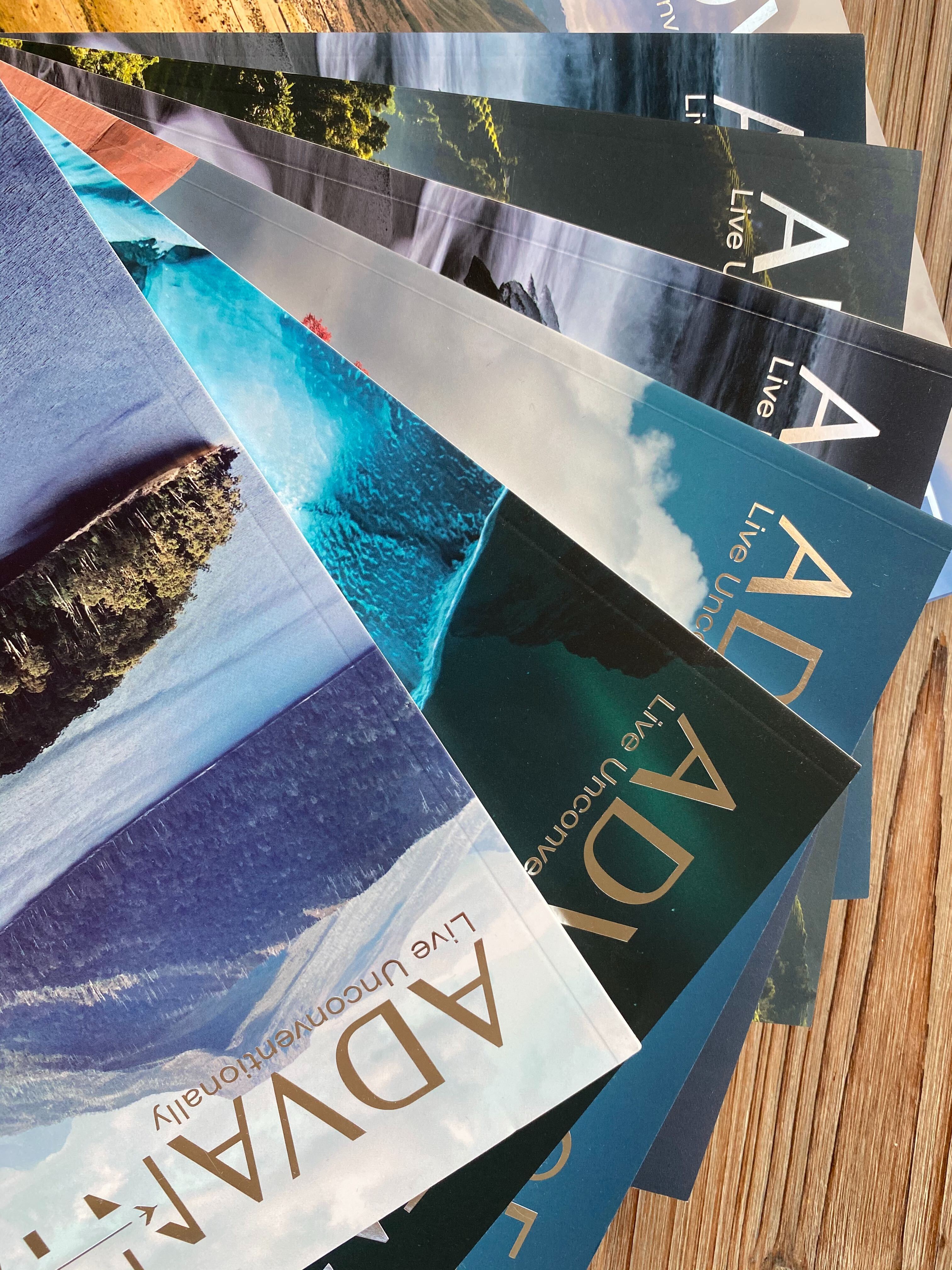
Brand heritage publishing earns its place in a marketing strategy when it does something no digital channel can replicate: it turns a company’s values, history, and craft into a physical object clients keep. The brands that do this well — whether through an annual print magazine or a carefully produced coffee-table book — treat the publication as an editorial product first and a marketing asset second. That distinction is what separates a piece people display from one they discard.
If you’re considering a heritage publication, start by defining your editorial spine before you think about design or print specs. Then work with a studio that manages the full process, strategy through delivery. Rethink Publishing has produced 80+ high-end magazines and 30+ coffee-table books for brands across hospitality, real estate, and design. Review the portfolio at rethink-publishing.com and assess whether the editorial standard matches what your brand demands.
Recommended Articles
Explore more from our content library: