
Understanding brand differentiation print is essential. Brand differentiation in print means using physical marketing materials, magazines, direct mail, brochures, catalogues, to create a distinct, memorable identity that competitors relying solely on digital channels cannot easily replicate. Print works because it engages multiple senses, signals investment and credibility, and stays in a reader’s hands rather than disappearing in a feed. In saturated markets where products are nearly identical, a well-executed print strategy often becomes the differentiation itself. According to Radius Insights, brands that invest in distinctive communication channels consistently outperform those competing on product features alone.
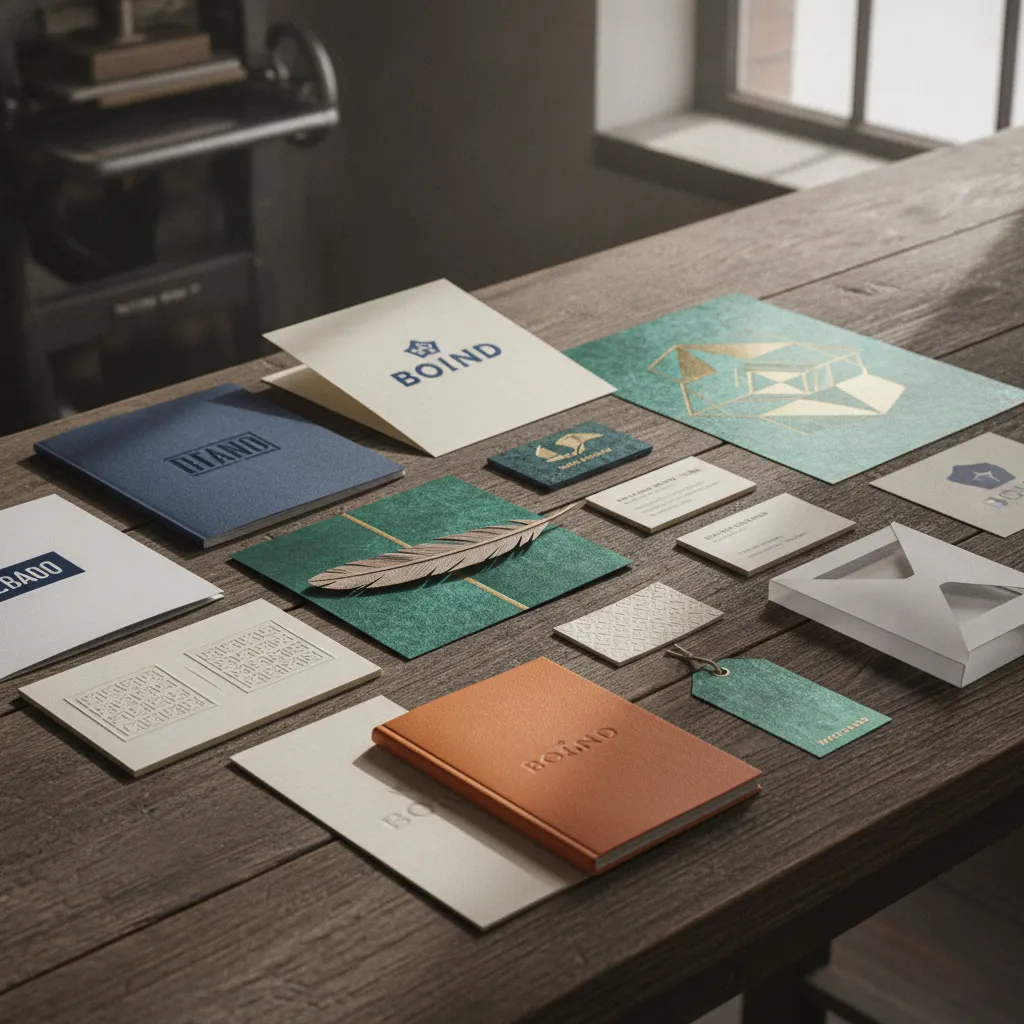
What Is Brand Differentiation and Why Does It Matter in Print?: brand differentiation print
Brand differentiation is the set of meaningful, perceivable differences that make a buyer choose you over an equivalent alternative, not your logo, not your tagline, but the actual evidence.
A brand can claim to be premium, trustworthy, or authoritative. Those are positioning statements. Differentiation is what makes those claims credible: the quality of your materials, the depth of your editorial, the physical weight of the magazine sitting on a client’s desk. Positioning is the promise; differentiation is the proof.
How does brand differentiation differ from brand positioning?
Positioning is the claim you make in the market, “we are the most trusted firm in our category.” Differentiation is the observable reality that either confirms or undermines that claim. Without differentiation, positioning is just assertion.
Brands that fail to differentiate don’t stay premium for long. When buyers can’t perceive a meaningful difference between two options, they default to price [3]. That compression erodes margins and, over time, commoditizes an entire category, a pattern as visible in professional services as it is in packaged goods.
“Differentiation is not about being different for its own sake — it is about being meaningfully different in ways that matter to your best customers.” — Gallup Business Journal, Building Brand Differentiation
What does a well-differentiated brand actually look like in practice?
Consider a mid-sized architecture firm that publishes a quarterly print magazine, featuring completed projects, client profiles, and design thinking, and mails it to 2,000 prospective clients. Months after a digital ad has vanished from a feed, that magazine is still on a coffee table. The firm isn’t just remembered; it’s associated with culture, craft, and seriousness of purpose.
That’s the white space brand differentiation print creates. Most competitors have abandoned print entirely, treating the channel as obsolete. For B2B firms and premium consumer brands, that retreat is an opening, a way to occupy physical space in a client’s world that no digital retargeting campaign can replicate.
The Main Strategies and Types of Brand Differentiation
Brand differentiation falls into four categories: product, service, experience, and communication, and each demands a different investment to execute well.
Product differentiation rests on features, quality, or performance that competitors cannot easily match. Service differentiation is built through expertise, responsiveness, and the depth of support a company provides. Experience differentiation works through emotional resonance, the feeling a client carries after every interaction with your brand. Communication differentiation is about how and where you show up: the channels you choose, the formats you use, and the consistency you maintain across both.
Communication-led differentiation is the most accessible for companies without large R&D budgets. Print is a primary tool within it, a brand differentiation print strategy does not require a new product; it requires a considered editorial decision. As explored in this overview of brand differentiation in practice, the channel choice itself communicates brand values before a single word is read.
One caution: being visibly different is not the same as being meaningfully different [3]. Differentiation that does not connect to something clients actually value does not drive preference, it just creates noise.
Brand architecture adds another layer. The four classic types, product brand, line brand, range brand, and umbrella brand, each create distinct differentiation challenges. An umbrella brand must differentiate across multiple audiences simultaneously; a product brand has a narrower, more focused job to do.
What is the 3-7-27 rule of branding and how does it apply to differentiation?
The 3-7-27 rule holds that a prospect needs roughly 3 exposures to recognize a brand, 7 to remember it, and 27 to build genuine trust. Digital impressions accumulate quickly but fade just as fast, a social post has an average lifespan of under 48 hours on most platforms. A printed magazine sits on a coffee table for months, sometimes years, and each time a client picks it up, it counts as another exposure. Print compresses the 7-to-27 journey in a way that digital volume alone cannot replicate. This is one of the core reasons brand differentiation print remains a powerful long-term investment.
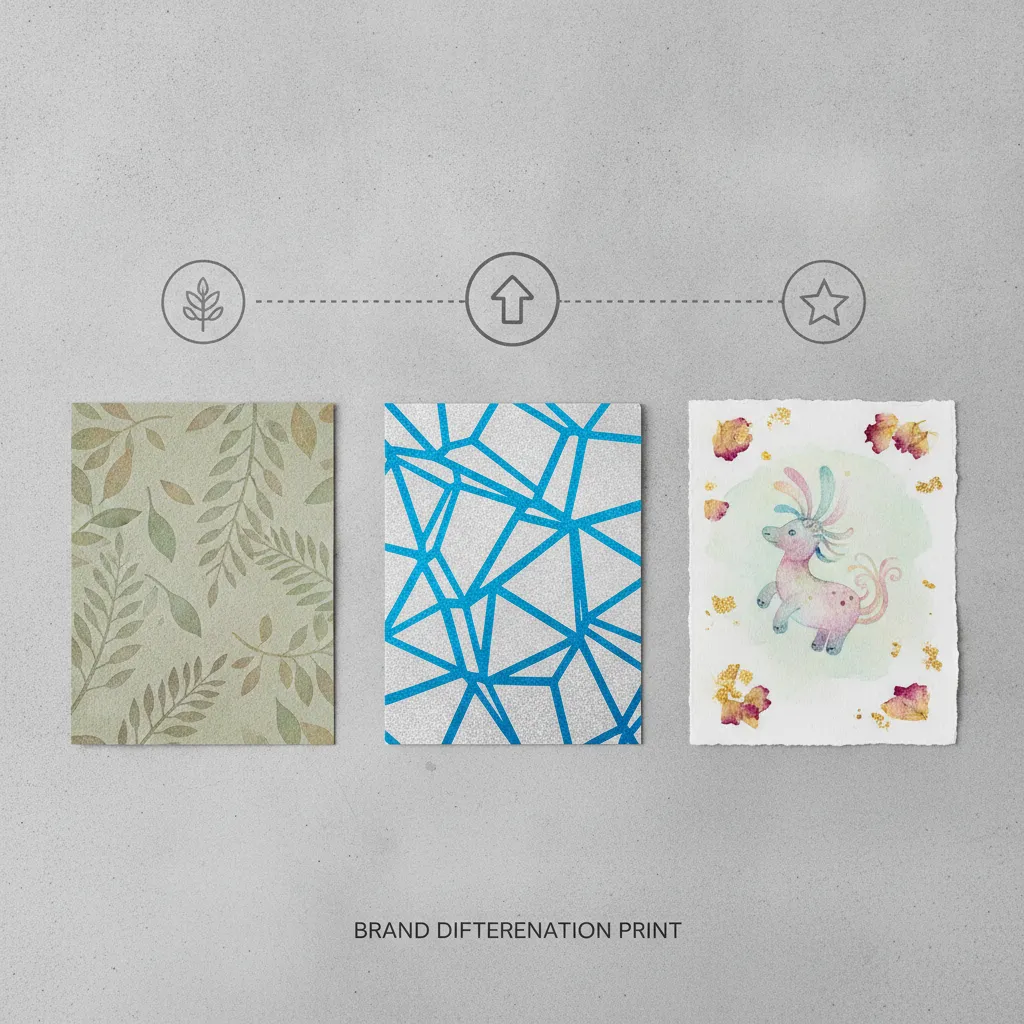
How to Differentiate Your Brand in a Saturated or Commoditized Market
When products are near-identical, differentiation has to come from how you communicate, where you show up, and who you serve, not what you sell.
What differentiation strategies work when products are nearly identical?
Start with the uncomfortable truth: in most professional service categories, financial advisory, law, architecture, hospitality, competing offerings perform at rough parity [3]. Buyers know it. Claiming superior quality rarely moves them.
Three angles consistently work when product differences are marginal:
- Audience specificity. Narrow your niche until you own it. A wealth management firm that speaks exclusively to family offices carries more weight with that audience than one that speaks to everyone.
- Proof of expertise. Published thought leadership, editorial content, case studies, a client magazine, signals depth that a homepage headline cannot. It shows, rather than claims.
- Channel presence. Show up where competitors have gone quiet. Brand differentiation through print is one of the clearest examples: if every competitor is running LinkedIn campaigns and no one sends a physical publication, the magazine is the differentiator by default.
“In a world saturated with digital noise, the brands that invest in physical, tactile communication stand apart not just in memory but in perceived credibility.” — Dr. David Eagleman, Neuroscientist and Author, Incognito: The Secret Lives of the Brain
How do you find competitive advantages when there are minimal product differences?
Audit the competitive white space. Map where every major competitor invests in communications, social, email, events, print, then identify the gaps. The gap is your opening.
A cybersecurity firm or financial advisory that publishes a client magazine is not simply sending information. It is signalling permanence, investment, and confidence in a way a weekly newsletter cannot replicate. The physical object stays on a desk. The email does not. Effective brand differentiation print strategies exploit exactly this gap, occupying physical space in a prospect’s world that no algorithm can displace.
One caution: don’t chase every differentiation angle at once. Pick one, execute it with discipline, and measure its effect before expanding. Rethink Publishing works with clients to identify exactly that angle, then builds a publication around it, end-to-end, so the execution matches the ambition.
The Role Print Plays in a Brand Differentiation Strategy
Print works as a brand differentiation channel because physical media creates deeper cognitive processing, stronger recall, and a brand impression that persists long after a screen ad disappears.
Why the brain responds differently to print
Neuroscience research from Canada Post and Temple University found that physical media activates memory-encoding regions of the brain more effectively than digital equivalents, producing 70% higher brand recall in some studies. According to the American Psychological Association’s research on cognition and media, tactile engagement with printed materials produces measurably stronger encoding than screen-based reading. A printed magazine sitting on a client’s desk is a brand impression that renews itself every time they glance at it, for days or weeks at a time.
That persistence is why a brand magazine is not a brochure. A brochure is a sales document, it answers “what do you sell?” and gets discarded. A magazine has an editorial spine: it offers genuine usefulness, a point of view, and content the reader chose to keep. The brand differentiation print delivers comes from that kept object, not from the transaction it describes.
How do you integrate print marketing with digital channels for omnichannel differentiation?
Print and digital reinforce each other when connected deliberately. QR codes embedded in a magazine can route readers to gated video content or exclusive landing pages, creating a measurable bridge between the physical piece and a digital retargeting campaign. Direct mail sequences that place a publication in a prospect’s hands before an email outreach campaign consistently outperform cold digital contact alone, the print piece warms the relationship first.
Rethink Publishing builds this logic into the editorial strategy for every publication it produces, ensuring each issue functions as the anchor of a broader brand communications sequence, not an isolated print exercise. This integrated approach is where brand differentiation print delivers its strongest measurable return.
What are real-world examples of brands using print to stand out from competitors?
Four Seasons distributes its Four Seasons Magazine to guests and high-value loyalty members, extending the brand experience well beyond checkout and keeping the hotel group present in clients’ homes for months. The publication carries editorial content on travel, design, and culture, which means readers engage with it voluntarily rather than filing it away.
On the B2B side, several professional services firms, including law and architecture practices, use quarterly publications to stay visible with C-suite buyers who delete marketing emails without opening them. A physical publication on a managing partner’s desk signals credibility that a newsletter cannot replicate.
The ROI question is fair to raise. Print carries a higher cost-per-impression than digital advertising. But cost-per-remembered-impression often runs in the opposite direction, a $15 magazine that a client keeps for three months and shares with two colleagues outperforms a $0.02 display ad that registers for 1.5 seconds and is forgotten. Measuring the right metric changes the investment case entirely.
How to Test and Validate Your Brand Differentiation Strategy Before Full Rollout
Test differentiation in three stages, hypothesis, small-scale pilot, signal measurement, before committing full budget to any channel or format.
What framework should you use to test differentiation strategies before full rollout?
Start with a clear hypothesis: articulate your differentiation claim precisely enough that a stranger could repeat it back without prompting. If they can’t, the positioning isn’t sharp enough to test, let alone scale.
Stage two is the small-scale pilot. For brand differentiation print specifically, a run of 500 copies distributed to a tightly defined audience segment is a legitimate test. Measure response rate, direct feedback, and, critically, whether recipients reference the publication in subsequent conversations with your team. That last signal is the one that matters most.
Stage three is measuring signal, not noise. Track brand recall, inbound enquiry quality, and sales cycle length, not impressions or open rates. Those vanity metrics tell you reach, not resonance.
The most common failure mode at this stage: brands test with internal stakeholders rather than actual buyers, then optimize for internal approval. A CMO loving the design is not market validation. Five conversations with ideal clients asking “what made you think of us?” will tell you more than a survey of 500 cold contacts [3].
How do you measure ROI from brand differentiation initiatives?
Keep brand metrics and direct response metrics in separate columns. Brand recall, preference shift, and NPS movement belong in one bucket; leads, conversions, and pipeline value belong in another. Conflating them produces misleading conclusions, a print publication may move recall significantly before it moves revenue, and that lag is normal, not failure.
Studios like Rethink Publishing build editorial strategy around a defined audience before a single page goes to press, which means the pilot audience is already qualified, making early signal data far cleaner than a broad cold distribution would produce. According to Gallup’s research on brand differentiation, brands that measure perception shift alongside revenue metrics make significantly better long-term investment decisions in channels like brand differentiation print.
Frequently Asked Questions
How long does it take for a brand differentiation strategy to show measurable results?
Most brands see early signals within 6–12 months, but meaningful differentiation typically takes 2–3 years to register consistently in customer perception. Differentiation is not a campaign, it is a cumulative impression built across every touchpoint. Physical assets like print publications work on a longer cycle than digital ads, but they also last longer: a branded magazine sitting on a client’s coffee table continues working months after delivery, with no media spend required to keep it visible.
Is print marketing worth the cost for small or mid-sized businesses trying to differentiate?
Print is worth the investment when your audience is high-value, relationship-driven, and already ignoring digital noise, not for every business at every stage. A boutique law firm, architecture practice, or regional hospitality group with a defined client base of 200–500 key accounts will see stronger return from a single well-produced print piece than from broad digital spend. The question is not the size of the company but the value of the client relationship you are trying to deepen.
What is the difference between brand differentiation and a unique selling proposition (USP)?
A USP is a single claim about what a product does better; brand differentiation is the broader, sustained perception of why a company is distinct. A USP lives in a tagline or feature list. Differentiation lives in how clients feel when they encounter your brand across every format, including physical ones. You can have a strong USP and still be indistinguishable from competitors if your brand experience does not reinforce it consistently.
How often should a brand refresh its differentiation strategy?
Review your differentiation positioning every 2–3 years, or immediately after a significant market shift, a new competitor, a change in your client base, or a major product or service expansion. The core of what makes your brand distinct should be stable; what changes is how you express and communicate it. Brands that refresh too frequently lose coherence; those that never revisit risk becoming invisible as the market moves around them.
Can brand differentiation print work for service businesses with no physical product?
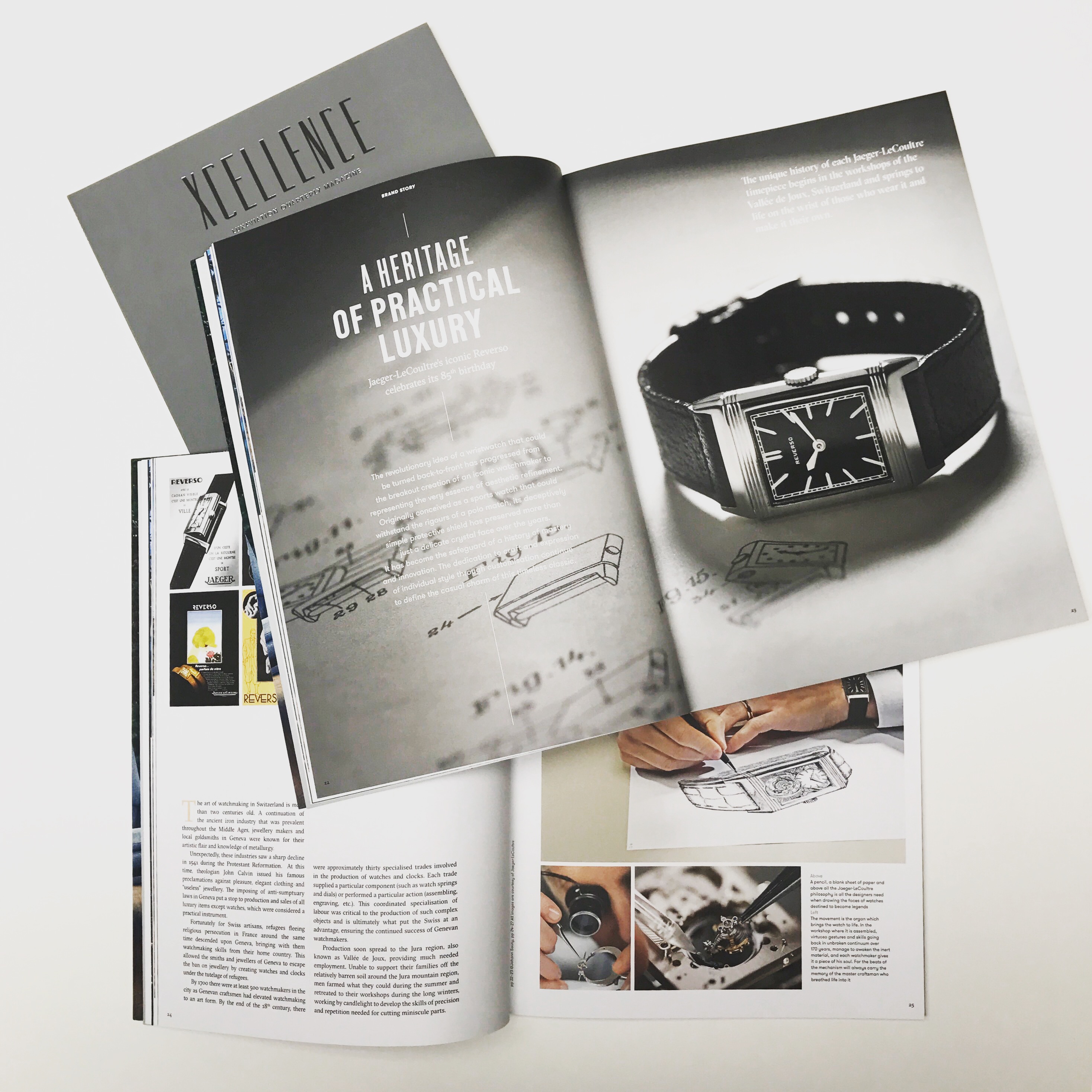
Brand differentiation print is arguably most powerful for service businesses, precisely because there is no physical product to evaluate. A well-produced client magazine or thought leadership publication becomes the tangible proof of quality that a service business otherwise cannot offer. For consultancies, law firms, financial advisors, and agencies, a print publication signals expertise, stability, and investment in the client relationship in ways that digital-only communication simply cannot match.

Conclusion
Brand differentiation in print works because physical permanence does what digital cannot: it stays in the room. The brands that hold attention longest are those that commit to a clear point of difference and express it through formats clients actually keep, not formats they scroll past.
Three things to act on: audit whether your current marketing materials reflect a genuine editorial point of view or just describe your services; identify the 200–500 client relationships where a physical touchpoint would do the most work; and define what your brand stands for before deciding how to express it.
If a print publication is the right next move, start by mapping your editorial spine, the core idea that every article, image, and page would serve. Rethink Publishing builds that foundation before a single word is written. See how the process works at rethink-publishing.com.
Sources & References
- Building Brand Differentiation — Gallup Business Journal
- 4 Ways to Drive Brand Differentiation — Radius Insights
- Brand Differentiation in Practice — YouTube
Recommended Articles
Explore more from our content library:
- How to Develop a Brand Voice for Your Magazine in 2026
- <a href="https://www.rethink-publishing.com/tactile-marketing-a-print-strategy-that-lasts" title="Tactile Marketing: A Print Strategy That Lasts“>Tactile Marketing: A Print Strategy That Lasts
- Cross-Industry Magazine Publishing: A Brand Guide
- Why Keepsake Publications Work: The Psychology Behind
- Narrative Design in Magazine Layout: A Complete Guide