
| Key Insight | Explanation |
|---|---|
| Editorial spine comes first | Every successful magazine starts with a clear editorial idea before a single word is written or image selected. |
| A full cycle takes roughly 17 weeks | From brief to delivery, a high-end custom magazine requires structured phases that can’t be safely compressed without sacrificing quality. |
| Design and content must develop together | Words and images that are paired with intention produce a cohesive publication. Bolting design onto finished copy almost always shows. |
| Multiple proofing rounds are non-negotiable | Errors in print can’t be corrected after the run. Rigorous review cycles are the only way to guarantee quality at press. |
| Pre-press is where most mistakes happen | Colour profiles, bleed settings, and file preparation require specialist knowledge. Getting this wrong costs money and time. |
| Print is a long-term brand asset | A well-produced magazine stays in homes and offices for months. The production investment pays back over a much longer horizon than any digital campaign. |
A magazine production workflow is the structured sequence of phases that takes a publication from initial concept to finished, printed copies in readers’ hands. It covers editorial planning, content creation, design, proofing, pre-press, and delivery. Understanding the full workflow is essential for any brand leader commissioning a high-end print publication, because the quality of the final product is determined at every stage, not just at the press.
Most companies underestimate how many distinct disciplines a magazine requires. Writing, photography, art direction, image rights, colour management, and print production all have to work in a coordinated sequence. Miss a step or compress a phase, and the result shows up on the page.
This guide walks through the complete magazine production workflow, explains what happens at each stage, identifies where things most often go wrong, and gives you a clear picture of what a well-run process actually looks like.
What Is a Magazine Production Workflow?
A magazine production workflow is the end-to-end process that transforms a brand brief into a finished print publication, coordinating editorial, design, photography, proofing, and print production across a structured timeline.
The term covers far more than printing. According to the Chicago Manual of Style, production controllers must coordinate in-house staff and vendors to ensure timely publication, within budget, and to the highest quality standards [1]. That coordination is the workflow.
Why the Workflow Determines the Final Quality
A magazine is not a brochure. It’s an editorial product with a clear structure, a visual logic, and a reading experience that has to feel intentional from cover to cover. That quality doesn’t happen by accident. It’s the result of a workflow where every phase is given the right time and the right expertise.
The Encyclopedia.com entry on magazine production notes that the production process involves several steps that are often carried out simultaneously by all contributors [2]. That simultaneity is exactly what makes workflow management critical. Without a clear structure, concurrent workstreams collide.
Who Needs to Understand This Process
Brand leaders, marketing directors, and CEOs commissioning a custom publication don’t need to manage the workflow themselves. But they do need to understand it well enough to ask the right questions, set realistic timelines, and evaluate whether a studio they’re considering actually has the process to deliver what they’re promising.
- CEOs approving the investment need to understand what they’re buying and why it takes the time it does
- Marketing directors need to align the publication timeline with campaign or launch calendars
- Brand directors need to see how editorial decisions translate into design decisions
- Founders commissioning a first magazine need a clear map of the journey ahead
The Core Stages of the Magazine Production Workflow
The magazine production workflow runs in seven distinct phases, from editorial strategy through to physical delivery, each of which feeds directly into the next.
Sources including GoPublish and eMagazines both identify client briefing, content planning, content creation, proofing, and print as the core stages [3][4]. In practice, a high-end custom publication requires additional layers around each of those phases.
The Seven-Phase Sequence
- Editorial strategy and brief. Define the editorial spine: what the publication stands for, who it’s for, and what it needs to achieve. This is the foundation. Everything else is built on it.
- Content proposal and flatplan. Outline every article, feature, and visual spread. Map the full issue before a word is written. The flatplan (a page-by-page overview of the issue) is the production blueprint.
- Content creation. Interviews, writing, research, photography commissioning, and image sourcing happen in parallel. Copy editing and fact-checking are built into this phase, not added at the end.
- Design and layout. Art direction and layout begin once the content structure is confirmed. Design-led spreads are developed in batches, with review rounds after each batch.
- Proofing and approval. Multiple full review rounds covering editorial accuracy, design consistency, image quality, and legal clearances. This phase is longer than most clients expect, and for good reason.
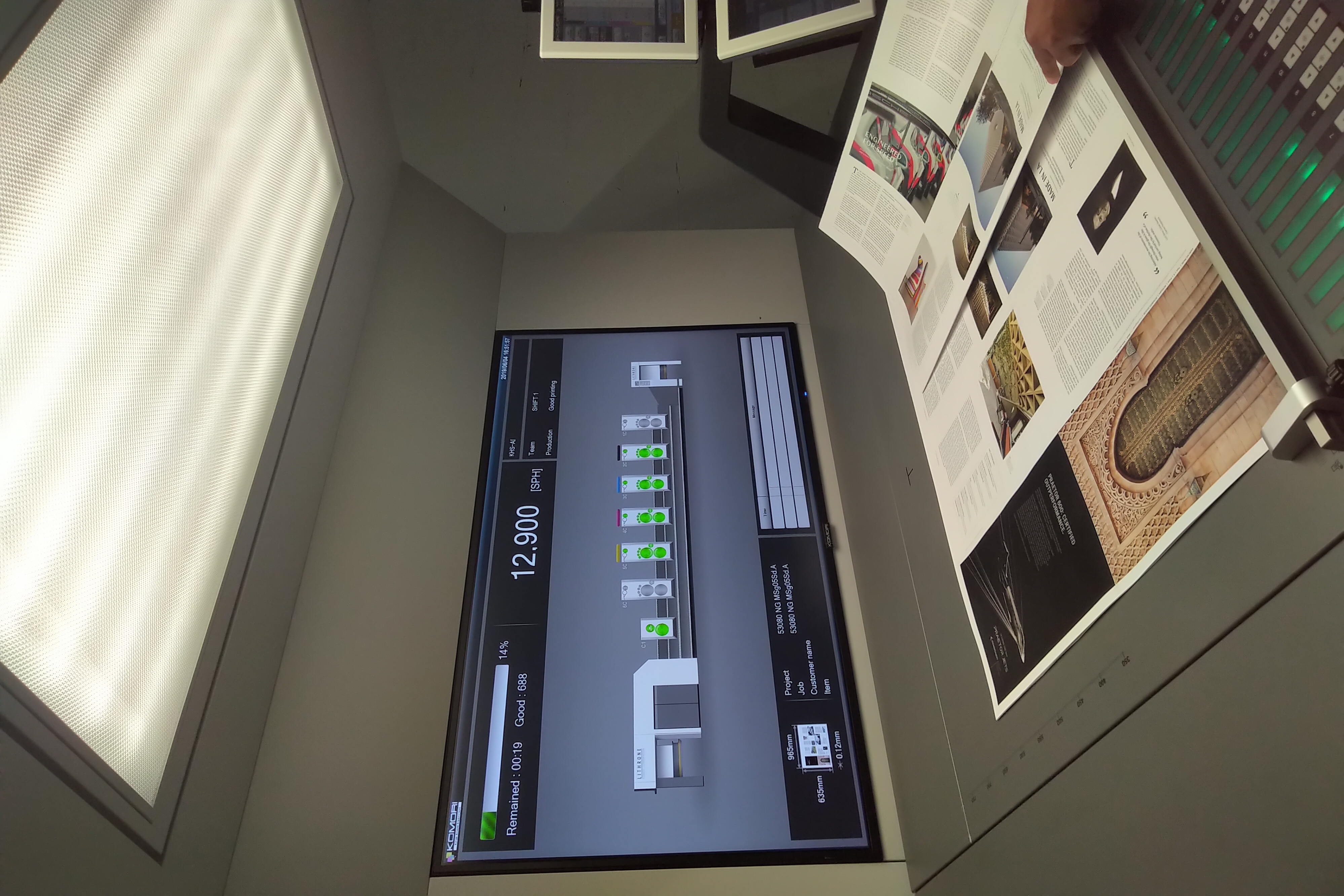
- Pre-press preparation. File preflight, colour profile management, bleed and margin checks, and print-ready file generation. This is a specialist phase that requires print production expertise.
- Print, finishing, and delivery. Press run, binding, finishing (lamination, varnishes, special finishes), and worldwide shipping.
A realistic timeline for a high-end custom magazine is approximately 17 weeks from brief to delivery. Industry practitioners on Quora confirm that content creation alone typically runs one to four weeks depending on scope, before design even begins [5].
Pro Tip: Build your flatplan before you commission a single piece of content. A flatplan forces editorial decisions early, prevents scope creep during design, and gives every contributor a shared map of the issue. Publications that skip this step almost always face expensive redesigns later.
| Phase | Typical Duration | Key Output |
|---|---|---|
| Editorial strategy and brief | 1-2 weeks | Editorial spine document |
| Content proposal and flatplan | 1-2 weeks | Issue flatplan and article outlines |
| Content creation | 4-6 weeks | Edited and proofed copy, cleared images |
| Design and layout | 4-5 weeks | Full designed issue in batches |
| Proofing and approval | 2-3 weeks | Client-approved print-ready files |
| Pre-press | 1 week | Preflighted, press-ready files |
| Print and delivery | 2-3 weeks | Finished copies delivered worldwide |
Design and Editorial: How They Work Together
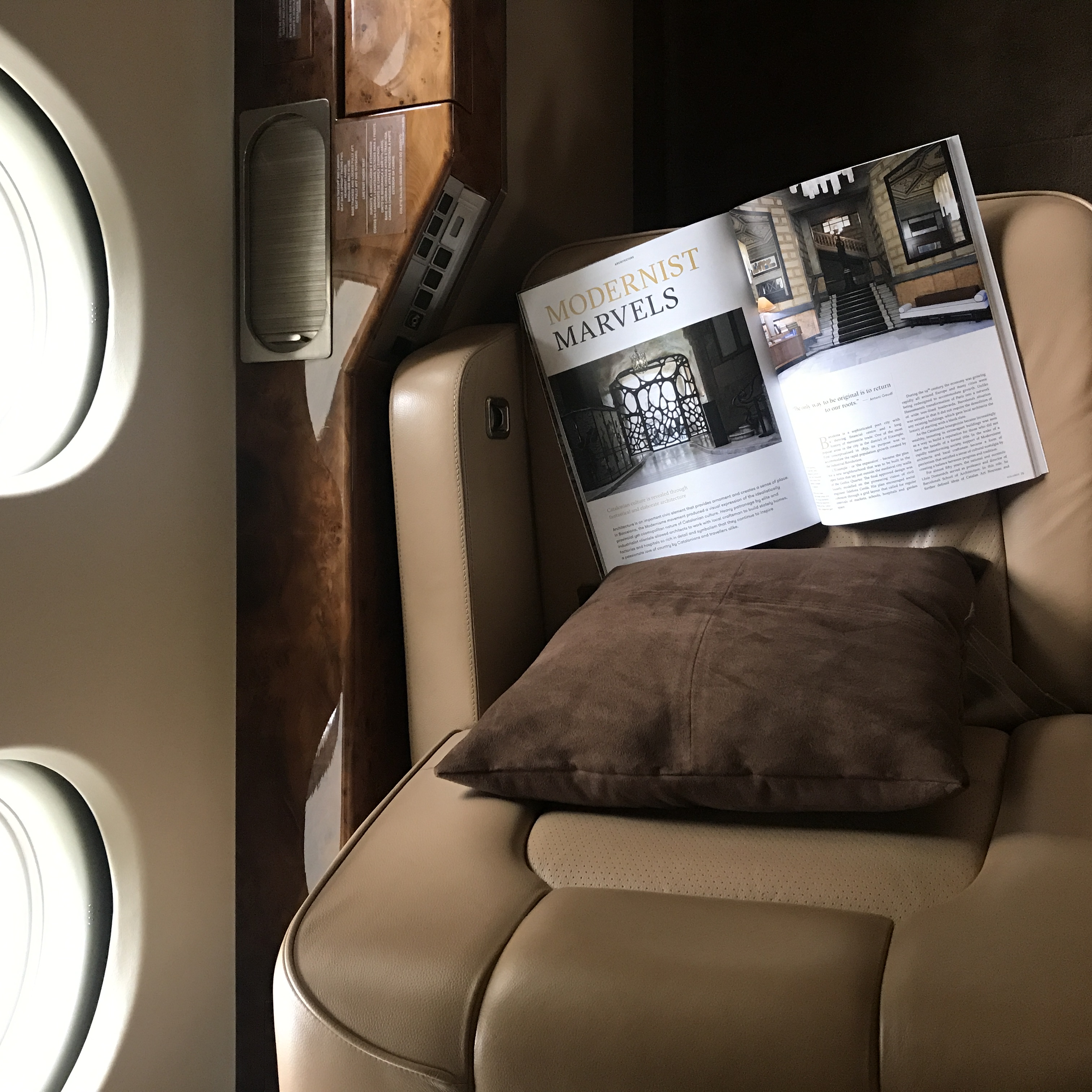
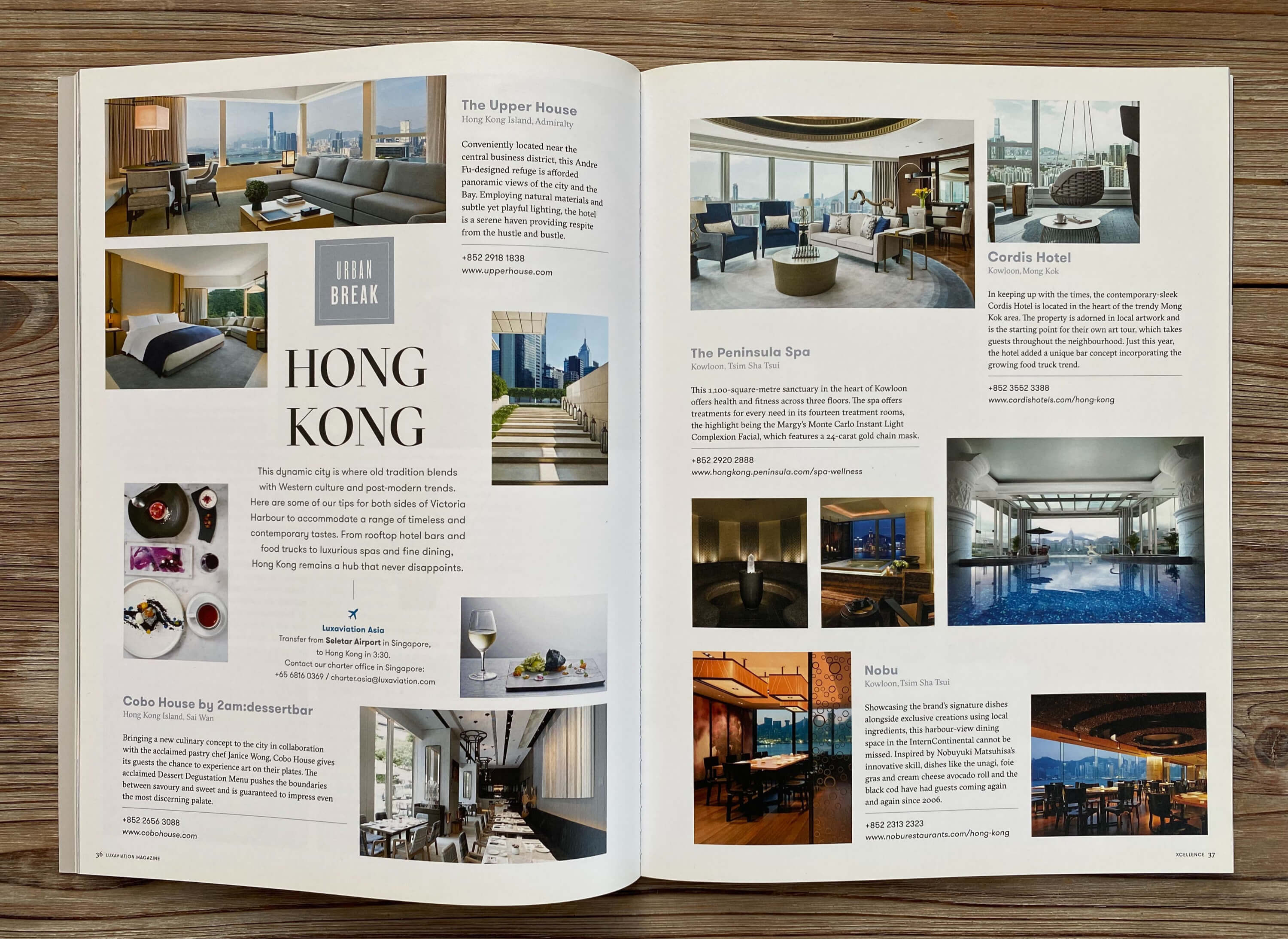
Design and editorial must develop in parallel, not in sequence. The most common mistake in magazine production is treating design as something you apply to finished copy. It isn’t. A magazine spread is a visual and verbal composition, and both elements shape each other.
The Editorial Spine as a Design Brief
The editorial spine (the overarching theme and point of view that runs through every page of an issue) functions as a design brief as much as an editorial one. It tells the art director what the issue should feel like before they open a layout file.
At Rethink Publishing, we’ve found that the publications that read most cohesively are the ones where the designer was in the room during editorial planning, not brought in after the content was written. That early alignment prevents the visual and verbal from pulling in different directions.
The ASHA Journals Academy production guidelines describe how the production phase involves professional typesetting after copyediting, reinforcing that design decisions are informed by the editorial state of the content [6]. For a brand magazine, that relationship runs even deeper.
Colour, Image, and Typography as Brand Tools
In a high-end magazine, colour management is not a technical afterthought. It’s a brand decision. The colours that print on the page need to match the brand’s visual identity, and achieving that requires softproofing (the process of simulating how a file will look when printed, using calibrated monitor profiles and print colour profiles) before anything goes to press.
- Image retouching and colour grading should be done with the final print stock in mind
- Typography choices (typeface, weight, leading, column width) affect both readability and brand perception
- White space is a design choice, not an absence of content. It signals confidence and quality
- Spread design should be reviewed as a two-page unit, not page by page
According to MediaShift’s analysis of magazine production evolution, publications that integrate visual and editorial decisions early in the workflow consistently produce more cohesive final products [7].
Pro Tip: Request a print proof (a physical sample printed on the actual paper stock before the full press run) before approving final files. What looks correct on screen can look quite different in print. This single step catches colour and contrast issues that no digital preview will reveal.
Pre-Press, Print, and Delivery
Pre-press is the phase between approved design files and the press run, and it’s where the most costly errors occur if the workflow isn’t managed by someone with specialist print production knowledge.
Innovative Publishing’s production overview identifies proof editing and approval as critical gatekeeping steps before anything moves to print [8]. That’s accurate, but the pre-press work that follows approval is equally demanding.
What Pre-Press Actually Involves
Pre-press is not simply “sending files to the printer.” It’s a specialist discipline that requires print production expertise to execute correctly.
- Preflight checks: Verifying that all fonts are embedded, images are at the correct resolution (minimum 300 DPI for print), colour modes are correct (CMYK, not RGB), and bleed and trim marks are properly set
- Colour profile management: Converting files to the correct ICC colour profile for the specific press and paper stock being used
- Imposition: Arranging pages in the correct order for the press sheet so they fold and bind correctly
- Print proofs: Physical proofs reviewed against the digital files before the full run is approved
The Cornell University Press overview of the publishing process notes that even for straightforward publications, production coordination requires careful scheduling to maintain quality standards [9]. For a design-led brand magazine with custom finishes, that coordination is significantly more complex.
Paper, Finishing, and the Physical Experience
The paper stock and finishing choices are part of the brand experience, not just production variables. A magazine printed on a lightweight coated stock feels entirely different from one printed on an uncoated, slightly textured sheet. Soft-touch lamination on the cover changes how a reader first picks it up.
These decisions should be made during the production planning phase, not at the last minute before the press run. They affect cost, timeline, and the reader’s first physical impression of the brand.
Walsworth’s guide to magazine production emphasizes that paper and finishing decisions made early in the process prevent delays and budget overruns at the press stage [10].
Common Mistakes in Magazine Production
The most damaging mistakes in a magazine production workflow share one root cause: decisions being made too late in the process, when reversing them is expensive.
In practice, the errors that most often derail a publication fall into predictable categories. Understanding them in advance is the fastest way to avoid them.
Mistakes That Happen Before Design Begins
- No editorial strategy. Starting with design before defining what the magazine stands for produces a publication that looks polished but says nothing. A brochure with better photography is still a brochure.
- Skipping the flatplan. Without a flatplan, content is written without knowing how much space it will occupy, resulting in articles that are too long, too short, or structurally incompatible with the intended layout.
- Underestimating image rights. Using images without proper licensing clearance is a legal and financial risk. Image rights acquisition takes time and needs to be built into the content creation phase, not resolved at the proofing stage.
Mistakes That Happen During Production
- Compressing the proofing phase. Proofing is not a formality. It’s the last line of defence against errors that can’t be corrected once printed. Reducing review rounds to meet a deadline is a false economy.
- Treating colour management as optional. Images that look correct on screen will often print differently if colour profiles aren’t properly managed. This is one of the most common and most visible production failures.
- Sending files to print without a preflight check. Missing bleeds, incorrect resolution, RGB images in a CMYK file: these are standard preflight catches that, if missed, can result in a reprinted press run.
- No print proof before the full run. Approving a press run from a digital PDF is a gamble. A physical proof on the actual stock is the only reliable way to verify colour, contrast, and finish before committing to the full print quantity.
Sheridan’s workflow guidance for publishing teams recommends consolidating production schedules and building dual-purpose assets to reduce the risk of last-minute errors compressing critical review phases [11].
Pro Tip: Build a buffer of at least five working days between final client approval and the pre-press deadline. In practice, final approvals rarely arrive without at least one last-minute revision request. That buffer protects the print timeline without requiring anyone to rush a critical production phase.
Best Practices for a Smooth Workflow in 2026
The fundamentals of a well-run magazine production workflow haven’t changed. What has changed, as of 2026, is the context: brands are investing more deliberately in print as a differentiator in a saturated digital environment, and that raises the stakes for getting the production process right.
Structure the Process Before You Start
The single most effective practice is committing to a structured, phased workflow before content creation begins. This means:
- A signed-off editorial brief before any writing is commissioned
- A completed flatplan before design begins
- Clear approval gates between phases so that no phase begins until the previous one is closed
- A production schedule shared with all contributors from day one
Our team at Rethink Publishing recommends treating each phase as a distinct deliverable with its own sign-off, rather than a continuous flow where decisions bleed from one phase into the next. That discipline is what keeps a 17-week production cycle on track.
Work With Specialists at Every Phase
A magazine requires a different skill set from a website, a social campaign, or a corporate brochure. The most effective workflows bring the right expertise to each phase rather than asking generalists to cover ground they don’t know well.
- Editorial direction requires someone who understands publication structure, not just content marketing
- Layout design for print requires knowledge of print typography, bleed, and colour management that digital designers don’t always carry
- Pre-press requires print production expertise. This is not a task for a graphic designer who occasionally sends files to a print bureau
- Image rights clearance requires someone who knows licensing terms for editorial and commercial use
The Activepieces guide to content publishing workflows defines a content publishing workflow as a step-by-step system that takes content from idea to publication, giving structure to every contributor [12]. For a print magazine, that structure needs to be more rigorous than for digital content, because errors can’t be corrected after the press run.
Sources and References
- The Chicago Manual of Style, “How Books and Journals Are Produced”
- Encyclopedia.com, “Magazine Industry, Production Process of”
- GoPublish, “The Key Stages of the Print Magazine Production Workflow”
- eMagazines, “Magazine Production: Steps to Produce Print and Digital Magazines”
- Quora, “What is a typical production schedule for a magazine?”
- ASHA Journals Academy, “Production Steps”
- MediaShift, “How Magazines Are Finally Putting Multimedia Into Their Workflow”
- Innovative Publishing, “Production Process At-A-Glance”
- Cornell University Press, “Overview of the Publishing Process”
- Walsworth, “From Idea to Mailbox: Streamlining the Magazine Production Process”
- Sheridan, “Workflow Tips for Lean, Mean, Magazine Publishing Teams”
- Activepieces, “How to Build a Content Publishing Workflow”
Frequently Asked Questions
1. What are 5 conventions of magazines?
The five core conventions of a magazine are: the masthead (the publication’s title and identity, typically displayed prominently on the cover), coverlines (short editorial teasers that tell readers what’s inside), a featured article or lead story that anchors the issue editorially, a consistent typographic and layout grid that creates visual coherence across all pages, and an editorial voice or point of view that runs through the publication from front to back. In a brand magazine, each of these conventions is an opportunity to reinforce brand identity rather than simply follow standard publishing formats.
2. How do you make a magazine step by step?
A magazine production workflow begins with defining the editorial spine (the theme and point of view for the issue), followed by a flatplan that maps every page before content is created. Content creation (writing, photography, image rights clearance) runs in parallel with early design direction, then moves into layout, multiple proofing rounds, pre-press preparation, and finally print production and delivery. The key distinction from simpler step-by-step guides is that design and editorial must develop together, not sequentially, and proofing must be treated as a rigorous multi-round process rather than a final check.
3. How long does a full magazine production workflow take?
For a high-end custom brand magazine, a realistic end-to-end production timeline is approximately 17 weeks from brief to delivery. Content creation typically runs four to six weeks. Design and layout takes a further four to five weeks with review rounds built in. Proofing, pre-press, and print production account for the remaining time. Timelines that promise significantly less than this usually achieve it by compressing proofing or pre-press phases, which increases the risk of errors reaching the press.
4. What is a flatplan and why does it matter?
A flatplan is a page-by-page overview of a magazine issue that maps every article, feature, visual spread, and section before content creation begins. It functions as the production blueprint for the entire issue. Without a flatplan, writers produce copy without knowing how much space it will occupy, designers receive content that doesn’t fit the intended layout, and the editorial structure of the issue becomes reactive rather than intentional. A completed, signed-off flatplan is one of the most effective tools for keeping a magazine production workflow on schedule and on brief.
5. What is pre-press and why is it a specialist task?
Pre-press is the phase between client-approved design files and the press run. It involves preflight checks (verifying correct resolution, colour mode, bleed, and embedded fonts), colour profile conversion for the specific press and paper stock, imposition of pages for the press sheet, and physical print proofing. It requires specialist print production knowledge because errors at this stage, such as RGB images in a CMYK file or missing bleed, either result in a failed press run or visible quality problems in the finished copies. It’s not a task that can be safely delegated to a graphic designer without print production experience.
6. Can a brand manage magazine production in-house?
Technically, yes. In practice, it requires in-house expertise across editorial direction, print-specific layout design, image rights, colour management, pre-press, and print production coordination, disciplines that most brand and marketing teams don’t carry simultaneously. The brands that attempt in-house production without that expertise typically produce something that looks like a corporate brochure rather than a genuine editorial publication. The more common and more effective approach is to work with a studio that manages the full workflow end-to-end, freeing the brand team to focus on their business while the publication is produced to a professional standard.
The Workflow Is the Quality
A well-run magazine production workflow isn’t just an operational framework. It’s the mechanism through which brand quality becomes physical reality. Every phase matters. The editorial spine shapes the design. The design informs the proofing. The pre-press determines what actually prints. Compress or skip any phase, and the result shows up on the page in ways that can’t be fixed after the press run.
The companies that get the most from a custom publication are the ones who understand this. They don’t try to rush a 17-week process into eight. They don’t treat proofing as optional. They invest in the right expertise at every stage because they know the magazine will be sitting on their clients’ coffee tables for months, representing the brand every time someone picks it up.
At Rethink Publishing, we’ve spent over 20 years refining this process across 80+ high-end magazines and 30+ coffee-table books. The workflow we run is calm, structured, and transparent. Clients see what’s happening at every phase without having to manage any of it. The result is a publication that feels like it was made with real care, because it was. If you’re ready to see what a properly managed magazine production workflow produces, visit rethink-publishing.com.
Recommended Articles
Explore more from our content library: